Guguayuan Agriculture Treats Farming as a Service: Integrating a Thousand Hectares of Fields and Six Hundred Farmers for Consistent Quality Year-Round
Why can a humble, rustic-looking roasted sweet potato occupy the most prominent spot in convenience stores? In recent years, imbalances between production and sales of various crops have been frequently reported nationwide, yet our local symbol, the sweet potato, has been advancing steadily, with rising output, and amazingly, prices rising at the same time, with annual output value exceeding four billion, and it has also made a major push into international markets!
So how exactly did the sweet potato turn things around? Today's impressive performance of the national sweet potato industry owes much to the collaboration eight years ago between Guguayuan and FamilyMart convenience stores. What are the internal strengths and core principles behind this golden business opportunity? They are worth other agricultural products learning from.
Depending on the weather to make a living, with unstable quality and output, is almost the fatal weakness of all agricultural products, and sweet potatoes are no exception. But 24 hours a day, all year round, these "FamilyMart roasted sweet potatoes" can be supplied at any time, selling 23 million strips a year. Even more rare is that the taste of every sweet potato is always the same, which for an agricultural product with no additives at all can be called a miracle.
Behind this sweet potato are one thousand hectares of fields and more than six hundred farmers, bringing together more than twenty years of pursuit of ever-greater refinement, single-mindedly putting consumer demand first. The one responsible for strategy and contract farming integration is an agribusiness located in Xinhua, Tainan - Guguayuan.
Year-round supply: behind one promise is a huge challenge for the farm
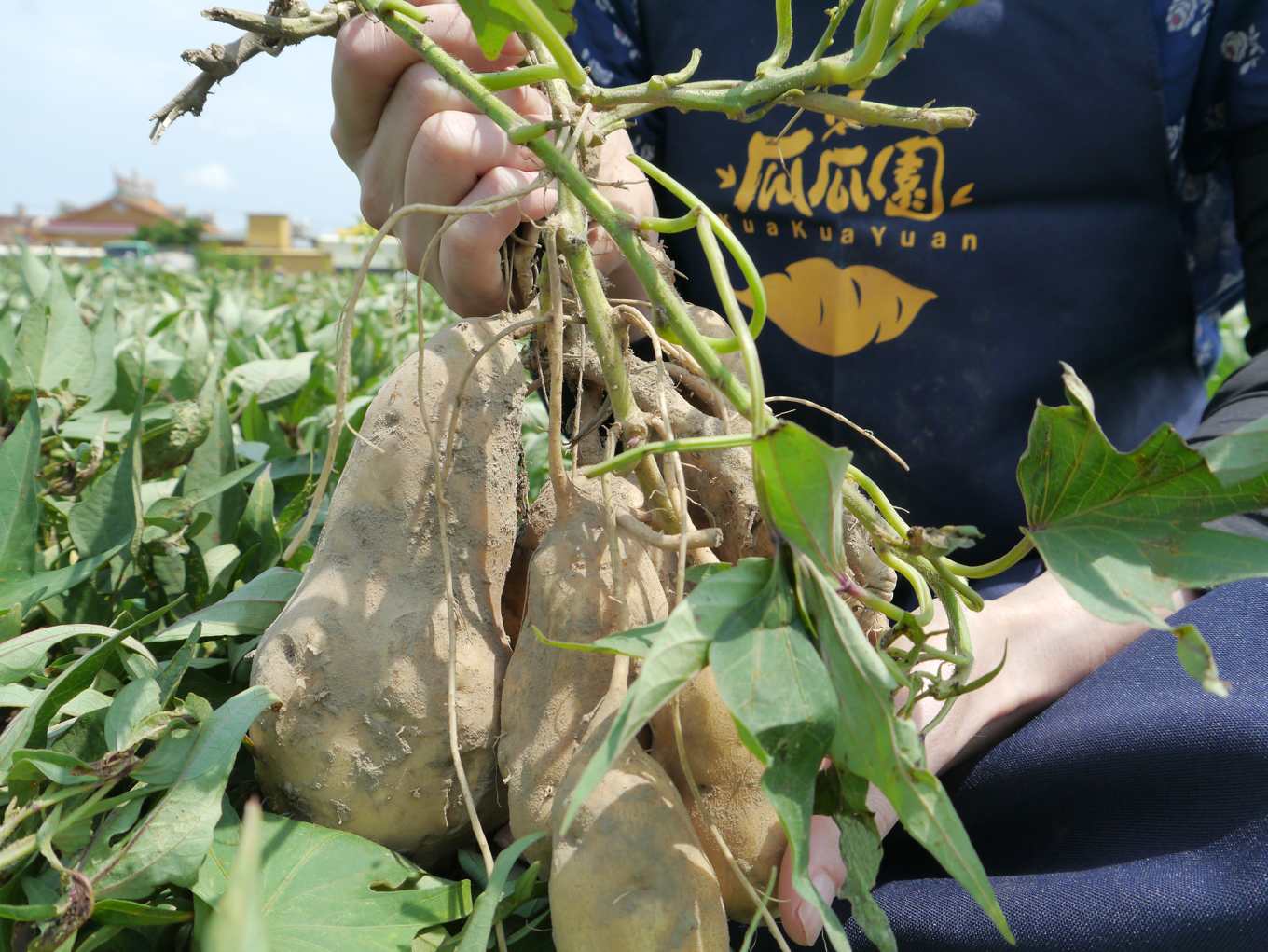
When whole boxes of fresh sweet potatoes with soil still on them arrive at convenience stores, staff must wash the sweet potatoes, roast the sweet potatoes, and roast them just right, with the taste required to be consistent all year round. The most difficult part is that 24 hours a day, all year round, more than two thousand convenience stores across Taiwan must all be reliably supplied.
"This is the biggest challenge for agricultural products. Not only quantity, but also stability. We have to think of a hundred ways to stabilize it," Qiu Yuxiang said, then reasoning back from the consumer end to the production end, "One sentence about stable year-round supply means a lot of things have to be done back at the farm end."
Take seedlings, for example. If three hundred hectares of sweet potato output are needed every month in the future, then half a year earlier, seedlings for three hundred hectares must be found for farmers to plant. "Planting ten jia a day means four hundred thousand plants, every single day!" Are there enough seedlings? Are there enough workers? Everything must be carefully planned. Qiu Yuxiang admits that at the beginning they lost quite a lot because of seedling problems. They ordered too many seedlings and could not plant them immediately, so the young seedlings withered and had to be discarded, and new seedlings still had to be bought. Only after redistributing the methods for seedling cultivation, contract farming and collection and transport were losses reduced.
The cruel reality of depending on the weather will also inevitably be encountered. When sweet potatoes are planted, it happens to be typhoon season. "What we fear most is the whole field being flooded!" Huang Xinfeng recalled that in two years, typhoons and heavy rains flooded more than one hundred hectares of field areas. The sweet potatoes that later grew had a very poor good-rate, and some fields were even entirely ruined, so they could only keep replanting and desperately make up the output. (Article not finished, please continue reading)