Planting Time and Care Notes for Early-Maturing Hybrid Melon Varieties
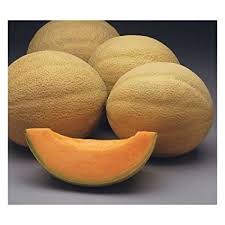
Cantaloupe watermelon red sweet 'N early hybrid cantalupo hibrido dulce Y precoz, ideal choice for areas with a short season. Can resist downy mildew. Harvest in about 75 days. Grows easily in full sun, sprouting and growing. Matures in 75 days.
Few horticultural crops come close to the juicy sweetness of melons. Muskmelons (sometimes mistakenly called cantaloupes) have a netted, tan rind and salmon-colored flesh. Honeydew-type melons include honeydew, with smooth white skin and pale green flesh; casaba, pointed at the stem end, with yellow skin and white flesh when ripe; and Crenshaw, oval with netted tan skin and pink flesh. Charentais-type melons, the true cantaloupes of France, have warty, ribbed rinds and sweet, bright orange flesh. Because melons grow on long vines, they take up more than their fair share of garden space. They also need a long, hot growing season, making them more difficult to grow in the north. Minimize problems by planting early-maturing varieties.
Planting date: late May
Transplant date: early June
Plant type: fruit
Bloom cycle:
pH level: above 6.0
Seed depth: ½ inch
Plant spacing: 2-3 per hill
Row spacing: 4-6 feet apart
Days to harvest: 75 days
Region requirements: preferably a long, warm summer
Fertilizer requirements:
Light requirements: full sun
Water requirements: plenty of water while the vines are growing; less when the fruit is ripening
Soil requirements: fertile, well-drained soil (high in organic matter)
Disease problems: mold
Pest/insect problems: cucumber beetles
Solutions: To prevent cucumber beetles, cover with row covers; remove them when female flowers appear (the base of female flowers is swollen). Treat infestations with pyrethrin. To prevent mold, keep plants vigorous and plant resistant varieties.
How to grow: If starting indoors, plant in peat pots 3 or 4 weeks before the planned transplant. In warm seasons of 120 days or longer, sow directly outdoors, or transplant 2 or 3 weeks after the last frost. If not trellising, plant 6 to 8 seeds in hills spaced 3 feet apart, or 4 to 6 feet apart if not. After the threat of cucumber beetles and changeable weather has passed, thin plants to the strongest 2 or 3. Alternatively, sow seeds 1 foot apart in rows 5 to 6 feet apart, thinning to 3 feet if trellising or 4 to 6 feet if growing on the ground. Use the same spacing for transplants.
In spring, cover the soil with plastic sheeting to warm it, then plant in holes in the plastic. In the South, remove the plastic once hot weather arrives and use organic mulch to keep the soil temperature even. To save space, provide support for the vines to climb. If melons hang heavily, support them with nets or pantyhose slings. If plants lie on the ground, place melons on butter tubs or boards to prevent pest damage. Keep the soil moist while the vines are growing and flowers are being pollinated. When the fruit is ripening, water only when the leaves wilt at midday.
Harvest notes: Harvest when the melon is 4-5 inches in size. Here are signs of ripeness: muskmelon, the stem separates from the fruit with a slight pull, leaving a round depression; honeydew, the blossom end (opposite the stem end) softens, the rind is slightly sweet, and the skin turns creamy white; casaba, the blossom end softens and the skin shows yellow stripes; and charentais, the fruit begins to turn yellow and the blossom end softens or cracks.