Japan promotes corporate hometown tax, allocating 100 billion yen in special funds to support regional revitalization
Driven by the fear of regions disappearing, Japan has been promoting regional revitalization policies, providing support through human resources, information and finance. Among these, financial support can be further broken down into regional revitalization grants, the corporate version of the hometown tax, and the regional hub strengthening tax system, providing ample financial support to localities so that regional revitalization capacity can be built. Taiwan's regional revitalization policy also integrates cross-ministerial resources and calls for corporate investment in hometowns, but what exactly are the differences in financial policy between Taiwan and Japan's revitalization efforts? And how can they be compared and referenced?
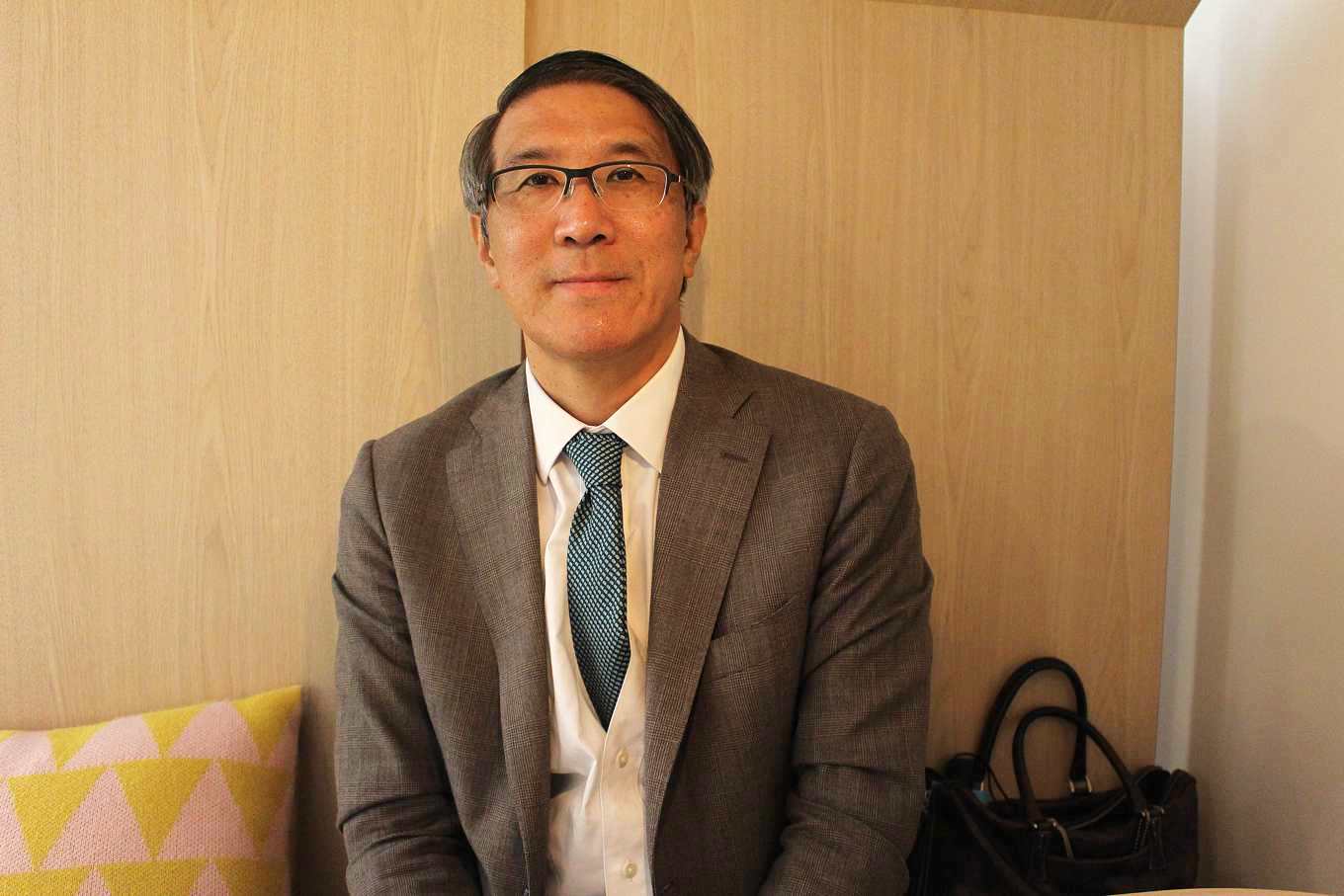
"Upstream and Downstream" conducted an exclusive interview with Chen Chih-jen, Deputy General Manager of Nomura Research Institute Taiwan Consulting, to discuss the policy differences between Taiwan and Japan. Chen Chih-jen has long followed Japan's regional revitalization policies and, commissioned by Taiwan's National Development Council, has been promoting a regional revitalization demonstration site in Zuozhen, Tainan.
Japan's "corporate version of hometown tax" provides dedicated funds for regional revitalization
In addition to regional revitalization grants, Japan has also introduced the "corporate version of hometown tax," where corporate donations to government accounts are treated as tax payments, and the account is used as a dedicated fund for regional revitalization. It has also proposed a regional hub strengthening tax system targeting Tokyo's 23 wards, whereby if companies relocate from these areas to the regions, they receive subsidy measures such as tax incentives and office subsidies.
Taiwan's National Development Council, meanwhile, has launched corporate investment in hometowns, including adopting revitalization business proposals, assisting with local product development and sales, establishing branches or offices in localities, donating to regional revitalization dedicated accounts, and investing in local infrastructure.
However, Chen Chih-jen observes that Taiwan actually has long had similar corporate tax-saving measures, with companies and wealthy individuals using foundations for tax savings. One type is venture capital foundations, used for industrial innovation and R&D; another is public welfare foundations, such as the TSMC Education and Culture Foundation. "Corporations giving back to society already embodies the hometown tax concept, it's just that it was never said that foundations can only invest in hometowns."
Taiwan's education and culture foundations can only engage in "non-profit undertakings" and cannot encourage local businesses
Chen Chih-jen states that the law stipulates education and culture foundations can only engage in non-profit undertakings, but companies allocate a fixed amount to foundations every year, and these resources should be invested in regional revitalization. He explains that local businesses need to survive sustainably, which requires a stable profit model so that resources invested from outside can be effectively utilized. However, current legal restrictions mean that education and culture foundation resources can only support local non-profit undertakings, "which turns localities into long-term dependence on subsidies, inconsistent with the concept of revitalization." Taiwan should be able to use the existing foundation model to encourage companies to invest in promising local characteristic businesses.
Should encourage investment in vertical agricultural integration, develop characteristic cultural businesses
However, when relying on corporate investment, do localities still retain their own subjectivity? In response, Chen Chih-jen believes that the 134 townships listed as priority areas are precisely those that are not easy to invest in, which is why no one has gone there. "Therefore, what companies invest in is absolutely not factories. What can grow in localities, what can be invested in, is something like vertical agricultural integration with local characteristic culture." This should become an action, "and this is what truly brings localities to life."
He believes that methods to solve local revitalization can be promoted on a large scale, such as vertical agricultural integration, where small farmers produce ingredients, use local ingredients to create distinctive cuisine, and further provide accommodation and food-and-farming experiences. Localities can also try shared kitchens, with the concept of bringing in foreign chefs to station there, using local ingredients to create distinctive exotic cuisine, becoming a highlight that attracts foot traffic.
"Vertical agricultural integration and shared kitchens don't need each township to submit proposals; they should be promoted holistically by the central government, and then localities supplement with their local characteristics. This is simpler." Chen Chih-jen states that currently local proposals have no framework whatsoever, which amounts to having no guidelines, making it difficult to propose effective solutions.
County and city governments should play an important role in connecting localities
Chen Chih-jen believes that county and city governments should serve as the level that attracts foundations and corporations to invest in local fund accounts, which would be dedicated to vertical agricultural development, with pragmatic monitoring of progress. "It's easier for county and city governments to raise funds from local enterprises and education and culture foundations."
Chen Chih-jen further points out that county and city governments still remain in the role of merely assisting with submitting applications for the National Development Council's regional revitalization, but as county and city governments, they have important functions. He emphasizes that county and city governments should first set out the overall regional revitalization direction for the county or city, so that the next level of townships can follow the general direction. County and city governments hold the capacity for coordination and integration. "As soon as a county or city has more than two or three proposals from its townships, the content is very likely to end up conflicting with itself."
The 134 priority townships listed have severe population outflow, making regional revitalization relatively very difficult, and the role of county and city governments becomes even more important. Chen Chih-jen takes Zuozhen as an example: foot traffic comes in from Xinhua, and it should connect with Xinhua. "It's not about each point breaking through individually, but a ring-shaped concept. County and city governments must take on the connecting of regional foot traffic so that each place can develop its own revitalization logic."
Regional revitalization should actively address the needs of residents. Grow local business entities
In the past, community building and rural regeneration were both about distributing resources, allocating resources to localities under a certain budget heading to make life a bit better. "It did indeed make local people feel life was better, but today we hope that beyond life being better, more people will be willing to stay and live in localities."
Chen Chih-jen states that in the past the goal was to make the environment better, but now it is about addressing the needs of residents, such as setting up childcare centers. In the past, much of the resources were used to care for the elderly, which is not bad in itself, but in the future we cannot only care for the elderly; instead, it should be transformed into a business concept, truly growing local characteristic business entities for sustainable operation. On the foundation of past community building and rural regeneration, leverage the energy of regional revitalization. "Now it's about finding ways to make this regional revitalization energy start happening one by one."
(To deeply grasp rural development and regional revitalization within Taiwan's real-world context, "Upstream and Downstream" has collaborated with the "Rural Development Foundation" on a "Rural Development Special Series," using a series of articles to explore Taiwan's current situation and Japan's policy developments. To read the full series, please click here)