Domestically produced rice feed promoted by the Livestock Research Institute: chicken, duck and pork become more tender and juicy
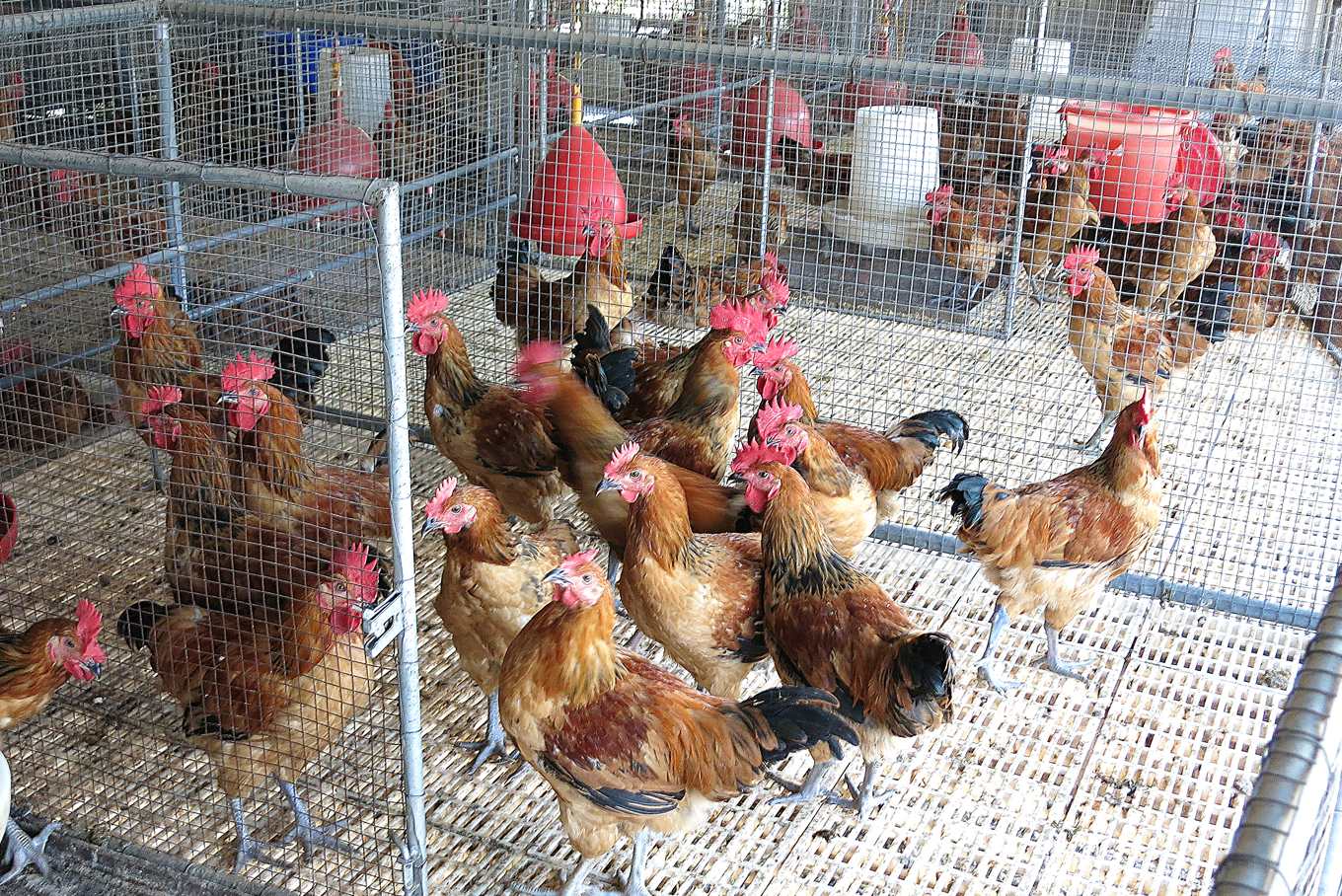
The domestic feed self-sufficiency rate is only 5%, requiring the annual import of 4.2 million metric tons of corn. By contrast, the self-sufficiency rate of domestically produced rice is as high as 107.9%, causing public grain stocks to overflow year after year. The Livestock Research Institute (abbreviated as "Livestock Research Institute") of the Council of Agriculture tried replacing feed corn with domestically produced rice to feed seven kinds of livestock and poultry, including chickens, ducks, geese and pigs, and found that rice-fed meat pigs and native chickens became more delicious! Lee Tsung-yu, assistant research fellow at the Livestock Research Institute, pointed out that brown rice increased the monounsaturated fatty acids in the meat, "chicken breast meat is more tender and juicy, enhancing the flavor of the meat."
Chuang Lao-ta, deputy director-general of the Agriculture and Food Agency, stated that the domestic public grain safety stock is maintained at about 400,000 tons per year, used for emergency supplies and war reserve grain, while the remaining stock is sold through various channels, with high-value uses sold first, such as exports, student and military meals, judicial grain, and processing rice. Should public grain be encouraged to move toward feed use? He emphasized, "Using aged rice as feed requires a sound management method to prevent it from flowing back into the edible rice market and disrupting market prices."
"Taichung Sen 17" has high yield and low production cost, making it especially suitable as feed
It is feasible for rice to become a substitute feed ingredient for corn, but must it be the "Taichung Sen 17" variety? Lai Ming-hsin, a research fellow at the Taiwan Agricultural Research Institute responsible for breeding special varieties for feed rice, explained that corn is the carbohydrate source in formulated feed, and rice is too, so differences in protein and amino acid content among different rice varieties are not the main factor in selecting feed rice; using public grain rice composed mostly of "japonica rice" is also fine.
"Using any rice variety as feed has roughly the same effect, but the lower the production cost, the higher the yield, and the stronger the disease resistance, the more suitable the variety." Therefore, "Taichung Sen 17" was ultimately chosen for the "rice feed" trial.
Processing aged public grain rice into rice feed has a price advantage
While increasing the feed self-sufficiency rate, there is also hope to open up a diversified consumer market for rice. In recent years, Taiwan has been affected by changes in dietary habits and the impact of low-priced imported rice, and domestically produced rice is generally in oversupply. In 2017, average annual consumption per person was 45.4 kg of rice, nearly 13 kg less than 20 years earlier. Last year, 200,000 tons of fresh rice also went unsold domestically. Japan, which faces the same situation as Taiwan, has in recent years developed "rice-fed pork" and created distinctive poultry meat products, which have also won favor in the consumer market.
By comparison, if Taiwan wants to promote "rice feed" comprehensively, it must first solve the cost problem. Lai Ming-hsin pointed out that the production cost of domestically produced grain is inherently high, and because no variety suitable for feed rice production has yet been bred, it may be difficult to compete with the average imported corn price of 7-9 yuan per kg. Only by using dumped aged public grain rice processed into "rice feed," combined with related supporting subsidies, is it possible to keep the cost of use from differing too much from corn feed, and also help reduce the storage pressure of public grain rice.
Although the Livestock Research Institute strongly promotes domestically produced rice as a replacement for imported feed corn, at this stage no feed company has developed "domestically produced rice feed." Lee Chun-fang explained that the production and management of domestic feed rice is not yet mature and is still in the trial period. To establish a complete rice-fed livestock and poultry industry, special varieties for feed rice must still be developed in order to ensure stable supply and lower operators' costs. At present, it is recommended to move public grain that has been stored too long, is of poor quality, and is no longer suitable for further processing into feed use, expanding the diversified use of aged rice and also solving the problem of public grain disposition.
Agricultural by-products can also be used to increase the domestic feed self-sufficiency rate
In addition to rice, the Livestock Research Institute also promotes enriched feed sources. For example, using 12% corn distillers grains to replace corn and soybean meal not only does not affect the egg production rate of laying hens but can also improve yolk color; whole-plant rice silage can also serve as a good feed source for lactating goats; in addition, using rice by-products (rice bran, rice hulls) and soybean meal to feed meat goats can save feed expenses on livestock farms and also effectively reduce the cost of handling agricultural waste, further increasing the domestic feed self-sufficiency rate.
Pig farmers: The plan is feasible, but a stable source of raw materials is needed for long-term use
In response, Su Tseng, an operator at "Central Livestock Farm," said that pigs have a keen sense of smell and like to eat what they are used to. Regarding the practice of replacing corn with rice, he believes that as long as the feed formula is properly adjusted so that the pigs' nutritional needs are all met, growth performance and carcass quality should not be greatly affected. "Rice has a lower protein content than corn, so more soybean meal needs to be added in making the formula to supplement it."
"Whether raw materials can be supplied stably" is the key to implementation. He further explained that foreign corn is easy to purchase, but to obtain rice at a price similar to corn, one must wait for the aged public grain rice that the government puts out for public bidding each year. "But the amount released each year is unstable. If the formula has been adjusted and there is not enough public grain, then the feed the pigs are used to eating has to be changed again." He believes that feed raw materials that are price-competitive and can be supplied stably are the first choice for pig farmers.
Agriculture and Food Agency: Public grain disposition must prioritize the highest-benefit uses, with feed as the last choice
In response, Chuang Lao-ta, deputy director-general of the Agriculture and Food Agency, stated that domestically, a public grain safety stock of about 400,000 tons is maintained each year for emergency supplies and war reserve grain, while the remaining stock is sold through various channels, with high-value uses sold first, such as exports, student and military meals, judicial grain, and processing rice. In addition, crushed brown rice suitable for feed use is also released, with the allocation price set at 90% of the average price of corn imported through Kaohsiung Port that year as the base bid. Last year, for example, the average winning bid price was between 6-8 yuan. After feed mills win the bid, it is used as raw material for livestock and poultry feed. "But using it for feed is the last choice; in public grain disposition, it should still be handled through the highest-benefit methods."
Facing the current problem of domestically produced rice oversupply, Chuang explained that the current policy is to reduce rice planting area and promote a crop conversion plan, hoping to reduce it from the current 270,000 hectares to 240,000 hectares and encourage farmers to switch to crops other than rice. Therefore, regarding the supply of raw materials for "rice feed," he believes that rather than additionally adding new feed rice planting area to replace existing rice, the approach should be to dispose of existing stock.
However, he also reminded that using aged rice as feed requires a sound management method to prevent it from flowing back into the edible rice market and disrupting market prices. He emphasized that the supply mechanism and price coordination for feed rice will still be discussed further with relevant units to communicate how to increase the feed self-sufficiency rate while also helping with public grain disposition.