A Non-Political Reading of the Hong Kong Market: The 2019 Agricultural Political Trade War
On March 11, 2011, eastern Japan was struck by the deadliest earthquake in its history, which also caused the Fukushima nuclear power plant to explode and trigger a major nuclear contamination incident; the first issue to bear the brunt was "whether Japanese agricultural products were contaminated by radiation," and at the time various countries successively issued bans on importing agricultural products from around Fukushima. It was precisely under this "opportunity" that Goldman Company, Hong Kong's largest fruit and vegetable supplier, came to Taiwan to procure fresh agricultural products in order to make up for the original shortfall in the Japanese market. This was an important origin of Taiwan's fresh fruits and vegetables being exported to Hong Kong.
In saying this, the author does not mean that before this the quantity of Taiwanese agricultural products exported to Hong Kong was zero, but rather intends to explore why trade exchanges formed entirely on the basis of market supply and demand, under no political pressure at all, still proved fleeting. It is truly a pity that the Hong Kong market was unable to become an important beachhead for Taiwan's fresh fruits and vegetables in overseas sales; looking back today and reviewing the matter, the deep-seated problems remain the same.
Compared with the "trade exchanges" of mainland China's policy-based procurement of Taiwanese agricultural products, Hong Kong, not only because of its inherent advantage as a free trade port but also because of its lack of agricultural self-sufficiency, is indeed a market of more than 7 million people that Taiwan should properly develop.
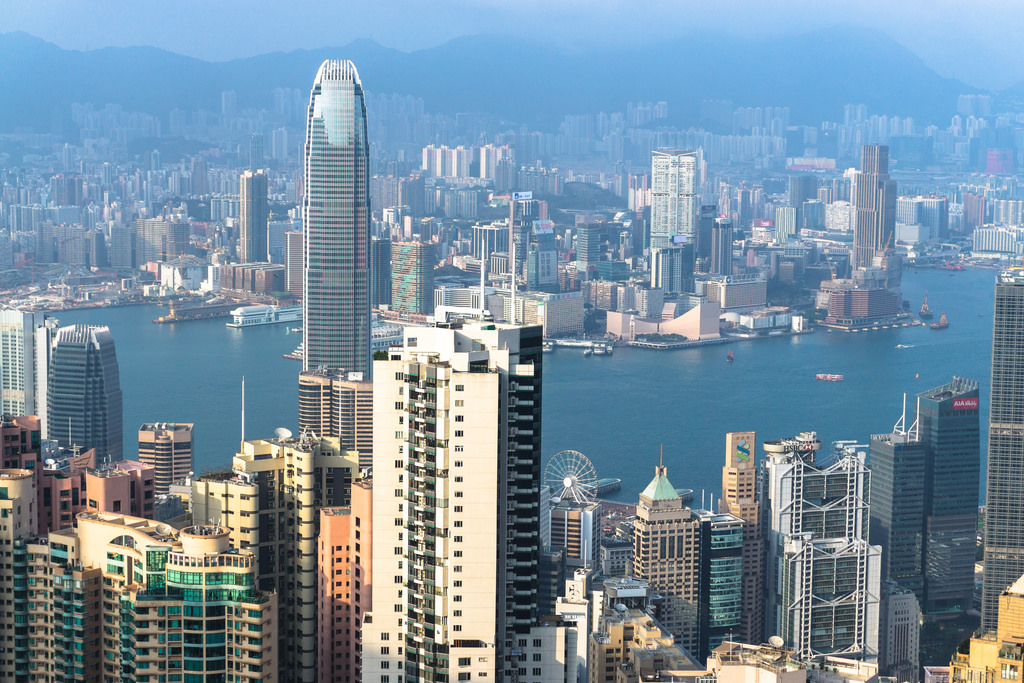
photo credit: pablocba Vista desde Victoria Peak, Hong Kong. via photopin (license)
The Problem of Taiwan Product Positioning: Prices Cannot Match Southeast Asia, Quality Cannot Catch Up with Japan
The densely populated island of Hong Kong, together with Kowloon and the New Territories, covers an area equivalent to four times the size of Taipei City; but the main economic activity is on Hong Kong Island and in Kowloon, with at least 500 supermarkets and large hypermarkets, among which are distributed supermarkets that serve the high-end top-tier customer base and those of ordinary specifications; some are operated by Hong Kong people, and some are foreign-invested chain systems. For Taiwanese fresh agricultural products to break into Hong Kong's supermarket channels, the first problem encountered is "product positioning."
The greatest awkwardness of Taiwan's fresh fruits and vegetables lies in the fact that "the price is higher than others, but the quality is not necessarily better than others," especially in Hong Kong, this internationalized city, where agricultural products from all over the world are sent here, and in addition a grand Hong Kong fruit exhibition is held every autumn. Hong Kong citizens not only have picky tastes, but for the budget-conscious residents of the Hong Kong government, every cent must be spent where it counts. If the fruit does not taste good, being cheap is useless; if the fruit is expensive and does not taste good, it is even more impossible to sell!
Taiwan's Fruit Is "Not Oriented Toward Export Production," with No Strategic Variety Thinking
Taiwan, located in the subtropics, although it has everything from the tropical fruits of Pingtung to the cold-climate fruits of Lishan in Taichung, compared with the cheapness of Southeast Asia, our fruit export prices are sky-high; compared with the quality of cold-climate fruits, we need not even compete with Japan, let alone in subtropical fruits.
It is not that our farmers are not striving, but that many of our fruits are "not varieties suitable for export," nor are they supplied by "specialized production zones for professional export." This is a major inherent test that can be immediately drawn from the Hong Kong experience, namely the big question of where the "strategic fresh agricultural products suitable for export" are?!
To Sell to the Hong Kong Market, One Must Face International Competition
The Hong Kong market is very realistic; what you must face is international competition, not merely comparing yourself with yourself. We can take pride in our fruit kingdom, and we can tell how much foreign exchange bananas, pineapples, and asparagus earned for Taiwan last century, but after all, these are all things of the past; in the face of an open, freely competitive market like Hong Kong, under "capitalism above all," whatever can make channel operators and importers money is a good fruit, a good product.
We keep boasting about how delicious our grapes are, but sorry, when grapes are exported to Hong Kong, they cannot make money; our organic fruits and vegetables sell astonishingly well in Taiwan, but sorry, the Hong Kong market will not accept products with such a high unit price.
Only by Helping the Buyer Make Money Can You Make Money Yourself
In those years when Japanese agricultural products were banned from export, Taiwan's fresh fruits and vegetables did indeed enjoy a fine spell in Hong Kong's supermarket channels: wax apples, red-fleshed guavas, honey dates, red-fleshed watermelons, sweet potatoes, bitter melons, netted melons, grapefruits, grapes, sugar apples, sweet persimmons, lettuce, cabbage, organic eggs, almost any fresh agricultural product you could imagine, Hong Kong traders shifted their orders to Taiwan because of the "shortage of Japanese goods." But very quickly, Taiwanese exporters began engaging in price-cutting competition to grab orders, and along with the successive lifting of the Japanese agricultural product export bans, Taiwan's fresh fruits and vegetables, like the tide, receded back to the starting point.
Nowadays, populist slogans like "goods out, people in, make a fortune" are shouted at a deafening volume; but on careful thought, before making others' money, must one not first let others also make money? Especially in matters like trade exchanges, how can there be a principle that I make all the profit and you bear all the loss; from the example of the Hong Kong market, one can learn that "finding a model/product that can make money for the buyer" is the fundamental logic of how capitalism operates. How to "train one's own foundations well" to compete in the international market is not only the royal road to business success or failure, but also where the knack lies for whether agriculture/agricultural products can go out into the world.
Series Reading:2019 Agricultural Political Trade War Series Reading
(Series note: The 2005 "Lien-Hu meeting" thawed cross-strait relations and created a boom in Taiwanese fruit sales to China; the sudden rise and fall of political procurement brought multiple effects on Taiwan's agriculture. In 2019, China's agricultural political trade war against Taiwan rose again. How should Taiwan respond? "Upstream and Downstream" invited experts to analyze, and the special topic will continue to be published.)