How to grow small potted pitcher plants: care methods and precautions
...........................................More home plant care.......................................
Daily snapdragon care methods and precautions How to grow poinsettia, what are the care methods
How to grow stonecrop, a summary of stonecrop care methods A complete guide to growing Daphne odora 'Aureomarginata': care methods and precautions
Crinum lily pictures/introduction to crinum lily care methods Is Lycoris aurea toxic/introduction to Lycoris aurea care methods
Nature is a mysterious place, filled with flowers and plants that have very unique functions, such as the well-known carnivorous plants. In fact, there are especially many carnivorous plants in nature, but those currently known to people are still relatively few, and the pitcher plant is one of them. The pitcher plant is named pitcher plant because its shape resembles a pitcher. It is a powerful trap for catching insects, so it is widely cultivated in some places. So how should pitcher plants be grown? Let us take a look together below.
¤ Introduction to pitcher plants
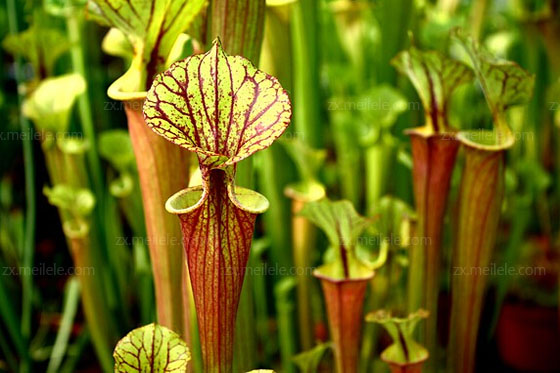
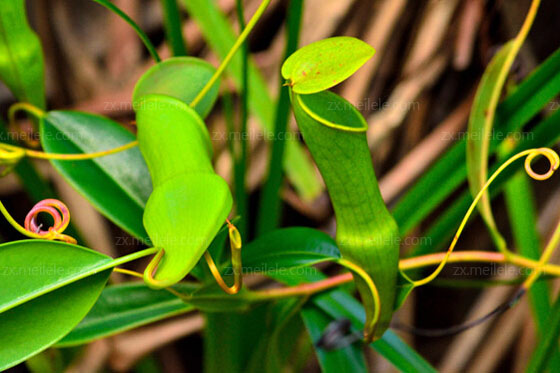
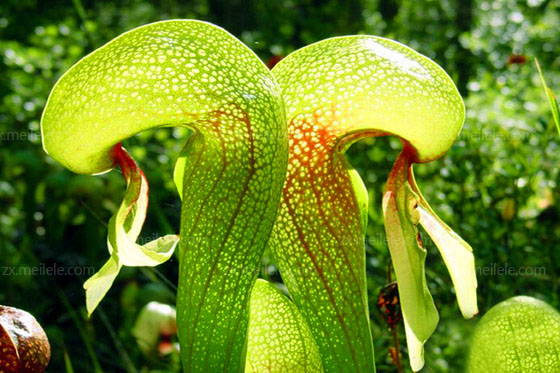
The pitcher plant, whose scientific name is Sarracenia, is a carnivorous plant in the order Ericales, family Sarraceniaceae, genus Sarracenia. Unlike ordinary carnivorous plants, the appearance and form of the pitcher plant are actually quite beautiful. In terms of appearance, its leaves are quite peculiar; some are tubular, some are trumpet-shaped, and some are even pitcher-shaped. When catching insects, these pitchers either lie slanting or stand upright, and thus catch the insects. In terms of shape, its leaves form a circle like a lotus, while a often tall flower stalk is pulled out from the middle, growing a small red flower resembling a small bowl. Seen from above, it is very beautiful and lovely. Compared with generally rather frightening carnivorous plants, it is very deceptive, so some people use it as a potted plant to decorate the environment.
¤ How to grow pitcher plants
1. Soil: At present, people mostly grow pitcher plants as potted plants, so before growing them it is necessary to prepare the materials, tools, and soil needed by pitcher plants. Pitcher plants grow all year round in peat bogs or poor wetlands, so when planting artificially, white sphagnum moss can be used for planting. Pitcher plants love water very much, so the pot is best able to hold a relatively large amount of water, and it is even better if the water can reach halfway up the pitcher plant.
2. Temperature: Pitcher plants can also grow normally in the wild, so they have strong adaptability and do not have very high temperature requirements. In summer, they can successfully survive at temperatures between 21 and 35°C. In winter, pitcher plants enter dormancy and can survive at a temperature of about 5°C.
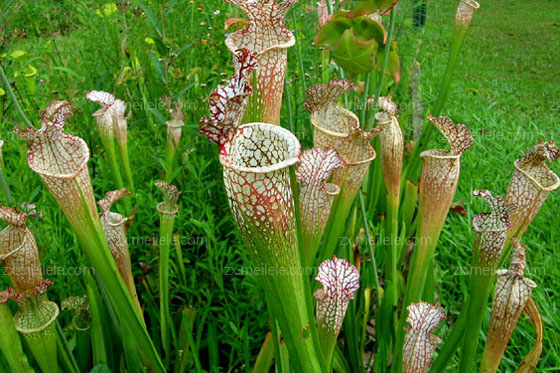
3. Watering: Pitcher plants have especially high water requirements, because they themselves are carnivorous plants that grow year-round in swamps, so providing water during cultivation is a very key part. When growing them artificially in pots, it is necessary to always keep the plant in a moist state, especially during the vigorous growth period and in summer, when water is consumed quickly. In addition to watering once a year, some misting can also be added, in both the morning and evening. In addition, when the summer weather is too hot, some water can also be appropriately added. However, in winter, when the plant enters dormancy, watering can be reduced, and it is enough for the pot to be slightly moist.
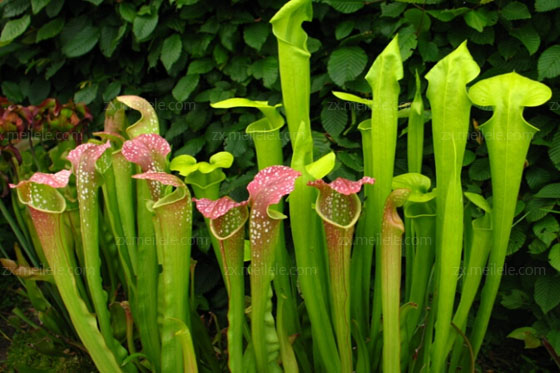
4. Light: Pitcher plants like light by nature. During cultivation, sufficient light is needed to ensure their normal growth. When growing them in pots, it is best to place them outdoors or in a sunny indoor place, trying to ensure 6 to 8 hours of sunlight exposure each day. In winter, when light is insufficient, some supplementary lighting can be added.
5. Fertilizing: Although pitcher plants can be self-sufficient and catch insects to increase nutrients, they can still be appropriately fertilized during cultivation. Fertilizing once every 3 or 4 weeks is enough, and diluted liquid fertilizer is sufficient. Fertilizer can be applied by spraying or drenching.
¤ Pitcher plant care methods
1. Natural seed propagation
Usually, pitcher plants reproduce through seeds. At the end of the pitcher plant's flowering period, the plant's petals begin to fall off and form seeds. After 5 months, these seeds mature and split open from the plant's seed pods and are dispersed. The seeds continuously absorb water and nutrients in the water flow. After a long period of development, about 3 to 5 years, they mature, take root, and sprout.
2. Artificial potted planting
Pitcher plants in nature need a very long period of time to mature, so generally people create a suitable growing environment for pitcher plants and grow them in pots. This is also potted pitcher plants. This method is similar to the planting methods for other potted plants; it is a planting process of seed germination, leaf growth, transplanting, and final planting.
Conclusion: The pitcher plant is a relatively common carnivorous plant in our lives. Unlike ordinary carnivorous plants, this plant is still quite beautiful and lovely in appearance, so many people keep it at home as a plant decoration, and the effect is quite good.
[You may be interested in]
☑ Information on Boston ivy ☑ Indoor foliage plants ☑ Blue enchantress flower language ☑ Wintersweet bonsai making ☑ Bead embroidery
☑ Characteristics of peonies ☑ Home flower care ☑ How to grow Aglaia odorata ☑ Potted plant pictures ☑ Caladium