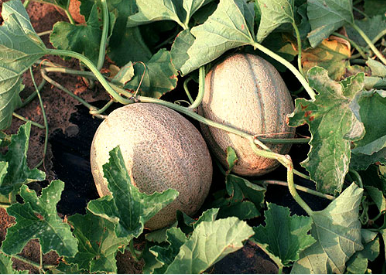
Planting Techniques and Questionable Points for the High-Yielding Melon Variety Fast Break
Fast Break melon, this melon, do you know it? This variety of melon has excellent flavor and sweet light orange flesh. A very high-yielding variety. It is one of the earliest maturing melons you can grow.
Start melon seeds indoors at least 3-5 weeks before the last frost date, in a seed starting mix or a good soil mix. Sow 3-4 seeds in 3-4 inch pots. Keep the soil moist and maintain the temperature between 27-30ºC (80-90º). Once seedlings appear, lower the temperature to 24ºC (75ºF) for about a week, until the first true leaf begins to appear. Thin each pot to one plant with scissors, and lower the temperature to 18-21ºC (65º-70ºF). Seeds should germinate within 3-7 days. Direct sow when the soil temperature rises to 23-29˚C (75-85˚F). If direct sowing, plant the seeds 1-2 weeks after the last frost date. Sow 3 seeds per hill, at a depth of 12 mm (½ inch), 45 cm (18 inches) deep. Space rows 122-182 cm (4-6') apart. We start melon seeds under lights, and move them to the greenhouse when they germinate. At least 4 weeks before transplanting outdoors, sow in 12 mm (1/2 inch) deep pots in organic-rich soil. An outdoor temperature of 23˚C (75˚F) is sufficient to ensure seedling growth. Gradually harden off the seedlings before transplanting by lowering the temperature and water. We transplant directly into the garden by transplanting double transplants into hills spaced 45 cm (18 inches) apart, with rows 122-182 cm (4-6 feet) apart.
Soil conditions: works well in rich, loose, well-drained soil. Ideal pH: 6.0-6.8.
Planting depth: 12 mm (½ inch) deep.
Germination: 3-7 days.
Height at maturity: vining habit. Fastbreak melon will grow to about 30 cm (12 inches) tall, and the vines about 1.5 m (5') long.
Days to maturity: 65-85 days to maturity from transplant.
Watering: one inch of water per week ensures good growth. This week's rainfall will affect how much you water your garden. Keep the soil consistently moist. Try to water evenly throughout the growing season until harvest. We use drip irrigation to keep the leaves dry and slow disease development.
Sun/Shade: full sun
Spacing after thinning: space plants 45 cm (18 inches) apart, with rows 122-182 cm (4-6 feet) apart.
Cantaloupes slip from the vine when ripe. Charantais melons have thick netted skin and can be cut. Galia melon types slip from the vine, and are ready when the skin turns bright yellow; honeydew can be cut from the vine when the skin changes color. Other ripeness indicators are when the leaf closest to the fruit dries and shrivels and the stem becomes hard and woody. Isolate different melon varieties by 1/4 mile to prevent cross-pollination. Tree lines, woods or buildings separating fields can allow shorter distances. Eat the melon when ripe. Remove the seeds and flesh, and rinse under water until the seeds are clean. A light fermentation with a small amount of water can sometimes help the cleaning process. Simply add 1 cup of water to each cup of seeds and flesh, then let stand in a warm place for 2-3 days, stirring daily. Then rinse under water and dry the seeds on a tightly woven cloth or plate. We plant our seeds after removing immature and light seeds. Under cool and dry storage conditions, melon seeds will remain viable for 5-6 years.