Is the Qianchuanzi toxic? Detailed guide to growing it
Qianchuanzi - hearing this name, many friends will instinctively think of the house centipede, because the house centipede is also called Qianchuanzi, but the Qianchuanzi here is not the house centipede, it refers to Chuanqian Jingtian, a perennial succulent plant of the genus Crassula in the family Crassulaceae. Its leaf shape and leaf color are beautiful, and it is deeply loved by people. Many friends grow it, but is this Qianchuanzi toxic, and what growing methods and precautions are there for growing Qianchuanzi in daily life? Below let us take a look at Qianchuanzi and its growing methods.
More home plant growing: Home growing methods for Ixora chinensis, Home growing methods for carnations, Spring orchid growing methods
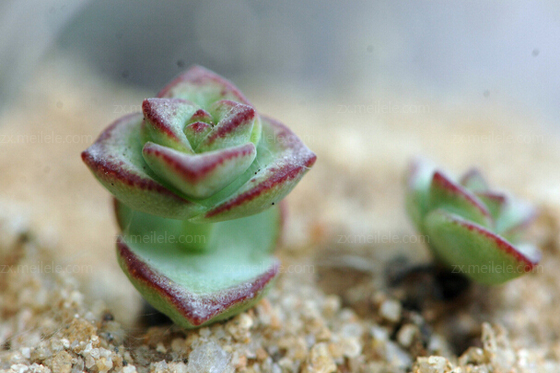
¤ Is Qianchuanzi toxic
The succulent plant Qianchuanzi is not toxic, this is the truth. As for whether Qianchuanzi is toxic, most friends who have this doubt have confused the succulent plant Qianchuanzi with the Qianchuanzi of the Scutigeridae family. Because the names of the two things are the same, many friends who are not clear about the succulent plant Qianchuanzi think this plant is toxic, but the actual situation is that the succulent plant Qianchuanzi, that is, Chuanqian Jingtian, is absolutely non-toxic, and the toxic Qianchuanzi we talk about in daily life actually refers to the Qianchuanzi of the Scutigeridae family.
¤ Complete guide to Qianchuanzi growing methods
1. Temperature: The plant Qianchuanzi is a succulent plant native to South Africa, so it likes a cool and dry growing environment, and is a winter-growing type among many succulent plants. Its suitable growing temperature is about 20 to 32 degrees, and it is relatively cold-tolerant in winter, able to survive at 5 to 10 degrees, but if the temperature is below 5 degrees, the plant may suffer frost damage, and in severe cases may freeze to death, so pay attention to keeping it warm.
2. Light: Qianchuanzi likes light, but at the same time it is very unsuited to long periods of strong direct sunlight, so in summer growing, attention should be paid to proper shading to avoid the plant being exposed to the scorching sun, so that the plant leaves can also avoid the risk of sunburn.
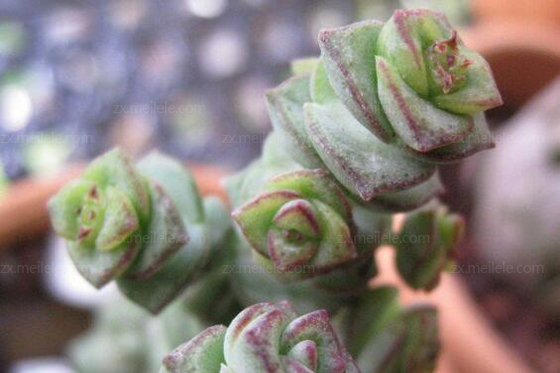
3. Soil: Qianchuanzi does not have high requirements for soil, but it also needs loose, breathable, fertile soil with good drainage. Usually people can mix it themselves, using leaf mold, garden soil and coarse sand mixed in proportion.
4. Watering: Qianchuanzi likes a dry environment and is a drought-tolerant plant. It greatly dislikes waterlogging and a stuffy, hot and humid growing environment, so in daily growing, the number and amount of watering must be strictly controlled. Especially during the growing period and in summer, water by the principle of watering when dry and stopping when wet, and moderate watering is enough. In winter, if the temperature is above 10 degrees, it can be watered, but if it is below 10 degrees or even 5 degrees, stop watering.
5. Fertilizing: The growth of Qianchuanzi needs sufficient nutrient supply, and the demand is greater during the growing period. It needs to be fertilized once every half a month, and ordinary decomposed dilute liquid fertilizer is fine. In winter, if the indoor temperature is kept above 10 degrees and the plant grows normally, fertilizing can continue, but apply as appropriate.
6. Pruning: During the growing process, Qianchuanzi should be pruned frequently, cutting off excess branches on the plant to keep the plant shape beautiful.
7. Pest and disease control: Qianchuanzi generally develops gray mold. In this case, carbendazim or chlorothalonil can be used for treatment and prevention.
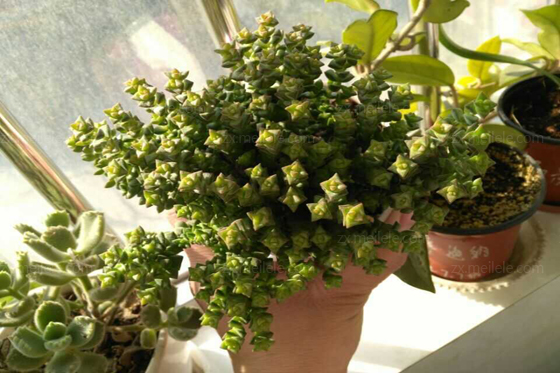
Summary: Qianchuanzi is not toxic, but this only refers to the plant Qianchuanzi, and not all Qianchuanzi are non-toxic, so everyone must be clear about what Qianchuanzi is in daily life. Chuanqian Jingtian Qianchuanzi is completely non-toxic and can be grown.
(Note: This article is original, and reproduction is prohibited without permission. If malicious reproduction is found, legal action will definitely be taken. If you like it, share it more.)
[You may be interested in]
☑ Crochet basics for beginners ☑ Growing methods for Buddhist pine ☑ Shower curtain fabric ☑ Silkworm dung pillow ☑ Gel pillow
☑ Growing methods for Christmas cactus ☑ Propagation methods for Kalanchoe blossfeldiana ☑ Sherpa fleece ☑ Quilted quilt ☑ Double-sided embroidery