How to Grow Camellias? A Complete Guide to Cultivation Methods and Propagation Techniques
Introduction: Camellia is a flower variety favored by many women. Camellia, also known as camellia flower or dongnai flower, is a plant in the Theaceae family of the order Ericales. Because of its graceful plant form, dense and glossy dark green leaves, and brilliantly colorful blooms, camellia is treasured by the world's horticultural community, and its flower language is lovable, modest, and prudent. Below we will explore camellia cultivation methods and propagation techniques together.
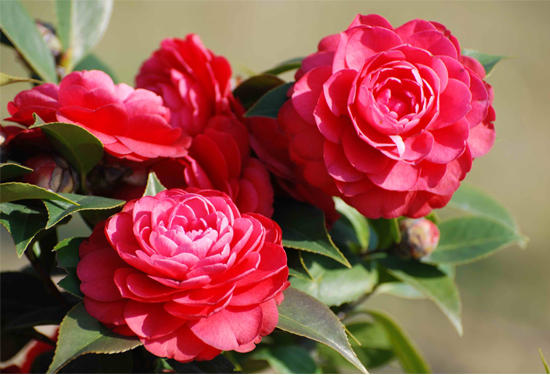
The suitable growing temperature for camellias is between 15 and 32°C, and they require a certain temperature difference, with environmental humidity above 60%. Most varieties can tolerate low temperatures of -8°C. The cultivation soil for camellias should be acidic and require good air permeability. To facilitate root hair development, peat, decomposed sawdust, red soil, humus soil, or a mixed substrate of the above can usually be used for cultivation.
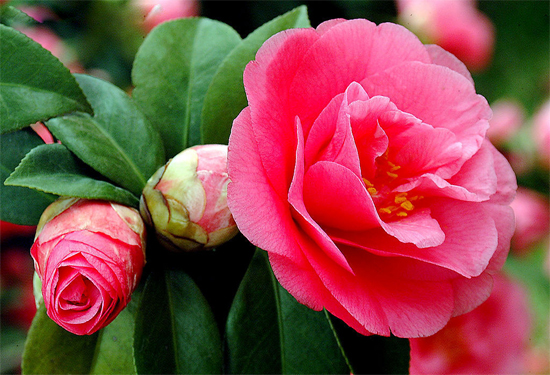
Camellias are normally watered with neutral or slightly acidic surface water. Watering should follow the principle of "dry then wet" - water when dry, and water thoroughly, but be careful not to let the soil become excessively dry. Generally, before buds set at the end of spring shoots, water should be appropriately withheld to facilitate the transition to reproductive growth, and water must not be cut off before flowering.
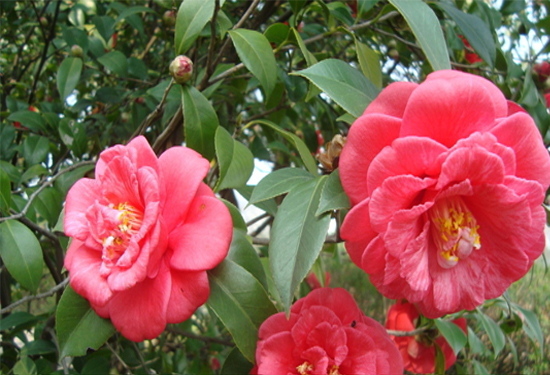
Camellias like fertilizer, so when potting, base fertilizer should be placed in the potting soil, mainly phosphorus and potassium fertilizer. Fertilizers applied include decomposed bone meal, hair, chicken feathers, rice hull ash, poultry manure, and superphosphate. Normally, too much fertilizer should not be applied. Generally, 2 to 3 applications of dilute fertilizer water are given between April and May after flowering, and one application of slightly concentrated liquid fertilizer in November in autumn is sufficient.
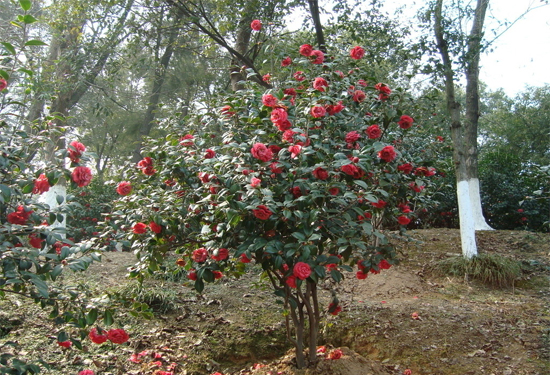
Camellias grow relatively slowly and should not be pruned excessively. Generally, it is enough to cut off leggy branches that affect the tree shape, as well as diseased, pest-infested, and weak branches. If there are too many flower buds on each branch, thin them out to keep only 1 to 2, maintaining a certain distance, and remove the rest early to avoid consuming nutrients.
Recommended reading: The Flower Language and Legends of Poppies, 2012 Jasmine Cultivation Methods