How to Grow Spider Plants? Indoor Care Methods and Planting Tips
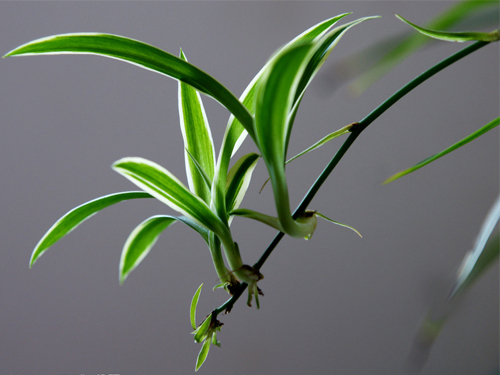
Introduction: The most distinctive feature of the spider plant is that mature plants will from time to time send out runners, with slender scapes, longer than the leaves, arching and drooping; the raceme is single or branched, and sometimes 2-8 cm strap-shaped leaf clusters also grow in tufts at the upper nodes of the inflorescence. The flowering period is between spring and summer, and it can also bloom indoors in winter. Now let's learn about spider plant care methods and growing tips together.
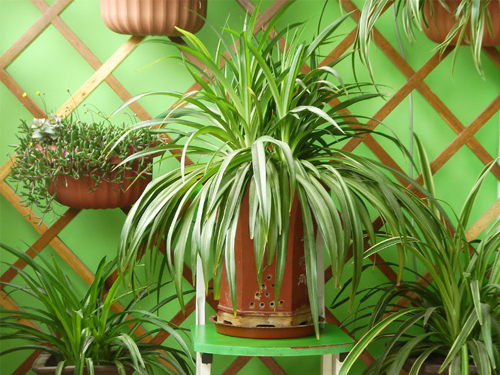
It likes a warm, humid, semi-shaded environment. It is highly adaptable and relatively tolerant of drought and cold. It is not choosy about soil, and grows best in loose sandy loam. It is not strict about light, generally suitable for growing under medium light conditions, and also tolerates weak light.
Except in winter, when the temperature is too low for division, it can be done in any other season. For potted plants that have been grown for 2-3 years, when repotting in spring, remove the old potting soil from the crowded clumps, divide them into two to several clumps, and pot them separately to become new plants. Spider plants can also be propagated using the small plantlets on the runners. During the growing season, cut off the small plantlets on the runners, plant them in potting soil or water, and transplant them into pots after the plantlets have rooted.
For potted spider plants, a common substrate is leaf mold or peat soil, garden soil and river sand mixed in equal parts with a small amount of base fertilizer added. Repot once every 2-3 years, and remake the potting soil. Its fleshy roots have well-developed water-storage tissue and strong drought resistance, but during the peak growth period from March to September it needs a large amount of water, so it should be watered and misted frequently to increase humidity.
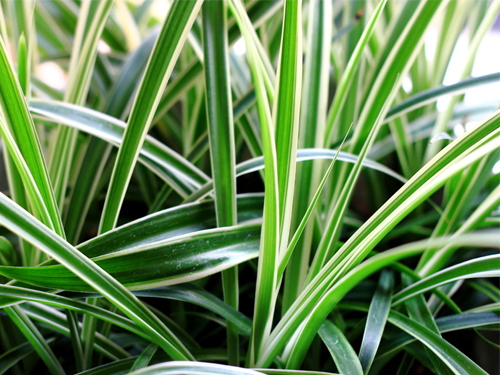
Fertilizer should be mainly nitrogen-based, but for the golden-heart and golden-edge varieties, nitrogen fertilizer should not be applied in excess, otherwise the linear markings on the leaves will become less obvious. Spider plants like a semi-shaded environment. If the placement site has too much or too little light, the leaves will easily turn pale green or yellow-green, lose their vitality, lose their proper ornamental value, and even dry up and die.
Recommended reading: Indoor Care Methods for Night-blooming Jasmine, Indoor Growing of Gardenia