What Does Wintersweet Look Like? Morphological Characteristics and Floral Language Explained
Wintersweet generally blooms during the cold winter months, that is, from December of each year to March of the following year. Its flower colors are mainly red, yellow and white, and its fragrance has a solid, rich quality. Next, we will introduce wintersweet to you.
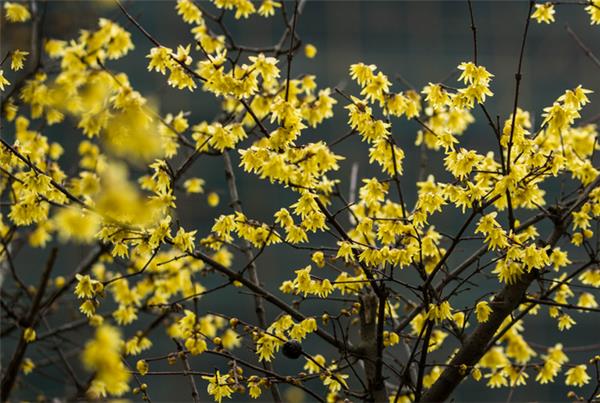
Morphological Characteristics of Wintersweet
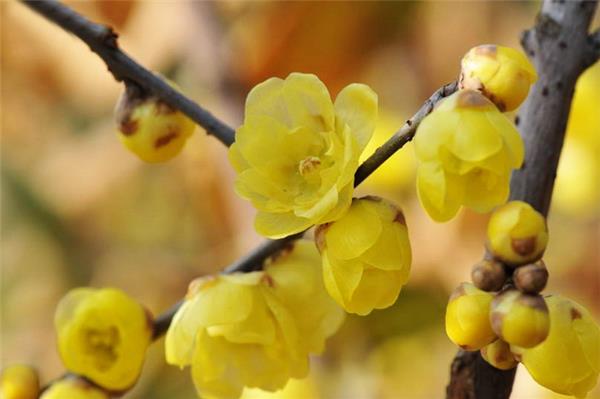
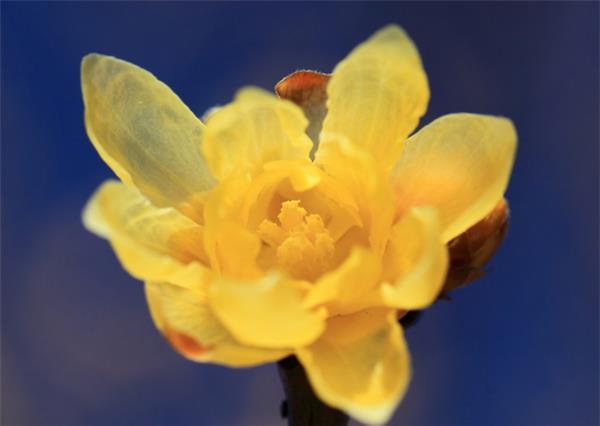
Wintersweet (Chimonanthus praecox), a deciduous shrub, 2-4 m tall. Stems grow in clusters, much branched, bark grayish white. Leaves opposite, with short petioles, without stipules, leaf blades ovate or oblong-lanceolate, 7-15 cm long, 3-7 cm wide, apex acuminate, margin entire, base cuneate or rounded, upper surface dark green and glossy, rough when old, lower surface pale green, smooth, sometimes slightly sparsely hairy on the veins. Flowers open before the leaves, yellow, richly fragrant; tepals numerous, petal-like, arranged in multiple imbricate layers, inner tepals small, middle tepals relatively larger; yellow, thin and slightly glossy, outer layer forming numerous fine scales; stamens 5-6, anthers extrorse; carpels numerous, separate, borne on the inner surface of the receptacle; ovary ovate, 1-locular. Achene, elliptic, dark purplish brown, sparsely covered with fine white hairs, containing 1 seed.
Floral Language of Wintersweet
A compassionate heart of sorrow and mourning, a noble soul, faithful, independent, resolute, loyal, strong, steadfast, faithful, loyal, pure and noble, lofty character and integrity, proud and commanding, a clear and limpid heart, noble and upright spirit, independent and innovative.
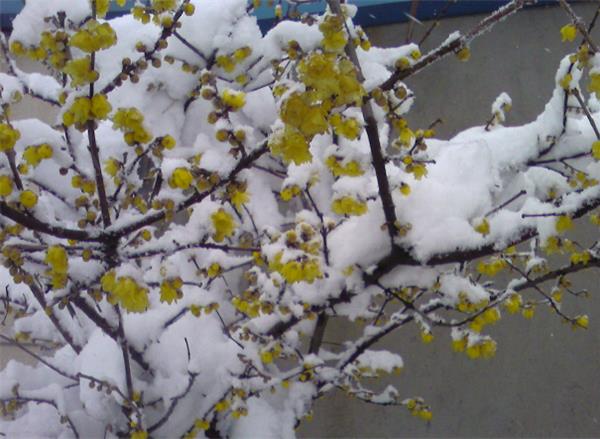
Ancient poets often compared winter plum blossoms with snow, which shows that plum blossoms were already regarded by the ancients as unafraid of the cold. All along, plum blossoms have also always been considered a symbol of strength and pride. The Tang dynasty poet Li Shangyin called wintersweet "cold plum," with the line "Knowing to visit the cold plum past the wild pond." Wang Anshi's poem "Plum Blossom" is even more widely known.
How Are Wintersweet Flowers
There is a saying about wintersweet: "wintersweet that will not die of drought," which fully demonstrates that wintersweet has very strong drought tolerance, so wintersweet bonsai is not sensitive to water needs. Generally, in spring and autumn, do not water unless the potting soil is dry; in summer, water once each morning and evening. During the flowering period of wintersweet, do not water too much or too frequently, otherwise it will cause the wintersweet flowers to drop.
Wintersweet likes fertilizer, but it should not be too concentrated. Fertilization is generally done once a month with liquid fertilizer from April to November, and one additional fertilization can be added in late June to prepare nutrients for flower bud differentiation.
To ensure good ornamental value for wintersweet bonsai, pruning of the branches is necessary. The pruning method for wintersweet bonsai depends on the tree shape decided in advance. Taking the pruning method for a tree-like shape as an example, during the seedling stage of wintersweet, select one thick, strong branch and train it as the trunk. After the trunk grows to the desired height, pinch the growing tip (pinching the growing tip means topping, which is the work of treating the reserved trunk branch, basic branch or side branch) to form the crown.
The above is an introduction to wintersweet; I hope you will like it.