How to grow a golden barrel cactus so it thrives
The golden barrel cactus is one of the most attractive plants among the cacti, with a round, jade-green body and hard, golden-yellow spines. In cultivation there are also several main varieties, such as the white-spined golden barrel, the fiercely-spined golden barrel, the short-spined golden barrel, the variegated golden barrel, and the crested golden barrel, so how do you grow a golden barrel cactus?
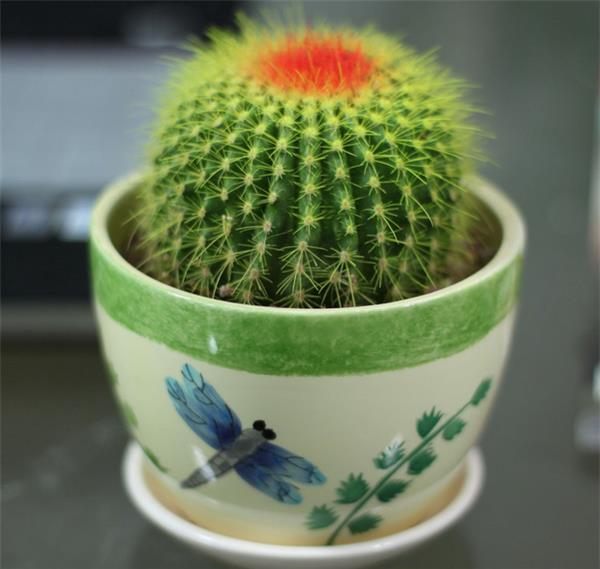
How to grow a golden barrel cactus
First, its sowing method: seeds of the golden barrel are very hard to come by, and generally only plants over 30 years old will set seed. So propagation is usually done by cuttings or grafting. If it has no roots, do not water it at first; wait until it slowly puts out small white roots before you start watering. Watering is not a matter of a set number of days or months; it depends on the actual situation. If the soil has completely dried out, you can water a little, and there is no need to soak it through. Especially when the root system is not yet well developed, it can take root in as little as half a month.
In the process of growing and managing the golden barrel, the most important thing is managing light. Do not leave it for long periods in a rather dark spot indoors; it should be placed on a south-facing windowsill or balcony. Strong summer sunlight will scorch the stem of the golden barrel, so a little shading is needed. In winter it should be kept indoors somewhere that gets direct light or bright diffused light. Temperature - the suitable growing temperature is 20-25 degrees, and in winter the temperature must not fall below 8 degrees, otherwise yellow spots will appear on the surface of the body, especially in early spring, and in severe cases it will rot.
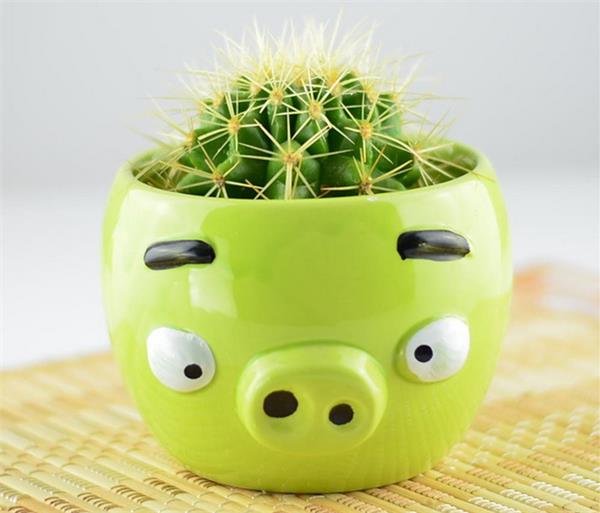
The golden barrel is a drought-tolerant plant, but if it is too dry it grows slowly. When growing the golden barrel, watering should follow the principle of "do not water until dry, and when you water, water thoroughly." During winter dormancy, watering should be controlled and kept as little as possible. In summer, if there is drought, water frequently, preferably in the early morning and toward evening; never pour cold water at hot midday, as this easily causes a "chill" that leads to disease. If the potting soil is too dry at midday, a little sprinkling to moisten the surface of the pot is enough; do not spray water on the top of the body or on the grafted part, to avoid water collecting and causing rot.
In spring and autumn, every 15 days or so, apply a suitable topdressing of cake fertilizer, bone meal, or well-rotted dilute liquid, and remember to keep it light rather than concentrated. If the topdressing is a quick-acting chemical fertilizer such as urea or monopotassium phosphate, be especially careful not to let the fertilizer stick to the body. After each fertilizing, spray once with clean water to prevent the fertilizer from damaging the body. In winter and summer, and for newly planted or newly transplanted golden barrels, fertilizing should be stopped.
The golden barrel cactus is naturally robust and highly resistant to disease, but in summer, due to dampness, heat, poor ventilation and other factors, it is susceptible to red spider mites, scale insects, whiteflies and other pests and diseases, so control should be strengthened. For red spider mites, spray with a 1000-1500 times dilution of 40% dimethoate or 90% trichlorfon. When scale insects, whiteflies and the like are found doing damage, they can be removed by hand.
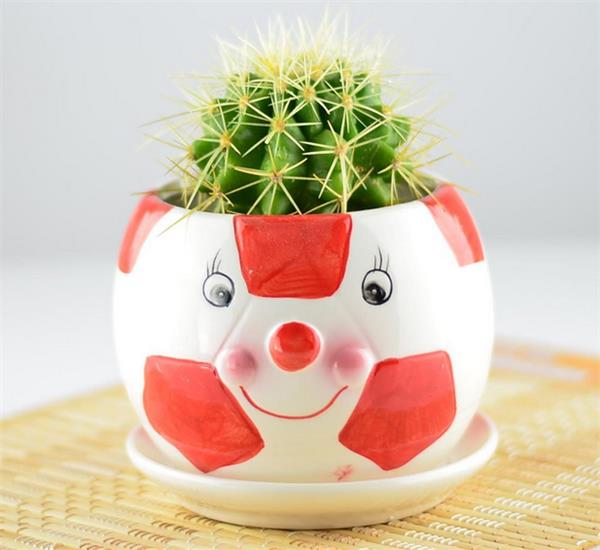
How to grow and care for the golden barrel cactus
Propagation techniques: The golden barrel is propagated by seed and by grafting of offsets.
1. Sowing method: seeds harvested in the same year give a high germination rate. Sowing is done from May to September, and 30-40 days after germination the seedling body is already the size of a grain of rice or a mung bean, and it can be transplanted or grafted onto a rootstock to speed up growth.
2. Offset grafting method: this is grafting seedlings raised for more than 3 months onto tender Hylocereus undatus to speed up growth. When the scion has grown to a certain size or the rootstock can no longer support it, it can be cut off, and after the wound is dried, it can be rooted as a cutting and potted. In a good environment with fertile soil and good air circulation, seedlings that have not been grafted also grow quickly. After potting, seedlings or grafted offsets should be placed in half shade and kept out of direct sunlight; if after 7-10 days the body has not shriveled, it has taken.
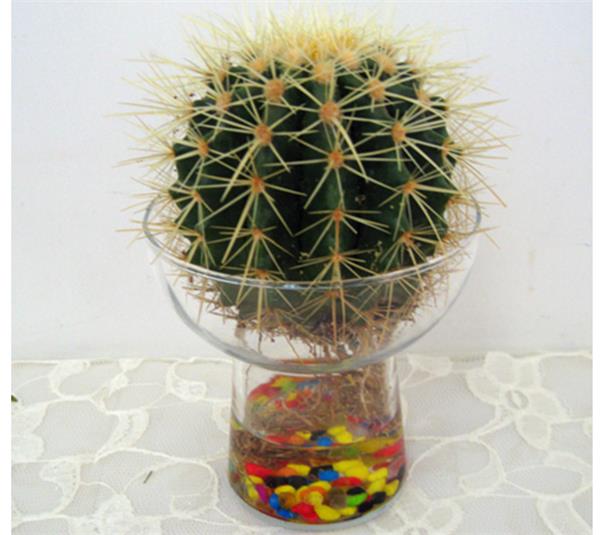
Management techniques: The golden barrel likes sandy loam containing lime, and it can be mixed from equal parts coarse sand, loam, leaf mold and a small amount of old wall ash. Once a year it should be repotted with fresh soil and have its old roots trimmed. In mid-March, take the body out of the pot and cut off the old roots, without damaging the main root. After trimming, put the plant in a ventilated place to dry for 4-5 days so the cut surfaces air-dry; the new potting soil for repotting should use fermented livestock and poultry manure as a base fertilizer, mixed thoroughly with coal ash, plant ash and a small amount of animal bone meal; the pot should be disinfected by sun exposure, boiling and spraying with chemicals, to prevent the body from rotting.