What Varieties of Cactus Are There? A Complete Guide in One Article
Cacti are extremely easy to keep alive at home, can absorb many harmful substances to help purify the air, and can even treat chilblains, burns and insect bites. So do you know what varieties of cactus there are?
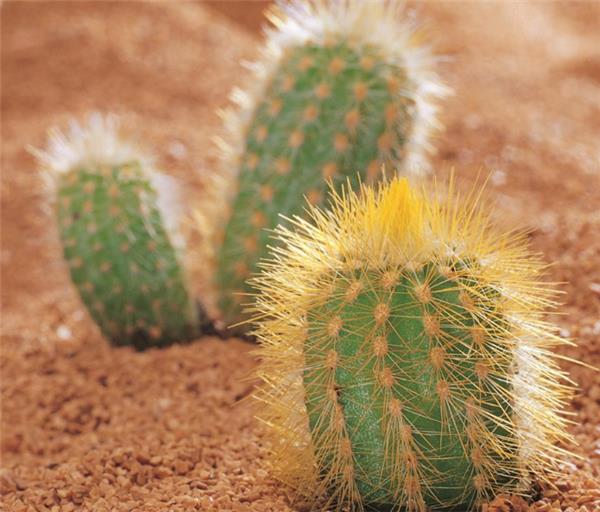
Varieties of cactus
1. Cephalocereus senilis:
The cactus, commonly known as the grass ball, also called Cephalocereus senilis, is a perennial succulent herbaceous plant of the Cactaceae family. It is native to South America and generally grows in hot, dry, low-rainfall desert regions. It likes dry conditions and is drought-tolerant. The main growing season of the cactus is summer, which is also its peak flowering season. The stem is spherical or oval, green, and the flowers grow among the spines on the vertical ribs. Cactus flowers generally open in the early morning or evening and last from a few hours to one day. The cactus is a plant whose stem, leaves and flowers all have high ornamental value; it is an artistic treasure among hydroponic flowers. The cactus also absorbs electromagnetic radiation, is a natural air freshener, and can adsorb dust and purify the air.
2. Short-haired ball:
The short-haired ball, also known as the grass ball or Cephalocereus senilis, is the most common species of the Cactaceae genus Echinopsis. The body is green, cylindrical, with neatly arranged ribs and short grayish-brown spines. Summer is its peak flowering season; the small buds grow larger and longer day by day, until they finally look like an extra-large writing brush. The flowering time is not long: it opens at 6 or 7 in the evening and withers by noon the next day. The flowers are relatively large, pure white and elegant, and give off a very pleasant delicate fragrance, which is rarely seen among other cacti. Its proudly upright posture has a standout quality, and this is probably the reason it is called the "Queen of the Night" in Europe and America. The short-haired ball has very strong vitality; as long as watering is controlled and it is kept indoors in winter, it generally will not die. The body readily produces offsets, and any one broken off and placed on soil will survive. Although the short-haired ball is ordinary, it is still quite widely owned among us flower and plant enthusiasts.
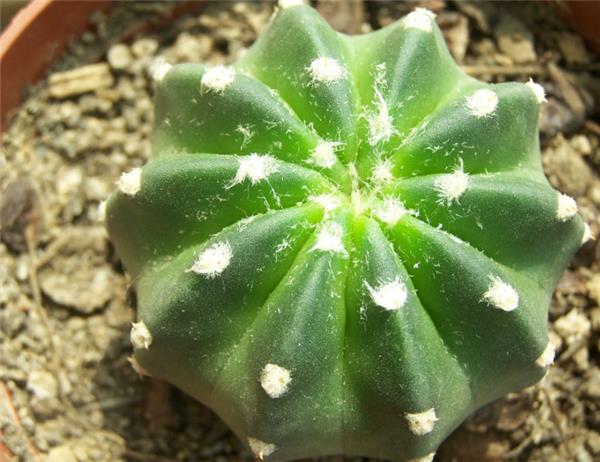
3. Cephalocereus senilis:
Cephalocereus senilis is the most common cactus, a perennial succulent herbaceous plant of the Cactaceae family. From South America, it originated in hot, dry, low-rainfall desert regions and has developed a preference for dry conditions and drought tolerance. It fears waterlogging; in winter it is more cold-tolerant than other cacti and can withstand low temperatures of 2-5 degrees. It likes to grow in well-drained sandy soil. Summer is the flowering season, and the flowers are large and beautiful, much loved by people. The stem is spherical or oval, up to 25 cm tall, green, and the body has several vertical ribs densely covered with spines, yellow-green, of varying lengths, arranged in a radial pattern. The flowers grow among the spines on the vertical ribs, silvery white or pink, in a long trumpet shape up to 20 cm long, with scales on the outside of the trumpet and long hairs in the scale axils. Cactus flowers generally open in the early morning or evening and last from a few hours to one day. The body often produces many small offsets on the sides, graceful and elegant in form.
4. Golden ball:
The scientific name is Golden ball, with alternative names Golden pill, golden-spined grass ball and grass ball. Its place of origin is southern Brazil. The body is yellow-green, clumping, with large white flowers. It likes warm, humid summers and slightly dry winters, requires ample sunlight but avoids direct strong light, is drought-tolerant, fears waterlogging, and is slightly cold-tolerant. The optimum growing temperature is 15-25°C; placed in a sunny spot in winter, it can withstand low temperatures above 0°C.
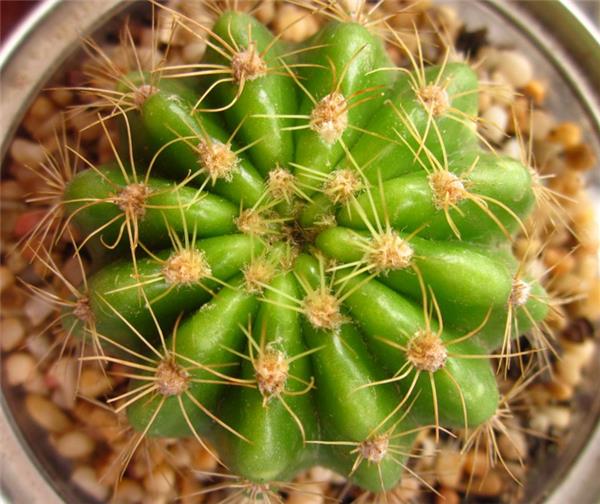
5. Vigorous ball:
The vigorous ball has a grayish-green body, spherical or cylindrical, with large dark pink or deep red flowers. Its place of origin is southern Brazil, Uruguay and northern Argentina. It is solitary or forms clusters from offsets at the base. It has 14 ribs with gentle ridges and slightly protruding areoles. There are 5-15 radial spines, 1.5 cm long; and 2-5 central spines, slightly longer; all spines are pale yellowish-brown with black tips. The flowers are 22 cm long and pale red.
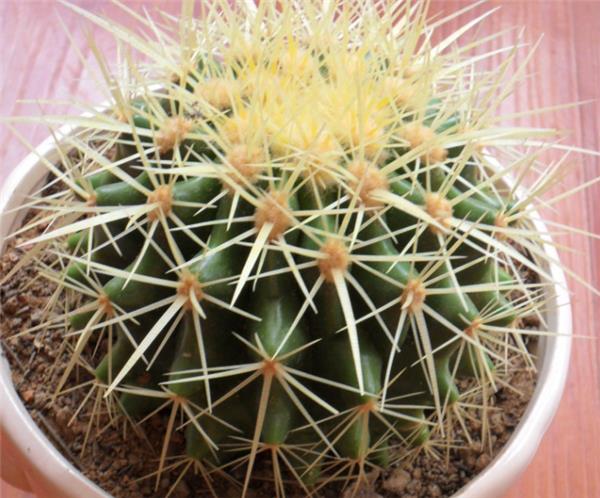
6. Golden barrel cactus:
The golden barrel cactus, also known as the yellow-spined golden barrel and the ivory ball, has more than ten main varieties including the white-spined golden barrel, the wild-spined golden barrel, the short-spined golden barrel, the golden barrel variegata and the golden barrel crest. The golden barrel cactus has a round, emerald-green body and hard, steel-like golden-yellow spines; the top of the body is densely covered with a ring of golden-yellow fuzz, and the flowers grow in the woolly cluster at the top of the body, bell-shaped. The golden barrel cactus is a perennial succulent herbaceous plant of the Cactaceae family and is the representative of the strongly spined cacti. It is native to the dry, hot desert regions from San Luis Potosi to Hidalgo in central Mexico; the wild golden barrel cactus is an extremely endangered rare plant. Grown indoors in a pot, the golden barrel cactus can reach 80 cm in diameter, showing a golden-jade color and an air of magnificence, and it can adsorb dust and purify the air.
From their appearance, cacti can be divided into: fuzzy types, warty types, treasure types, woolly column types, strongly spined types, sea urchin types, top-flowering types and so on. The spines and hairs of cacti also differ in being long, short, sparse or dense; the colors of the hairs include red, yellow, golden yellow and so on. Among them, the cactus varieties that can be grafted include Gymnocalycium mihanovichii, green Gymnocalycium, Schlumbergera, Red Sun, golden ball, golden button, white jade cactus and Christmas cactus, among others.
From the perspective of whether they are edible, cacti can be divided into edible and ornamental cacti, and there is a slight difference between the two: the edible cactus has 12-14 ribs, with straight and very hard spines; the ornamental cactus is not edible, its ribs may be many or few, its shapes are also varied, and its spines are soft and pale yellow; the edible cactus is dark green and the whole plant has a strong cactus scent, while the ornamental cactus does not.
The spines and hairs of cacti also differ in being long, short, sparse or dense; the colors of the hairs include red, yellow, golden yellow and so on. Among them, the cactus varieties that can be grafted include Gymnocalycium mihanovichii, green Gymnocalycium, Schlumbergera, Red Sun, golden ball, golden button, white jade cactus and Christmas cactus, among others.From the perspective of whether they are edible, cacti can be divided into edible and ornamental cacti, and there is a slight difference between the two: the edible cactus has 12-14 ribs, with straight and very hard spines; the ornamental cactus is not edible, its ribs may be many or few, its shapes are also varied, and its spines are soft and pale yellow; the edible cactus is dark green and the whole plant has a strong cactus scent, while the ornamental cactus does not.