How to Grow a Ball Cactus? I'll Teach You the Correct Cultivation Method
Nowadays, more and more people are starting to grow green plants indoors to purify the air and decorate their homes, and the ball cactus is very suitable for people who have no time to care for plants, or who are simply lazy. But how do you grow a ball cactus?
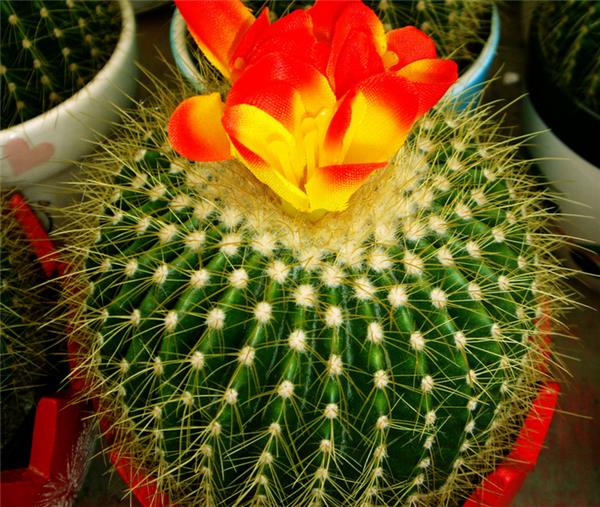
How to Grow a Ball Cactus
1. Soil
The ball cactus is a desert plant and prefers acidic and slightly acidic soil conditions. It also likes sandy ground, so you had best prepare some sand. However, water in sand evaporates very quickly, so to help the ball cactus grow better, you can lay a layer of soil beneath the sand, which can retain moisture to a certain extent so you don't have to water it every day. Since the ball cactus has an underdeveloped root system, the soil must be rich in organic matter and loose and breathable. The usual growing medium is humus soil sun-dried for 2 to 3 days plus phosphorus and potassium fertilizer; generally, for every 50kg of potting soil, mix in 1kg of superphosphate and 0.5kg of potassium phosphate as a base fertilizer.
2. Light
The ball cactus is a plant that greatly loves sunlight, but if the temperature exceeds 36°C, it should also be shaded. The ball cactus is not suited to being kept indoors for long periods, as this easily causes its color to turn black. Generally, about once a month, place it outdoors in the sunlight for 2 to 3 days, then move it back indoors, and be sure to put it in a spot indoors that gets sunlight.
However, it should not be exposed to blazing sun either, because blazing sun will slow the growth rate of the ball cactus. Of course, the ball cactus will not be sunburned to death. If you want your ball cactus to grow a bit faster, you had best find it some shade when the sunlight is too intense.
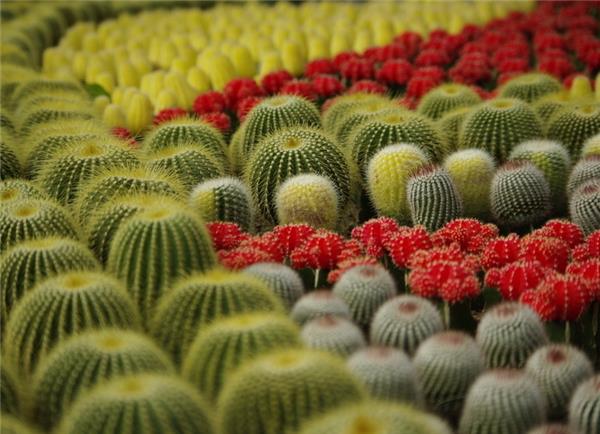
3. Water
The principle for watering is "do not water until dry, and rather dry than wet." When watering, do not pour water into the center of the ball cactus. Generally, in spring, water once every half month; in summer, water once a week; and in autumn and winter, when growth slows, watering once every 20-some days is enough. Note that it is best to water flowers with rainwater; if using tap water, it is best to let it sit in the sun for two days before use.
However, avoid letting it get rained on. The ball cactus is not afraid of lacking water, but it is afraid of too much water. Too much water can cause the root cells to die from lack of oxygen, so be careful not to let the ball cactus get rained on on rainy days.
Because the vast majority of cacti originate from the hot, arid desert wilderness regions of South and North America, the ball cactus has a very strong water-absorbing ability in its roots, and if you water it too much, its roots will rot. Some large ball cacti will not die of dryness even if they are not watered for one or two years.
4. Fertilizing
Fertilizing is mainly based on phosphorus fertilizer. Do not fertilize too much at one time, otherwise the concentration of the soil solution will exceed the concentration of the cells in the ball cactus roots, causing water to flow outward and resulting in dehydration of the ball cactus.
You can put rice-washing water in a sealed container for half a month, then use it to water the plant. This rice-washing water is rich in nutrients and weakly acidic, very suitable for watering the ball cactus. When necessary, apply additional fertilizer; generally, in spring and summer each year, apply 1% potassium dihydrogen phosphate along with watering, 2 to 3 times a year is enough.
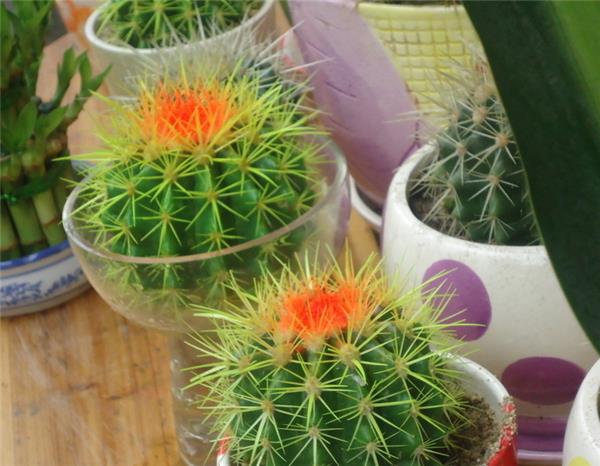
5. Temperature
The optimal growing temperature for most cacti is 20-35°C. And the vast majority of species like a relatively large day-night temperature difference. Under conditions of within 35°C during the day and around 15°C at night, it is favorable for the production and accumulation of organic matter, thereby promoting vigorous growth of the plant.
6. Repotting and Changing Soil
Generally, after the ball cactus has grown in a pot for 2 to 3 years, the soil nutrients will indeed be depleted, and the growing medium will also become compacted. At this time, it needs to be repotted. Be careful to take the ball cactus out of its original flowerpot, place some broken pieces at the bottom of the new flowerpot to help with drainage and aeration, then fill in the growing medium prepared in step one. When it is filled to 1/3, press it down with your hand, gently place the dug-out ball cactus (be sure to cut off rotten roots, old roots and diseased roots) in, fill the growing medium in around it, lift the ball cactus gently to help the roots spread out, and finally fill in the remaining growing medium and press it firm.
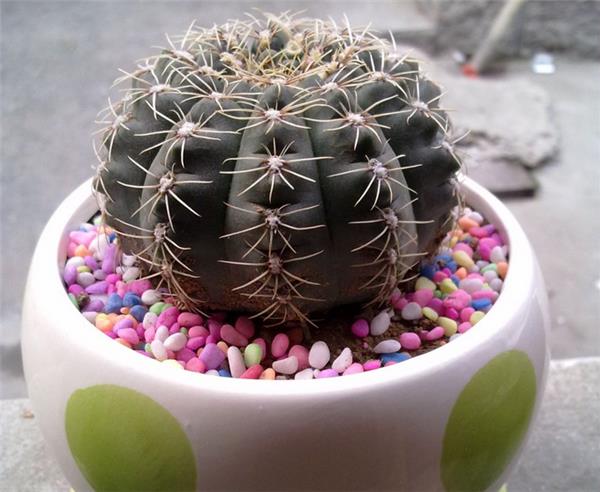
7. Pests and Diseases
The main pests and diseases of the ball cactus are anthracnose, canker, scale insects and whiteflies. The main thing is to control moisture, provide timely ventilation, and focus on prevention. Carbendazim has a certain effect on anthracnose, and streptomycin is relatively effective against canker, but the main approach is still prevention.