Do Cacti Have Leaves? It Turns Out the Spines Are Their Leaves
Do cacti have leaves? This is a question many people ask, so let's take a brief look below.
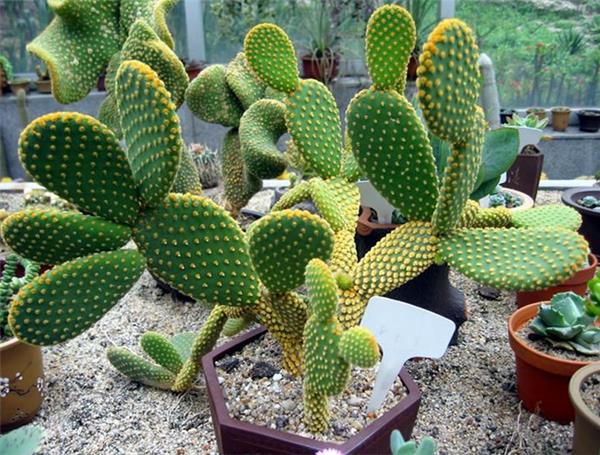
Do Cacti Have Leaves?
The answer is: yes, but in order to adapt to the dry, rain-scarce desert environment, over the long ages cacti constantly changed their form, and their leaves gradually disappeared, turning into fleshy spines or dense fine hairs, reducing water transpiration to the maximum. In fact, the spines of a cactus are its leaves. Cacti originated in harsh desert regions, where water is naturally hard to come by. To cope with the intense drought, cactus leaves gradually degenerated and transformed into needle-like or spine-like forms, fundamentally reducing the transpiring leaf surface and cutting down water expenditure. Therefore, the spines of a cactus are its leaves.
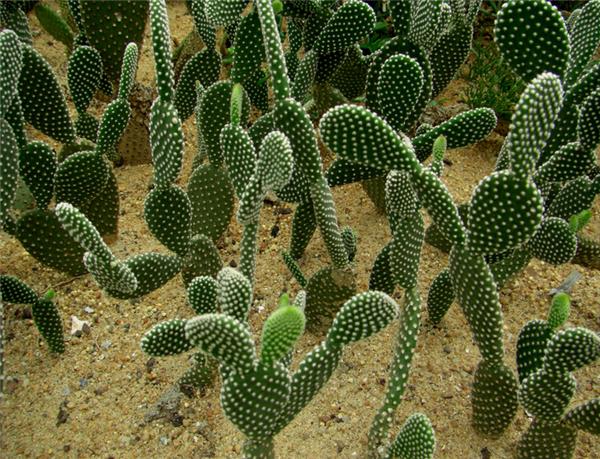
The commonly used methods of growing cacti are four: cutting propagation, division propagation, seed propagation and grafting propagation.
I. Cutting Propagation
1. Timing of Cuttings
Under normal conditions, May to June is the most suitable time for taking cuttings. Where a greenhouse is available, it can be done all year round.
2. Preparing the Substrate
Cacti tolerate drought and poor, thin soil, and dislike waterlogging. Therefore, the substrate must have good air permeability, good drainage and the ability to stay moist; vermiculite, perlite and the like are best. You can also make a mix of 4 parts coarse river sand, 3 parts loam, 2 parts leaf mold and 1 part rice-husk ash.
3. Cutting the Shoots
From a mother plant with strong growth and no pests or diseases, select robust, mature stem segments as cuttings. Use a rust-free scraper to cut the shoots from the mother plant; before and after each cut, wipe and disinfect the tool with alcohol.
4. Drying the Cuttings
Freshly cut shoots should not be planted immediately; first leave them in a relatively dry room to air for 5 to 7 days, until the cut surface has dried and the stem flesh begins to shrink, and only then plant them.
5. Hormone Soaking
For varieties that root with difficulty, soaking the base of the cutting in plant growth hormone can greatly increase the survival rate. The method is: soak the base of the cutting in a 50 to 100 ppm GGR (plant growth regulator) solution for half an hour to one hour, or soak the base of the cutting in a 200 ml/L naphthaleneacetic acid solution for 4 hours. For most other varieties that root easily, hormone treatment is not necessary when taking cuttings.
6. Planting the Cuttings
Bury the base of the cutting shallowly into the substrate; never plant it too deep, as this causes rot. At this point the cutting is hard to stand upright (because it has softened after drying), so you can lay it flat on the substrate; you can also support it with a small stick, then gently press the soil on both sides of the cutting with both hands so that it makes close contact with the soil.
7. After-planting Care
(1) Water management. When planting cuttings, the substrate should be moist; if too dry, rooting is difficult, so pour a little water in from the edge of the pot. But the substrate must not be too wet, otherwise the cuttings easily rot. Before rooting, keep the potting soil moist at all times. To reduce evaporation, you can cover the pot with a plastic bag; after about a month the cuttings will root, and at that point the plastic bag should be removed immediately.
(2) Light management. Before rooting, protect from blazing sun and keep the plants in a semi-shaded spot. After rooting, routine management of water and light can be carried out.
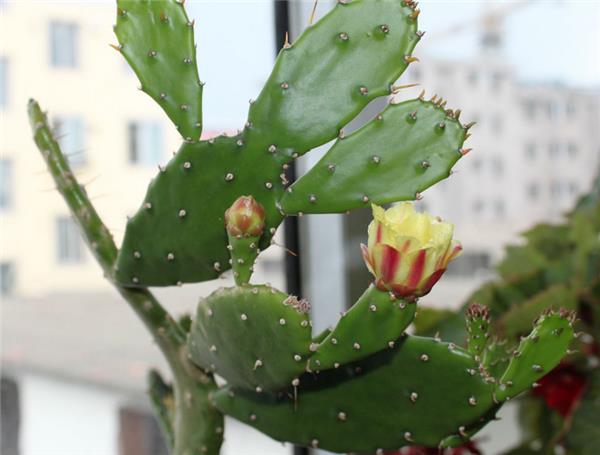
II. Division Propagation
Many cacti can produce offsets: globular cacti, for example, grow small offsets on the stem, while prickly pear cacti or segmented cacti all produce offsets. For these varieties, use a knife to cut off the growth point of the cactus, and after cultivating it for a period, many small offsets will grow near the growth point; when the offsets have grown to a suitable size, cut them off and propagate them as cuttings.
III. Seed Propagation
1. Hand Pollination
Among cacti, very few species are self-pollinating. Most are cross-pollinated and need hand pollination to set seed, and even more species require pollination between different plants of the same species. Therefore you need to prepare at least two plants of the same species. Pollination must be done when the anthers of the stamens have split open, the pollen is mature, and the stigma of the pistil is fully secreting sticky fluid. However, in different species the ripening times of the stamens and pistil are not necessarily the same.
If the mother plant flowers later than the father plant, you can first place the father plant in a cool spot to make it flower later, or you can collect the pollen of the father plant and store it in a cool, dry place. When the pistil of the mother plant matures, take the pollen out and pollinate. For most species, the pollination success rate is highest 1-2 hours after noon on the second day of flowering. Use a clean soft brush to dip up pollen and lightly apply it to the stigma of the mother plant, or use fine tweezers to pick up pollen and place it on the stigma. If the weather is extremely hot, the humidity is too high, or there is water on the flower, the fertilization rate will not be high.
2. Removing the Petals
After pollination, if the ovary gradually swells, it indicates that pollination has succeeded; at this point you can cut off the withered petals to prevent mold and rot. The plant should be protected from rain and from being washed by water, and fertilizer and water management should be strengthened.
3. Collecting Seed in Good Time
Cactus fruits generally ripen in 50-60 days. Some species are berries, which are easily pecked by birds and other small animals when ripe, so the fruits should be protected with netting. Some fruits have skins that split easily, so take care to harvest them in good time. Harvested berries should have the flesh removed, the seeds washed clean, and then the water drained off. The seeds obtained should be put into paper bags, placed in a dry, cool spot, and labeled with the seed name and harvest date.
4. Disinfecting and Soaking the Seed
The soil used for sowing should be disinfected river sand or sand-mixed leaf mold; it must be disinfected by frying in a pan or steaming, and must not be disinfected with chemicals. Before sowing, moisten the potting soil by the immersion method, then soak the seeds in 1% formalin or 2.5% copper sulfate solution for 15 minutes; take them out, rinse them, and they are ready for sowing. Small seeds can be mixed with sand and scattered evenly over the soil surface without covering with soil. Large seeds can be sown in holes at a spacing of 5 mm x 5 mm.
5. Sowing at the Right Time
The best time for propagating cacti from seed is spring and autumn, when the temperature difference between day and night is large. A large temperature difference not only raises the germination rate but also speeds up the growth of the seedlings. Avoid sowing on rainy days; choose fine, sunny weather. In a greenhouse, seed propagation can be carried out in all four seasons.
6. Careful Management After Sowing
After sowing, cover the pot with a glass pane, and every day a gap must be opened at set times for ventilation. Most cactus species can germinate within 15 days. After germination, carefully observe the dryness and moisture inside the pot and keep the surface of the potting soil somewhat moist. Seedlings must have their light controlled; you can cover the glass with white paper that has holes punched in it. As the seedlings grow, replace the white paper so that the holes become correspondingly larger and more numerous, to let in more light. In the seedling stage, cacti should be strictly managed in terms of temperature, humidity, water, light and ventilation. In the peak growing seasons of spring and autumn, maintain a relatively large day-night temperature difference and give the seedlings light at the right times and in the right amounts. In summer, strengthen ventilation and lower the temperature. In winter, place them in a warm spot indoors and appropriately increase light, but not excessively. Watering should mainly be done by the immersion method; the pot surface just needs to be moist.
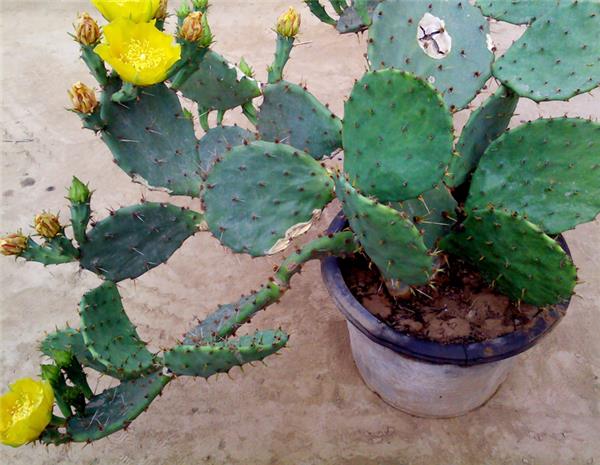
IV. Grafting Propagation
Grafting is a horticultural technique often used on cacti. Because the root systems of some cacti are very fragile, after long cultivation the roots gradually lose their original function and disappear, and the plant thereby loses its vitality. Grafting is the cure-all that saves these cacti. In addition, purposes such as speeding up the growth rate of cacti or keeping plants with root rot growing after the affected part is cut away can all be achieved by grafting.
When grafting, the chosen rootstock - the triangular column - is one type of such cactus. The method is to cut off the growth point of the triangular column and slice off the edges at an angle, then place the cactus whose root system has been removed in the center of the rootstock, then fix the position with string or a weight; after 1-2 weeks, the string and weight can be removed.
Harvested berries should have the flesh removed, the seeds washed clean, and then the water drained off. The seeds obtained should be put into paper bags, placed in a dry, cool spot, and labeled with the seed name and harvest date.4. Disinfecting and Soaking the Seed
The soil used for sowing should be disinfected river sand or sand-mixed leaf mold; it must be disinfected by frying in a pan or steaming, and must not be disinfected with chemicals. Before sowing, moisten the potting soil by the immersion method, then soak the seeds in 1% formalin or 2.5% copper sulfate solution for 15 minutes; take them out, rinse them, and they are ready for sowing. Small seeds can be mixed with sand and scattered evenly over the soil surface without covering with soil. Large seeds can be sown in holes at a spacing of 5 mm x 5 mm.
5. Sowing at the Right Time
The best time for propagating cacti from seed is spring and autumn, when the temperature difference between day and night is large. A large temperature difference not only raises the germination rate but also speeds up the growth of the seedlings. Avoid sowing on rainy days; choose fine, sunny weather. In a greenhouse, seed propagation can be carried out in all four seasons.
6. Careful Management After Sowing
After sowing, cover the pot with a glass pane, and every day a gap must be opened at set times for ventilation. Most cactus species can germinate within 15 days. After germination, carefully observe the dryness and moisture inside the pot and keep the surface of the potting soil somewhat moist. Seedlings must have their light controlled; you can cover the glass with white paper that has holes punched in it. As the seedlings grow, replace the white paper so that the holes become correspondingly larger and more numerous, to let in more light. In the seedling stage, cacti should be strictly managed in terms of temperature, humidity, water, light and ventilation. In the peak growing seasons of spring and autumn, maintain a relatively large day-night temperature difference and give the seedlings light at the right times and in the right amounts. In summer, strengthen ventilation and lower the temperature. In winter, place them in a warm spot indoors and appropriately increase light, but not excessively. Watering should mainly be done by the immersion method; the pot surface just needs to be moist.
IV. Grafting Propagation
Grafting is a horticultural technique often used on cacti. Because the root systems of some cacti are very fragile, after long cultivation the roots gradually lose their original function and disappear, and the plant thereby loses its vitality. Grafting is the cure-all that saves these cacti. In addition, purposes such as speeding up the growth rate of cacti or keeping plants with root rot growing after the affected part is cut away can all be achieved by grafting.
When grafting, the chosen rootstock - the triangular column - is one type of such cactus. The method is to cut off the growth point of the triangular column and slice off the edges at an angle, then place the cactus whose root system has been removed in the center of the rootstock, then fix the position with string or a weight; after 1-2 weeks, the string and weight can be removed.