What is the flower language and legend story of the cactus?
The cactus is one of the most familiar flowers, and because the cactus can protect against radiation, many office workers place a cactus in front of their computers. So, do you know what the flower language of the cactus is?
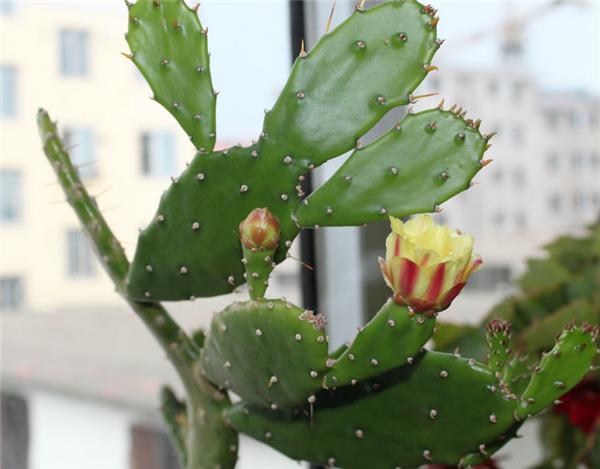
The flower language of the cactus
The flower language of the cactus is: strong, carry love through to the end.
The cactus has a heart that is hard on the outside and soft on the inside. At the beginning of creation, the cactus was the most delicate thing in the world. She was tender as water, and a light touch could take her life. God could not bear it, so He added a suit of armor over her heart, hard as iron and covered with sharp thorns that wound. From then on, no one could ever see the cactus's heart again, and any creature that came near her would be covered in blood. Long afterward, a brave man wanted to destroy this evil thing. As his sword came down, the cactus was split in two, and from within came a green liquid. It turned out that this was the sealed heart of the cactus, and because no one understood its loneliness, it turned into drop after drop of tears. The green tears made the delicate cactus show her strength even more. Therefore, the flower language of the cactus is: strong, carry love through to the end.
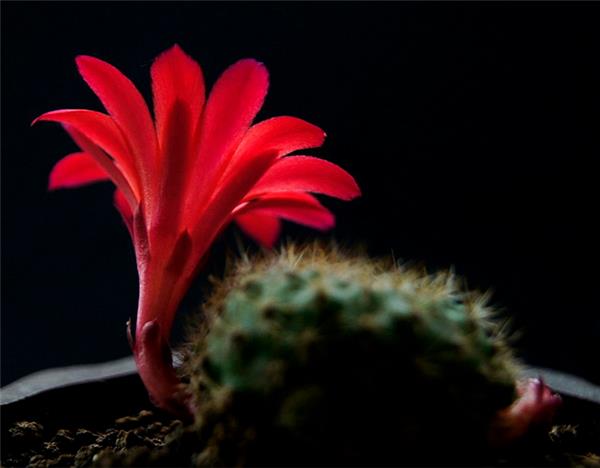
The legend of the cactus
At the beginning of God's creation, the cactus was the softest thing in the world. She was tender as water and crystal as jade, and if anyone touched her even slightly, she would lose her life. God could not bear it, so He gave her a layer of armor. Hard as iron and with steel-like thorns, from then on no one could ever see the cactus's water-like heart. Any creature that tried to touch her would surely be covered in wounds. If anyone wanted to come near her, she would use her armor and thorns to deal with them. So for thousands of years, no one dared to approach the cactus. Later, a brave man appeared. He said disdainfully, "Watch me destroy this monster!" So the brave man drew his sword and split the cactus into two halves. He had thought destroying it would be very difficult, but unexpectedly it was so easily broken!
The brave man cried out in surprise: "Ah! I never thought the cactus would be so soft inside! Don't people all say it has a hard and ugly heart? Why is it that only green teardrops slide down one by one..." In the end, the brave man understood that the so-called thorns were only the shell the cactus used to protect its fragile heart. Deep in its heart, it was actually so fragile and easily hurt! Therefore, the flower language of the cactus is called - strong!
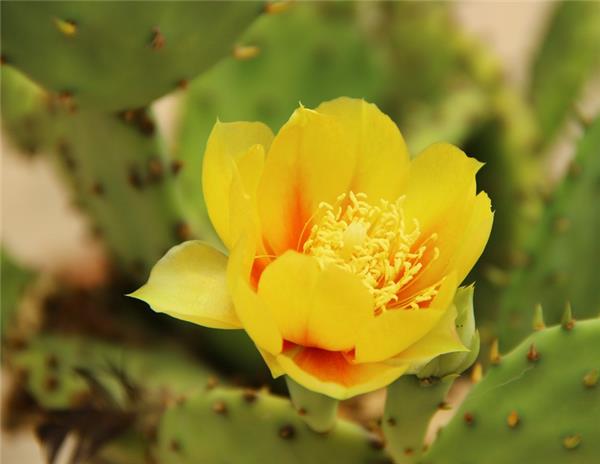
Finally, let us look at how the cactus is grown.
1. Hand pollination
Among the cactus family plants, very few species are self-pollinating. Most are cross-pollinated and need hand pollination to set seed, and even more species need pollination between different plants of the same species. Therefore, at least two plants of the same species must be prepared. Pollination must be carried out when the stamens' anthers have split open, the pollen is mature, and the pistil stigma is fully secreting sticky fluid. However, different species do not necessarily mature at the same time for the stamens and pistil. If the female parent blooms later than the male parent, the male parent can first be placed in a cool place to make it bloom later, or the male parent's pollen can be collected and stored in a cool, dry place. When the female parent's pistil matures, take it out and pollinate. For most species, the pollination success rate is highest 1-2 hours after noon on the second day of flowering. Use a clean brush to dip up pollen and gently apply it to the female parent's stigma, or use fine tweezers to pick up pollen and place it on the stigma. If the weather is extremely hot, the humidity is too high, and there is water on the flower, then the fertilization rate will not be high.
2. Cutting off the petals
After pollination, if the ovary gradually swells, it indicates that pollination has succeeded. At this point, the withered petals can be cut off to prevent mold and rot. The plant should be protected from rain and water washing, and fertilizer and water management should be strengthened.
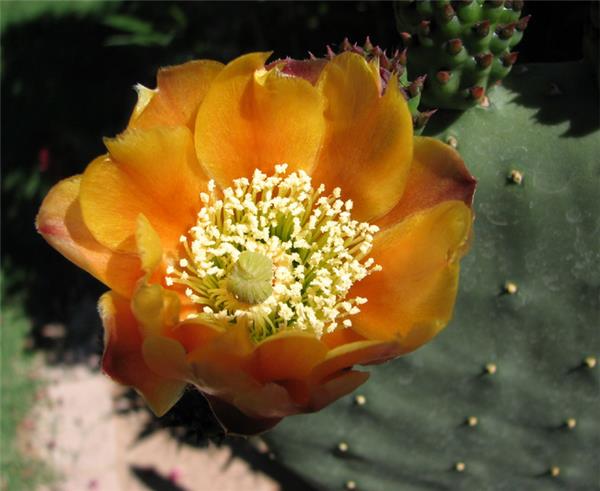
3. Collect seeds in time
Cactus fruits generally mature in 50-60 days. Some species are berries, and when ripe they are easily pecked and eaten by birds and other small animals, so the fruit should be protected with a net cover. Some fruits have skins that split easily, so care should be taken to harvest them in time. Harvested berries should have the flesh removed, the seeds washed clean, and then the water drained. The obtained seeds should be put into paper bags, placed in a dry, cool place, and labeled with the seed name and harvest date.
4. Disinfection and seed soaking
The soil used for sowing should be disinfected river sand or sand-mixed leaf mold, and it must be disinfected by frying in a pot or steaming, not by chemical agents. Before sowing, moisten the potting soil by the soaking method, then soak the seeds in 1% formalin or 2.5% copper sulfate solution for 15 minutes, take them out, rinse them, and then sow. Small seeds can be mixed with sand and evenly broadcast on the soil surface without covering with soil. Large seeds can be sown in holes at a spacing of 5 mm x 5 mm between plants and rows.
Then soak the seeds in 1% formalin or 2.5% copper sulfate solution for 15 minutes, take them out, rinse them, and then sow. Small seeds can be mixed with sand and evenly broadcast on the soil surface without covering with soil. Large seeds can be sown in holes at a spacing of 5 mm x 5 mm between plants and rows.