What are the benefits and effects of elderflower?
Elderflower comes from a deciduous shrub that mainly grows on hillsides, roadsides, near houses, and in thickets, and it is also a Chinese medicinal herb with very high medicinal value. Let's take a look at what benefits elderflower has!
Introduction to elderflower
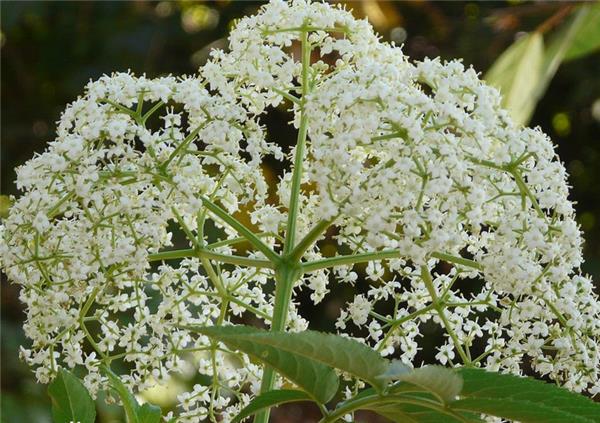
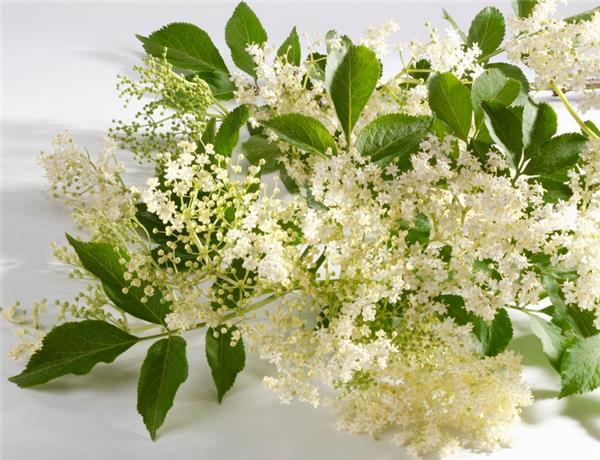
Elderflower is the flower of a plant in the honeysuckle family, harvested from the flowers, produced throughout the north and south, a small yellow flower with an elegant sweet muscat grape fragrance. It is the flower that grows on the tall shade street trees common in Europe. Its benefits and range of uses are treasured by Europeans, and it is a childhood memory for many Europeans. The part of the elderberry that can be made into herbal tea is the yellow-white flower that blooms in June and July each year.
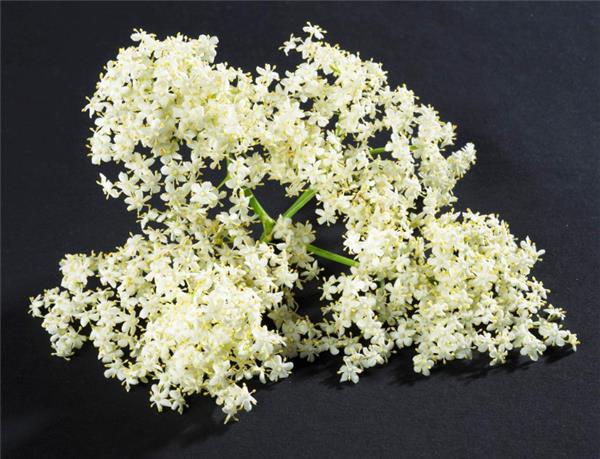
Elderflower has a peduncle; the inflorescence branches spread mostly at right angles; the flowers are small and dense; the calyx tube is cup-shaped, about 1mm long; the calyx teeth are triangular-lanceolate, slightly shorter than the calyx tube; the flower buds are pinkish when in bud, turning white or pale yellow after opening; the corolla is wheel-shaped with 5 lobes, about 2mm long. The stamens are equal in length to the corolla lobes, the anthers are yellow, the ovary has 3 chambers, the style is short, and the stigma is 3-lobed. The flowering period is April-May.
What are the benefits of elderflower?
1. Relieving colds. Elderflower has a very good relieving effect on wind-cold, colds, sore throat, nasal congestion and other problems of epidemic colds. Many parents brew elderflower tea with brown sugar and give it to their children to drink, helping to relieve their physical discomfort. Elderflower also has the reputation of being a "panacea", and legend says it can drive away illness.
2. Skincare and beauty. Many skincare and beauty products use elderflower ingredients to achieve beautifying and nourishing effects. Steaming the face with elderflower and water can make the skin whiter and more delicate, helping to maintain a beautiful appearance.
3. Relieving oral problems. For example, if problems such as gingivitis, bad breath, or strong mouth odor occur, you can directly use water brewed with elderflower to rinse the mouth, solving oral odors and discomfort.
4. Anti-inflammatory. Elderflower has anti-inflammatory effects, and it can also prevent pollen allergies and relieve respiratory diseases.
Elderberry cultivation techniques
1. Site selection and land preparation
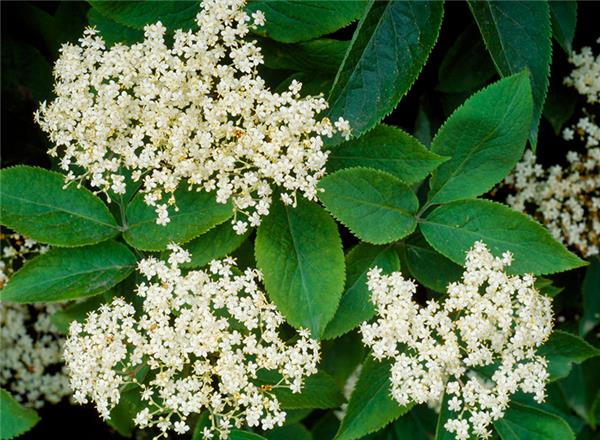
Elderberry does not have very high requirements for growing land. Generally, it is enough to choose some plots with flat terrain, relatively moist soil, and good drainage. Deeply plow and level the selected land, then apply an appropriate amount of farmyard manure.
2. Propagation methods
Elderberry seeds are not easy to germinate, so the cutting propagation method is generally used.
Cutting propagation should be done before germination in February. Select some branches that are growing well and free of pests and diseases, cut them into cuttings about 25 cm long, and leave three small bud nodes on each cutting. Note that the topmost and bottommost bud nodes should be at a certain distance from the cut. Next, carry out the cuttings on the prepared land. First make beds 3 m wide, then open horizontal furrows at a row spacing of about 25 cm, with a furrow depth of about 20 cm. Each furrow can hold 15-20 cuttings. Note that the topmost bud node of the cuttings should be exposed above the ground. After that, cover with soil up to half the furrow, press firmly, and finally cover with some fine soil level with the bed.
3. Field management
During the growing period, elderberry should be deeply plowed and weeded in time to avoid hindering its ventilation and light penetration. Elderberry has lush branches and leaves and requires relatively large amounts of water and fertilizer, so during its growing season it should be irrigated in time and drought should not occur. Wait until the leaves fall in autumn or before germination, then apply an appropriate amount of farmyard manure. The amount of fertilizer applied depends on soil fertility: poorer soil can be given more fertilizer, and more fertile soil can be given less. Pruning of elderberry is also very important, mainly in spring and autumn, pruning some old branches, diseased branches, broken branches, etc. When pruning, be careful to maintain the tree shape.
4. Pest and disease management
The common diseases of elderberry are canker, leaf spot, and powdery mildew, which can be prevented and controlled by spraying 65% zineb wettable powder at 1000 times dilution. The common pests are mainly scale insects, noctuid moths, and clearwing moths, which can be controlled by spraying 50% fenitrothion emulsifiable concentrate at 1000 times dilution.