What are the benefits and effects of Cherokee rose (Rosa laevigata) fruit? A detailed guide to its edible methods
Cherokee rose (Rosa laevigata) fruit is a common medicinal material with high medicinal value. It is rich in sugars (fructose, sucrose) and contains citric acid, malic acid, tannins, vitamin C and other components, which play a very important role for the human body. Below we introduce in detail the benefits, effects and edible methods of Cherokee rose fruit.
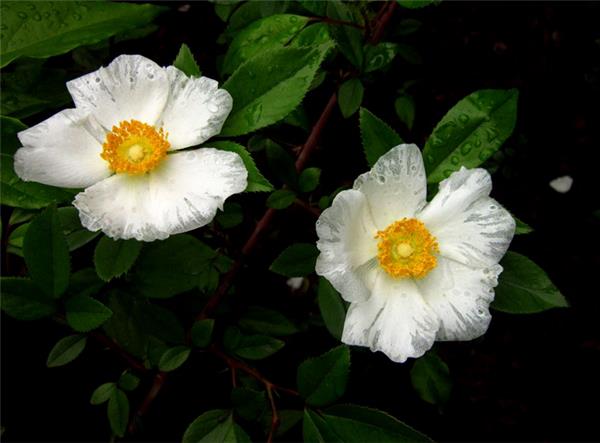
The benefits and effects of Cherokee rose (Rosa laevigata) fruit
1. Antibacterial and anti-inflammatory. In recent years, research has found that Cherokee rose fruit extract can kill Staphylococcus aureus and Escherichia coli, among others, and can be used to treat diseases caused by Staphylococcus aureus or Escherichia coli infection.
2. Consolidating essence and reducing urination, astringing the intestines and stopping diarrhea. Cherokee rose fruit contains a large amount of acidic substances, saponins, etc., which can both consolidate the essence chamber to prevent spermatorrhea and involuntary emission in men and excessive vaginal discharge in women, and astringe the intestines to prevent diarrhea and dysentery caused by insufficient restraint from spleen deficiency.
3. Relieving cough and calming asthma, anti-spasmodic. Traditional Chinese medicine believes that asthma and cough are mostly caused by upward rebellion of lung qi. Cherokee rose fruit is sour and astringent, can astringe lung qi, and can relieve cough and calm asthma. Modern research has found that Cherokee rose fruit contains components that resist smooth muscle spasm, and can prevent spasms of the gastrointestinal tract and trachea. 2. Reducing urination and stopping enuresis. Cherokee rose fruit contains a large amount of acidic substances and saponins, which have the effect of controlling the bladder sphincter, prolonging the interval between urinations, and increasing the amount of urine each time, and can be used to treat enuresis and frequent urination.
4. Lowering blood lipids. Cherokee rose fruit contains fatty acids, beta-sitosterol, tannins and saponins, etc., which can lower blood lipids, reduce fat deposition in blood vessels, and can be used to treat atherosclerosis.
5. Nutrition of Cherokee rose fruit. The fruit of Cherokee rose has a unique flavor, with a honey taste and a delicate fragrance. It is extremely nutritious, containing sugars (mainly reducing sugars such as fructose), citric acid, malic acid, tannins, vitamins, more than 20 kinds of amino acids, 18 kinds of mineral elements, as well as resins, saponins and other components, with especially high content of vitamin C and reducing sugars. According to measurements, every 100 g of fresh Cherokee rose fruit flesh contains 1009 mg of vitamin C, second only to Rosa roxburghii in content, 2 times that of fresh jujube, 10 times that of kiwifruit, and 30 times that of citrus. Secondly, Cherokee rose fruit is rich in zinc and selenium. These two elements are essential trace elements for the human body with specific health-care and anti-cancer effects.
The benefits and effects of Cherokee rose fruit are significant. According to personal taste, Cherokee rose fruit can be used as an ingredient to make a variety of foods.
1. Decoction
The most common and convenient method for Cherokee rose fruit is decoction. Simply crush the Cherokee rose fruit, then add an appropriate amount of water, put it in a pot and simmer. After a certain time, remove the residue and drink it. The remaining residue can also be re-decocted.
2. Cherokee rose fruit porridge
Cooking porridge with Cherokee rose fruit can help consolidate essence and stop diarrhea, and the production process is also very convenient. Pour the Cherokee rose fruit into a pot, add water and cook until 100 milliliters, remove the residue, extract the juice, add an appropriate amount of water and rice to the Cherokee rose fruit juice, turn on the heat and bring the water to a boil, and when the rice is cooked through and done, it is ready to eat.
3. Cherokee rose fruit and Eucommia ulmoides stewed pig tail
First prepare the ingredients: Cherokee rose fruit, Eucommia ulmoides and pig tail. Remember that the pig tail must be washed clean and dehaired. Then directly add water and put it into a clay pot to stew until cooked. Season with a little salt, eat the meat and drink the soup. It can effectively treat symptoms such as dizziness, tinnitus, pale or dull complexion, listlessness, aversion to cold and cold limbs.
4. Cherokee rose fruit and crucian carp soup:
30 grams of Cherokee rose fruit, 250 grams of crucian carp with innards removed and scales kept, add an appropriate amount of clear water and stew into soup, season with oil and salt, eat the fish and drink the soup.
Contraindications for the use of Cherokee rose (Rosa laevigata) fruit
1. People with excess fire or pathogenic heat should not take Cherokee rose fruit.
2. People with middle burner cold and abdominal masses should not take Cherokee rose fruit. "Introduction to Medicine"
3. Cherokee rose fruit is not suitable for diarrhea caused by violent purging due to fire-heat; Cherokee rose fruit is not suitable for incontinence of urine and loss of essence due to yin deficiency with blazing fire. "Commentary on the Materia Medica"