Detailed explanation of the grafting method for the Epiphyllum
The Epiphyllum has large, beautiful flowers and brilliant colors, with great ornamental value, and is deeply loved by people. Below is a simple introduction to the grafting method for the Epiphyllum and the uses of the Epiphyllum.
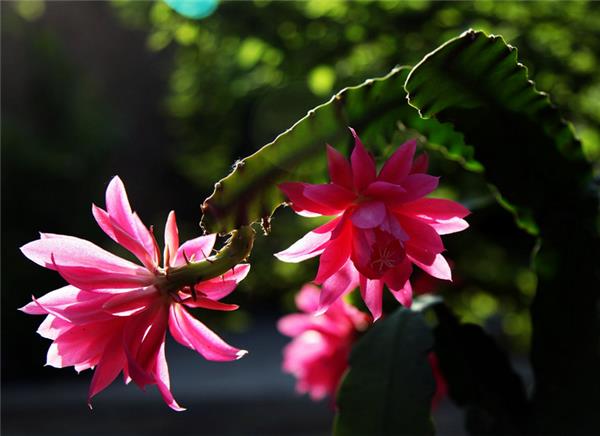
Grafting method for the Epiphyllum
The Epiphyllum can be grafted in spring and autumn, preferably on sunny days. The rootstock is generally three-angled cereus (commonly known as "triangle"), cactus, and cactus ball (that is, Echinopsis multiplex and the common ball cactus).
The Epiphyllum is commonly grafted using the cleft grafting method (also called wedge grafting or insert grafting). When using cactus or three-angled cereus as the rootstock, cut horizontally across the plant at a height of 20-30 cm to remove the top, then make a vertical cut 2-3 cm deep at the vascular bundle in the middle of the cut surface. The scion should be selected from robust modified stems, about 10 cm long. The lower end of the scion is cut into slanted surfaces on both sides, and the cut surfaces should be smooth. After the scion is cut, immediately insert it into the cut in the rootstock, and after grafting, use the long spines of the cactus or small bamboo needles to fix the scion onto the rootstock. At the same time, paper can be placed on the rootstock and then fixed with bamboo or wooden clips. The clips can be removed after 6-7 days, and after the scion survives, remove the long spines or small bamboo needles to avoid affecting the plant's growth.
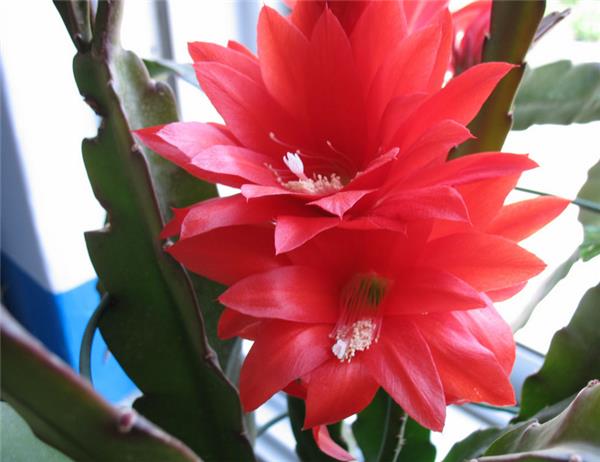
If using a cactus ball as the rootstock, note that its top must be cut off, and then the scion is grafted at the vascular bundle in the center of the ball. If the top of the cactus ball is not removed, the top of the rootstock will continue to grow due to apical dominance, causing the graft to fail.
After grafting, when watering the plant, be careful not to let water get on the cut, to avoid causing infection of the cut surface. After about 3 months, the epidermis of the cut forms a membranous layer, and even if it is exposed to rain, it is no longer a problem. Because the above rootstocks are tolerant of fertilizer and moisture, the plant can appropriately increase the amount of fertilizer and water, fertilizing 2-3 times a month, using decomposed bean cake, bone meal, and other phosphorus and potassium fertilizers.
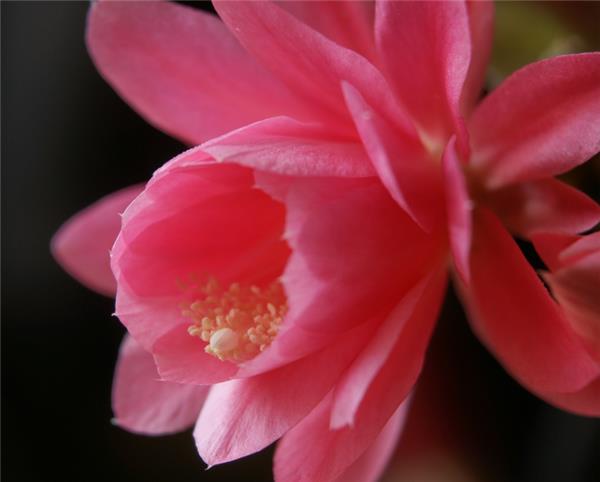
Uses of the Epiphyllum
1. Home decoration
The Epiphyllum has many flower colors and varieties, and is deeply loved by people for its delicate and graceful posture, brilliant colors, and rich fragrance. It is mainly grown as a potted ornamental plant, and in greenhouses, matching varieties are often used to improve the ornamental effect. It is used to decorate the windows, balconies, and doorways of living rooms and studies, making it an excellent indoor potted flower with excellent color, posture, and fragrance.
2. Fresh air
The Epiphyllum is a CAM plant. What is a CAM plant? It refers to the physiological phenomenon in which, under light conditions, the plant's water transpiration is only equivalent to between 1/10 and 1/4 of that under other conditions. This is called crassulacean acid metabolism, or CAM for short. The Epiphyllum is a common plant with CAM metabolism. It closes the stomata on the underside of the leaves during the day, and at night, after the surrounding ambient temperature drops to an appropriate level, it opens the stomata on the underside of the leaves, releases oxygen, and absorbs carbon dioxide. So placing the Epiphyllum in a bedroom can bring fresh air to people while sleeping, which is beneficial to our health.
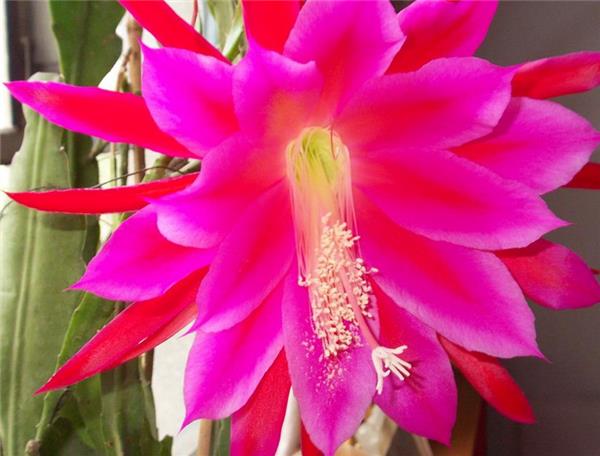
The Epiphyllum can also greatly increase the negative ion content in indoor air. The Epiphyllum can increase negative ions, and negative ions are something our bodies greatly need. However, if a TV or computer is turned on indoors, negative ions will be rapidly reduced, so if a pot of Epiphyllum is placed next to a computer or TV, it can increase the negative ion concentration and maintain a balanced state in the environment.
3. Improving the aura
The Epiphyllum is a plant belonging to the fire element in the five elements, suitable for placement on east-facing or west-facing balconies. Its fire-element quality is beneficial to these two directions and can adjust and improve the aura in the home. People born in the Year of the Ox can place the fire-element Epiphyllum in the southwest of the home, people born in the Year of the Dog can place the Epiphyllum in the northeast of the home, and friends born in the Year of the Dragon and the Snake can also choose to keep a pot of Epiphyllum in the south of the home.