Step-by-step guide to growing clematis
Clematis has long been known as the "queen of climbing flowers", with many varieties, many flower colors, and flowers that carry a faint fragrance, making it very popular. Below we will look at clematis growing methods.
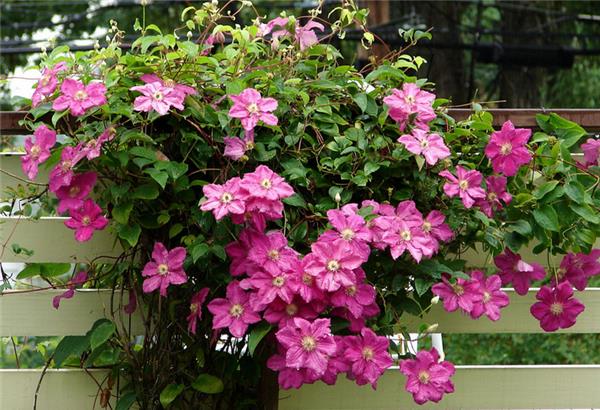
Clematis growing methods
Seed sowing, layering, grafting, division, or cuttings can all be used for propagation.
Seed sowing: The original species can be propagated by sowing. For seeds of the epigeal type (the achenes are relatively small and the seed coat is relatively thin), if sown in spring, they will germinate in about 3-4 weeks. If sown in autumn, they will sprout when spring becomes warm. For seeds of the hypogeal type (larger, with a thicker seed coat), they must go through a low-temperature vernalization stage before they can germinate and produce the first pair of true leaves; some species must go through two low-temperature stages before they can germinate, such as Clematis patens. For vernalization treatment, if seeds are refrigerated at a low temperature of 0-3°C for 40 days, germination takes about 9-10 months. Treatment with gibberellin at a certain concentration can also be used.
Layering: In March, use mature shoots from the previous year for layering. They usually root within 1 year.
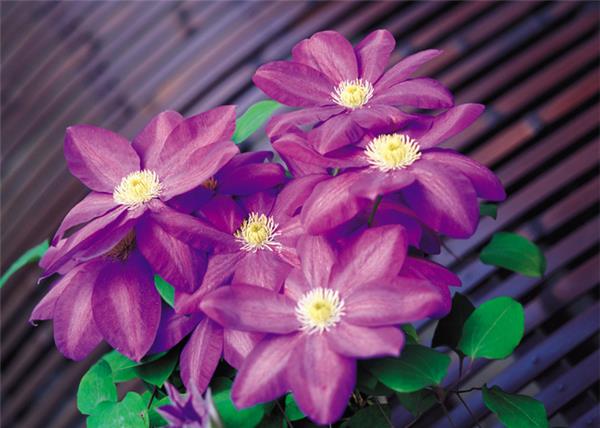
Grafting: For hybrids such as Clematis jackmanii, a single-node scion can be grafted onto a rootstock of C. vitalba or C. viticella by cleft grafting. The node has 1-2 buds, and below the node it is 5-10 cm long. Grafting in a heated and closed grafting case easily promotes survival.
Division: Clumping plants can be divided.
Cuttings: For cultivated varieties of hybrid clematis, cuttings are the main propagation method. In July-August, take semi-mature shoots and cut between nodes (that is, cut in the middle between the upper and lower nodes; the node has 2 buds). Use a medium of half peat and half sand. The cutting depth is just until the buds on the node are exposed above the surface. The bottom temperature is 15-18°C. After rooting, place them in 3-inch pots and overwinter them in a frost-protected hotbed or greenhouse. In spring, change to 4-5-inch pots and move them outdoors. In summer, shade is needed to protect against showers, and plant them out in the ground at the end of October.
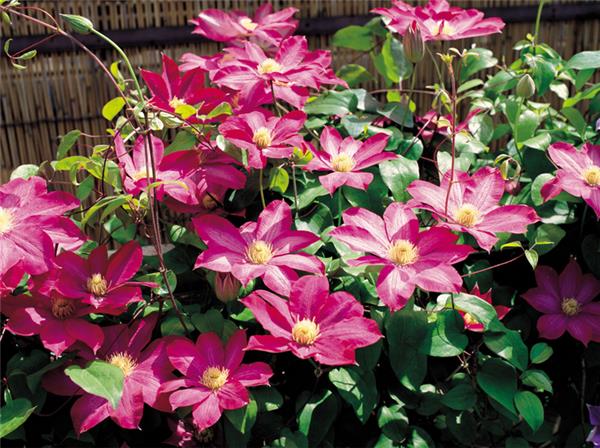
Clematis growing methods
1. Soil: It prefers fertile, well-drained alkaline loam, and dislikes waterlogged soil or soil that cannot retain water during summer drought.
2. Watering: It is drought-tolerant and afraid of waterlogging. During the plum rain season, due to high temperature and high humidity, it is prone to disease and death, so during the growing season it is enough to keep the potting soil moist. Never water too much, otherwise the root system is prone to rot.
3. Sunlight: Potted clematis can be grown under full-light conditions from autumn to early spring of the following year without shading. After entering summer, intense sunlight will cause clematis leaves to age and turn yellow and grow poorly, so appropriate shading is needed.
4. Temperature: It has strong adaptability and is relatively cold-tolerant, able to withstand a low temperature of -20.
5. Fertilizing: It does not have high fertilizer requirements. During the peak growth period, apply liquid fertilizer once about every half month.
6. Pests and diseases: Clematis has relatively strong resistance to pests and diseases. Serious pest and disease damage rarely occurs. Diseases include clematis wilt, which is especially likely to occur in summer when rainy days clear and the temperature rises sharply, causing branches to suddenly wilt; new shoots often sprout in autumn or the following spring. Others include powdery mildew (damaging leaves or flowers), viral disease (yellow spots on leaves, deformed flowers), etc. Spray with a 1000-fold dilution of 10% antibacterial agent 401 acetic acid solution. Pests include red spider mites and stinging caterpillars; spray to kill with a 1000-fold dilution of 50% fenitrothion emulsifiable concentrate.
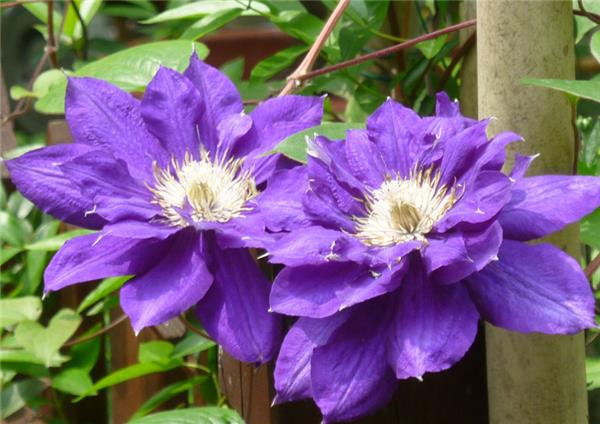
Uses of clematis
1. Ornamental
Clematis has sparse, graceful branches and leaves. Some have large, brightly colored flowers, while others have many small flowers gathered into large inflorescences, with a unique charm. It is an indispensable good material in climbing greening and has certain ornamental value.
2. Beautifying the home
Clematis can be planted beside the walls of home buildings, in front of windows, or beside trees and shrubs in courtyards, placed among rockeries and rocks, climbing on flower pillars, flower arches, and fences. It can also be grown in pots for ornament, making it a very good choice for beautifying and accenting the home environment.
3. Medicinal use
The roots and the whole plant are used as medicine, with diuretic, qi-regulating and laxative, and blood-activating and pain-relieving effects. It can be used to treat difficult urination, abdominal bloating, and constipation; externally, it is used to treat joint swelling and pain, insect and snake bites, etc.