Introduction to Aquatic Canna and Price Overview
Canna is a fairly common ornamental plant, so do you know what aquatic canna is, and how much does aquatic canna cost? Below we give a brief introduction.
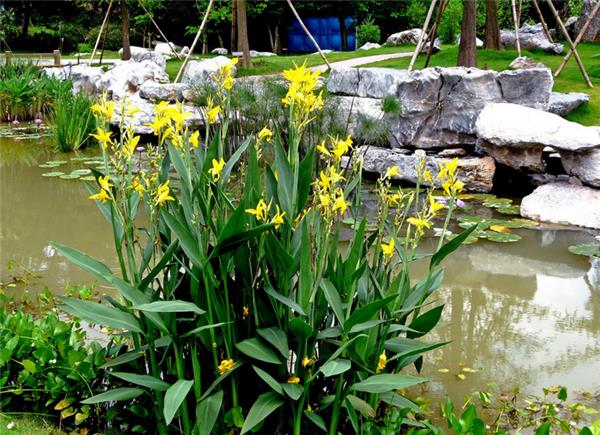
Introduction to Aquatic Canna
Aquatic canna is native to South America and widely distributed in the southeastern United States. It can be seen everywhere along the waterways of Georgia, Alabama, Florida and Louisiana. It closely resembles terrestrial canna, except that its narrowly lanceolate leaves have a layer of white powder on the surface and are grayish green. Its petals are upright, the corolla tube is extremely short, and the flowers are yellow, red or spotted; the sepals, petals and staminodes are all very similar to those of the common canna, and the plant grows up to 6 feet tall. It still grows wild in Mexico and can be introduced to temperate zones. In summer, at the shallow water's edge, the flower colors are very rich.
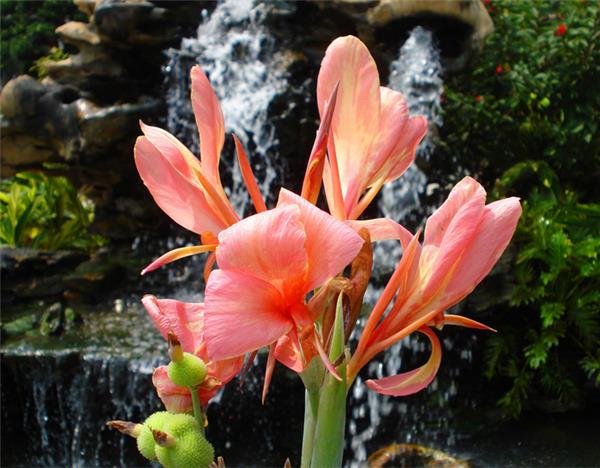
Morphology of Aquatic Canna
Aquatic canna is a large perennial herbaceous plant with a height of 1-2 m; the leaves are long lanceolate and blue-green; the raceme is terminal and many-flowered; the stamens are petaloid; the flower diameter is large, about 10 cm; the flowers are yellow, red or pink; in temperate regions the flowering period is from April to October, while in tropical and subtropical regions it blooms all year round; the above-ground parts die in winter in temperate regions, and the rhizomes enter dormancy, while in tropical and subtropical regions it remains evergreen all year round.
Ecological Habits of Aquatic Canna
Aquatic canna is robust and highly adaptable. It likes light and fears strong wind, and is suitable for growing in moist places and shallow water. It grows well in both fertile soil and sandy soil. The suitable growth temperature is 15-28°C, and below 10°C is unfavorable for growth. In its place of origin it has no dormant period and grows and blooms year-round, while in cold northern regions it goes dormant in winter. The rhizomes need to be protected in a greenhouse to overwinter.
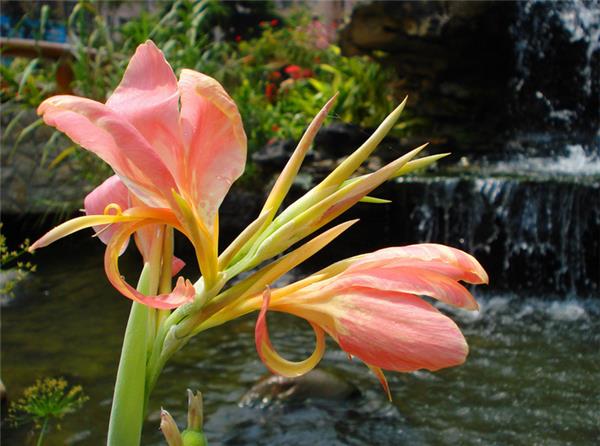
Cultivation and Management of Aquatic Canna
When growing aquatic canna in pots, in spring the divided tubers can be planted directly into pots with fertile soil, with the growing points slightly exposed; after planting, water thoroughly, place in a shady spot to recover for 5-7 days, then move to a sheltered, sunny spot to grow. For open-field planting, choose a damp spot by a pond or a shallow-water area, dig holes and plant in clumps, bury the tubers in the soil and cover with 7-10 cm of soil; after planting, maintain moisture or shallow water.
Potted aquatic canna should be placed in a warm, humid and sunny environment, and weeds in the pot as well as old and dead leaves at the base should be removed promptly to keep the plant's overall appearance neat. For open-field planting in the south, it can overwinter outdoors. In warm regions, after 2-3 years the tubers need to be dug out and replanted in the same spot.
After entering the vigorous growth period, the clumps become denser, which easily causes excessive vegetative growth and leads to a decline in the number and quality of flowers. Stems that have already flowered must be thinned out promptly, and overly dense and tall stems should be appropriately removed to increase air and light penetration and promote the growth of new shoots.
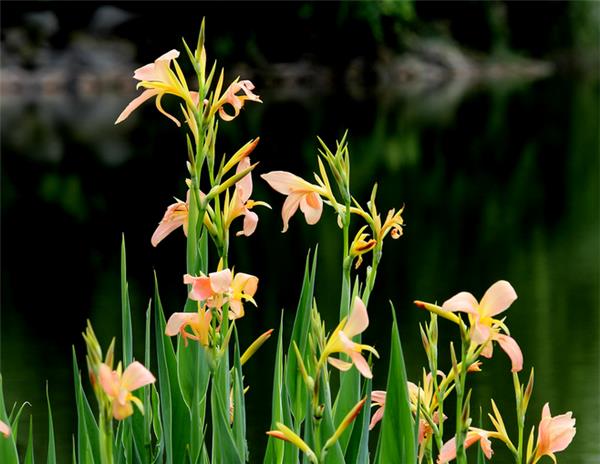
Uses of Aquatic Canna
Aquatic canna has lush leaves and abundant flowers, with brilliant and rich flower colors and a long flowering period. It is suitable for large-scale natural planting in wetlands, can also be used as an accent in ponds, and is also a good flowering plant for viewing flowers and foliage in courtyards; it can be used as a cut flower material. It is also a good material for purifying air, with a certain resistance to and absorption capacity for harmful gases such as sulfur, chlorine, fluorine and mercury.
Aquatic Canna Prices
The prices of aquatic canna seedlings and finished plants differ greatly. Generally, seedling prices are mostly wholesale, ranging from 1 yuan to 5 yuan depending on the variety, while finished plant prices are more expensive, generally above 10 yuan. The price of aquatic canna also varies by region; the above prices are for reference only.