What are the effects and functions of Scutellaria barbata?
Scutellaria barbata is the dried aerial part of the Lamiaceae plant Scutellaria barbata. It has functions such as clearing heat and removing toxins, invigorating blood and removing stasis, reducing swelling and relieving pain, and fighting cancer. Below we introduce in detail the effects and functions of Scutellaria barbata.
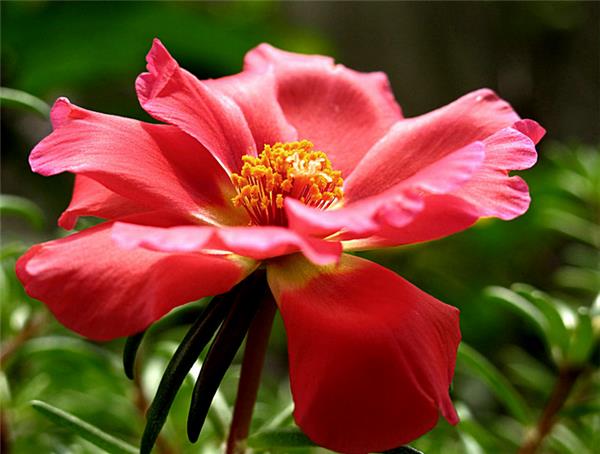
The effects and functions of Scutellaria barbata
Scutellaria barbata is the dried aerial part of the Lamiaceae plant Scutellaria barbata. It has functions such as clearing heat and removing toxins, invigorating blood and removing stasis, reducing swelling and relieving pain, and fighting cancer. It is now mainly used in combination with Hedyotis diffusa to prolong the survival of patients with intestinal cancer. At the same time, Scutellaria barbata clears heat, removes toxins, dissipates stasis, stops bleeding, relieves pain, and treats hematemesis, nosebleeds, hematuria with strangury, red dysentery, jaundice, sore throat, lung abscess, furuncles, scrofula, sore toxins, cancer swelling, bruises and cuts, snake bites, and so on.
1. Antibacterial effect. A 50% decoction of Scutellaria barbata, using the plate trench method, has an inhibitory effect on Staphylococcus aureus, Shigella flexneri, Salmonella typhi, Pseudomonas aeruginosa, and Escherichia coli.
2. Antispasmodic and expectorant effect. The carthamidin contained in this product has a relatively strong effect against histamine-induced smooth muscle contraction, and also has a good expectorant effect.
3. Tumor-inhibiting effect. Screening tests using the methylene blue test tube method show that this product has a very mild inhibitory effect on acute granulocytic leukemia cells; screening experiments using the cell respirator method show that the inhibition rate against acute granulocytic leukemia blood cells is greater than 75%.
4. Immunomodulatory effect. The polysaccharides contained in this product can promote ConA-induced lymphocyte transformation of mouse spleen cells in vitro, with an optimal concentration of 400r/ml. After 1 week of Sc administration, it can significantly increase the percentage of esterase-positive cells among mouse peripheral blood lymphocytes and promote DNCB-induced delayed-type hypersensitivity. However, high-dose administration (200mg/kg) can inhibit the mouse thymus index, with no effect on the spleen index.
5. The alcohol preparation (200 mg/ml) has a cancer-fighting effect in tumor tissue culture fluid on cancer tissues such as rectal cancer and colon cancer taken from the human body; the water decoction has a destructive effect on Hela cells isolated from a stable cultured cervical cancer cell line.
6. In experiments using the cell respirator method, it has an inhibition rate of more than 75% against leukemia cells.
7. The alcohol preparation has an inhibitory effect on the growth of transplanted mouse sarcoma S-180, Ehrlich ascites carcinoma, and brain tumor-22.
8. Intravenous injection of the infusion into animals has a blood pressure-lowering effect; oral administration does not produce the same effect.
9. The ether extract of the infusion has a diuretic effect in animal experiments.
10. Other effects:
Inhibition of ATP production: the baicalein contained in this product has an inhibitory effect on indole-3-acetic acid oxidase and ATP production.
Inhibition of larval growth: it can also inhibit the growth of Heliothis zea larvae.
Effect on blood vessels: baicalein glycoside increases cerebral blood flow, reduces cerebrovascular resistance, increases blood-brain barrier permeability, and counteracts platelet aggregation caused by adenosine diphosphate.
The above are the effects and functions of Scutellaria barbata. Now everyone knows, right. So, let us now look at what edible methods Scutellaria barbata has. We take Magnolia flower bud and Scutellaria barbata stewed cuttlefish as an example, and share its preparation method as follows:
Materials: Magnolia flower bud 10g, Scutellaria barbata 15g, cuttlefish 150g, cooking wine 10ml, ginger and scallion 10g each, salt and monosodium glutamate 3g each
Preparation method:
1. Clean the cuttlefish thoroughly and cut it into cubes of about 3cm; slice the ginger and cut the scallion into sections; wash the Scutellaria barbata and Magnolia flower bud and set aside.
2. Put the prepared Magnolia flower bud, cuttlefish, ginger, scallion, Scutellaria barbata, and cooking wine together into a stewing pot, add an appropriate amount of clean water, bring to a boil over high heat, then simmer over medium heat for about 25 minutes, and add an appropriate amount of salt and monosodium glutamate according to personal taste and stir well.
Edible method: once a day, one cup each time.
Edible effects and functions: fighting cancer swelling and clearing the nasal passages; regular consumption by patients with nasopharyngeal cancer has a very good therapeutic effect.