A detailed guide to making Murraya paniculata bonsai, beginners can learn it too
Murraya paniculata, commonly called orange jasmine, is a tropical evergreen plant with fragrant white flowers, and it can be grown as an ornamental tree. Today we introduce the method for making a Murraya paniculata bonsai.
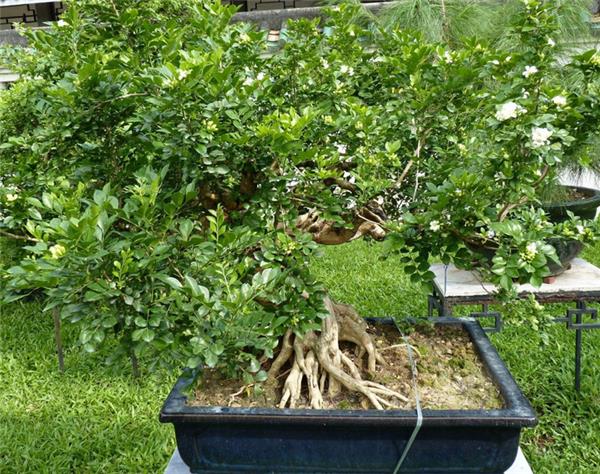
How to make a Murraya paniculata bonsai
Seedling sources: To make a Murraya paniculata bonsai, you can use artificial propagation methods such as sowing and cuttings to produce bonsai material. You can also collect tree stumps with an antique tree form from the mountains and fields.
Potting: Murraya paniculata bonsai is usually transplanted in spring, in March-April. For the potting soil, use garden soil with good air permeability, mixed with a small amount of sand and chaff ash. For Murraya paniculata bonsai, glazed ceramic pots in pale yellow, grayish brown and blue are commonly used.
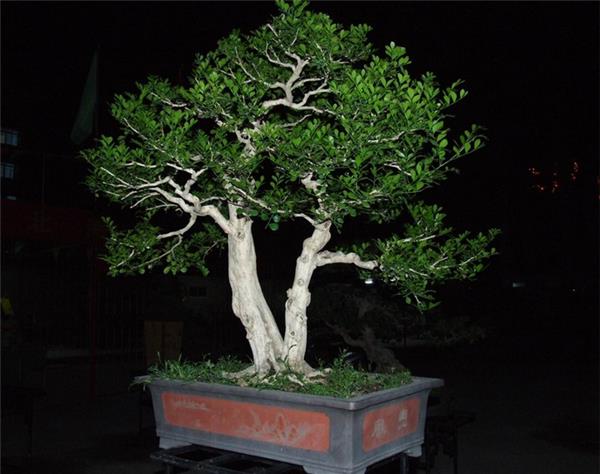
Shaping and pruning: Murraya paniculata is suitable for making into natural-style large bonsai such as the straight-trunk style and the slanting-trunk style. Murraya paniculata is suitable for shaping by pruning; the trunk can be slightly wired and bent, then pruned. The pruning period is best in spring, April-May. The "grow branches and cut the trunk method" is generally used, that is, when the main branches of the trunk have been grown to a suitable thickness, a section is cut off each branch and trunk. After years of pruning, the branches and trunk can achieve a natural, winding and vigorous effect, with well-balanced density, full of painterly charm.
Placement: Murraya paniculata bonsai should not be kept for a long time indoors in insufficient light; it is best placed in half shade. In summer, be sure to guard against scorching sun, and in winter it must be put in a greenhouse, where the temperature must not be lower than 5°C. The place where the Murraya paniculata bonsai is kept should be sprayed with water often to maintain air humidity.
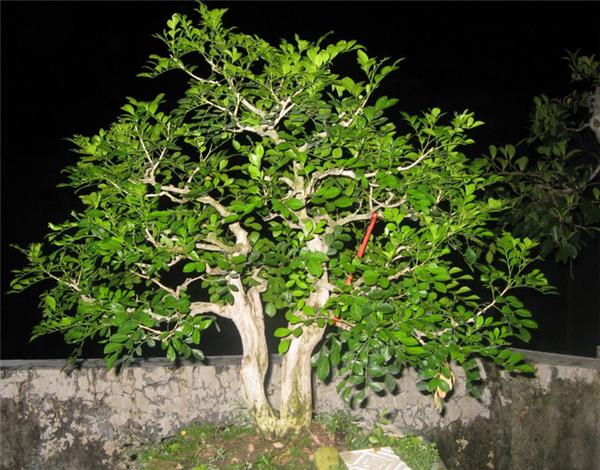
Watering: Murraya paniculata likes a humid environment, but because the potting soil of a Murraya paniculata bonsai is limited, it dries out easily; if not watered in time, it will suffer from lack of water and die. Although a Murraya paniculata bonsai needs constant watering, it should not be watered too much. Too much water will cause Murraya paniculata to grow leggy, and long-term overly wet potting soil will cause poor root respiration, easily leading to root rot and death. Therefore, watering a Murraya paniculata bonsai should follow the principle of "do not water until dry, and when watering, water thoroughly".
Fertilizing: The nutrients in the potting soil are limited. In order to supply the nutrients needed for the growth of Murraya paniculata, attention should be paid to supplementing appropriate fertilizer. However, a Murraya paniculata bonsai grows slowly, so too much fertilizer should not be applied, lest it grow leggy and affect its beauty. Fertilizing should be moderate, and the type of fertilizer and nutrient content should be controlled.
Pests and diseases: Common pests of Murraya paniculata include aphids, stem borers, red spider mites, wax scales; aphids, red spider mites and wax scales can be killed by spraying with 40% dimethoate 800-fold solution, and 50% dichlorvos 1000-fold solution can also be used to kill stem borers, red spider mites and wax scales. When stem borers are found to have bored into the tree core, a thin iron wire can be used to pierce and kill them.
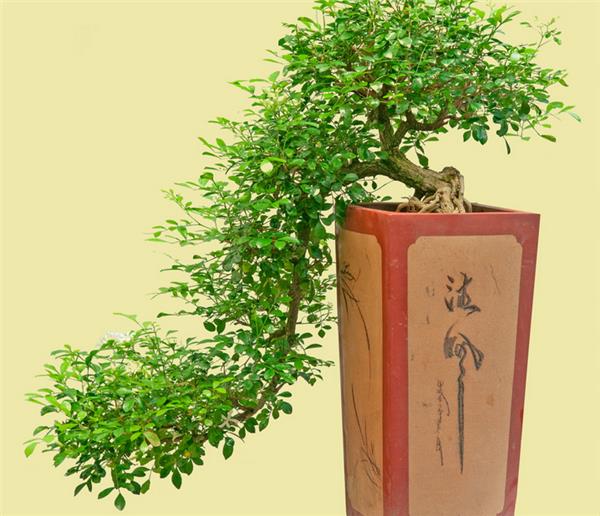
Points to note when growing Murraya paniculata bonsai
1. A Murraya paniculata bonsai needs to be repotted once every 2 or 3 years, and this should be done in April or May. When repotting, prune rotten roots, old roots and overly dense roots. When repotting Murraya paniculata, 50-70% of the old potting soil around the root ball needs to be removed and replaced with new soil.
2. Organic fertilizer and cake fertilizer used for Murraya paniculata bonsai must be fully decomposed before use, otherwise fermentation in the potting soil can easily burn the roots. Liquid fertilizer should not be too concentrated; it must be diluted before use, otherwise fertilizer damage can easily occur.
3. Pest and disease control for Murraya paniculata bonsai: Murraya paniculata has relatively few pests and diseases, but longhorn beetles, aphids and scale insects sometimes occur. When pests are found, they can be caught by hand, and lime sulfur mixture can also be used for prevention and spraying to kill them.
4. In addition, Murraya paniculata has strong sprouting ability, so crossing branches, overlapping branches, dead branches and diseased or pest-infested branches need to be cut off frequently and continuously.