How to grow Mimosa pudica? Master these cultivation methods
How do you grow Mimosa pudica? Mimosa pudica is a perennial herb or subshrub in the Fabaceae family. Because its leaves respond to heat and light and close immediately when touched by an external force, it is named Mimosa pudica (sensitive plant).
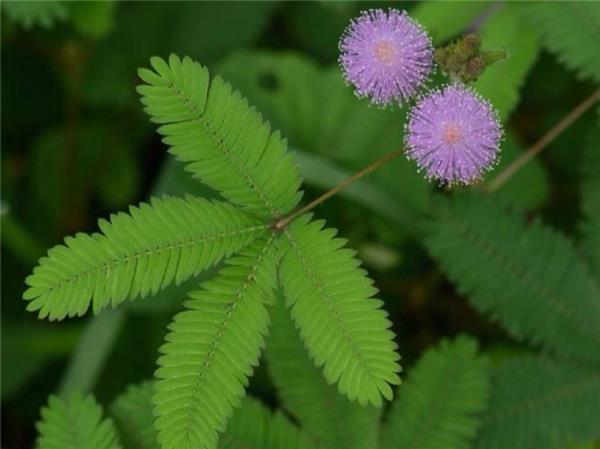
How to grow Mimosa pudica
1. Choose a suitable place for planting; growing it indoors in a pot is a relatively good approach.
Mimosa pudica is a taproot plant with very few fibrous roots, so it is suitable for propagation by sowing, and it is best to sow it directly in place to avoid damaging the roots during transplanting; if transplanting is absolutely necessary, it should be done at the seedling stage, otherwise it is not easy to survive. Mimosa pudica grown as an annual is generally sown indoors in early spring. It can be sown directly in a small pot. It can also be raised in a shallow pot and then divided and transplanted. For the sowing soil, mix 2 parts leaf mold, 3 parts garden soil, and 5 parts fine yellow sand after sifting. When sowing, first fill the pot with an appropriate amount of potting soil, spread it flat and press it firm, water it thoroughly with a watering can, and sow immediately after the water has fully penetrated. For direct sowing in a small pot, sow 1-2 seeds per pot. If using a shallow pot for raising seedlings, sow in spots at a spacing of 2 cm x 2 cm. After sowing, cover with 3-5 cm of soil, just enough to cover the seeds. Cover the pot with glass or plastic film to retain moisture, and place the pot in a bright spot with indirect light at around 20°C. Afterward, when the potting soil becomes dry, water by the bottom-watering method. After about 7-10 days, the seeds germinate and emerge. After emergence, remove the cover from the pot and gradually let them receive sunlight. When the seedlings reach 3 cm in height, those sown in the shallow pot can be divided and transplanted. When dividing seedlings, transplant them with soil, otherwise they are not easy to survive. After the newly potted seedlings are watered thoroughly, first place them in a semi-shaded spot, and after they recover, move them to a spot with ample sunlight. Those sown directly in small pots can be placed directly in a spot with ample sunlight to grow. In mid-April or early May, the seedling pots can be moved outdoors for growing, and water promptly to keep the potting soil moist at all times. When the seedlings grow to 4 leaves, begin applying liquid fertilizer; generally, apply a diluted decomposed liquid fertilizer once every 7-10 days. After the plants grow larger, they can be repotted once more, but the pot should not be too large; generally, planting them in a medium-sized flower pot of 15-20 cm is sufficient. When collecting seeds, select robust mother plants, strengthen management, and during the fruiting period collect them as they ripen; the pods will split open automatically when mature. Field management. For field planting, the plant spacing is 25-30 cm; loosen the soil, hoe weeds, and water promptly.
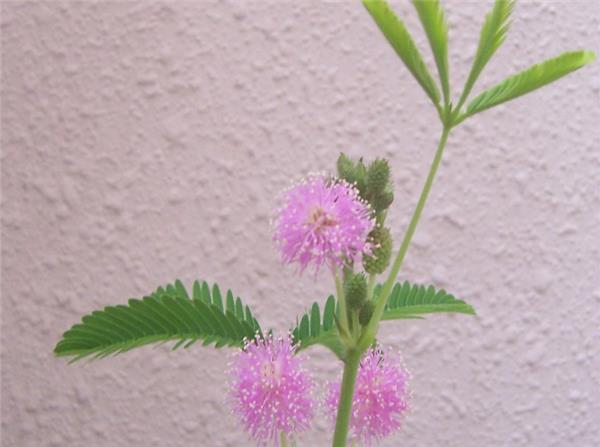
2. Assist in growing Mimosa pudica.
Propagate by sowing seeds; sowing can be done in spring and autumn. Before sowing, soak the seeds in 35°C warm water for 24 hours, sow in holes in a shallow pot, cover with 1-2 cm of soil, supply water by the bottom-watering method, keep moist, and under 15-20°C conditions, seedlings emerge after 7-10 days; when the seedlings are 5 cm tall, pot them up. When collecting seeds, select robust mother plants, strengthen management, and during the fruiting period collect them as they ripen; the pods will split open automatically when mature.
3. The management of Mimosa pudica is very simple.
There are no special requirements for care and management. It can be grown in general soil, and it does not need much fertilizer during the growing period; applying diluted liquid fertilizer 2-3 times is sufficient. Fertilizer should not be too much; it is enough for the leaves to be green and the growth robust. Do not let it grow leggy, because Mimosa pudica is mainly a novelty foliage plant and is better kept small. The cultivation technique for Mimosa pudica is simple, and management is extensive. It is not strict about climate, sunlight, or soil, but fertile, loose sandy loam is best, and it likes a warm and humid environment.
4. It is worth noting that Mimosa pudica basically has no pests or diseases. If there are slugs, they can be controlled in the morning with fresh lime powder.
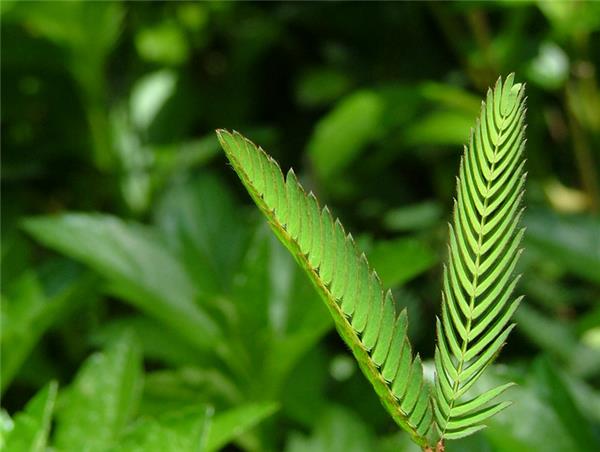
Mimosa pudica has value for ornamental use, medicinal use, and other convenient uses, but in terms of feng shui, it must be viewed from two sides, or it could be said that its feng shui disadvantages are far fewer than its advantages.
1. Starting with the advantages, Mimosa pudica can bring joy to the family. The feather-like slender leaves of Mimosa pudica close immediately when touched by an external force, so it is named Mimosa pudica (sensitive plant). Its leaves also respond to heat and light, so in the evening each day its leaves also fold up. Mimosa pudica is also known as zhixiucao, huhecao, and paichoucao. It grows in clusters, and the base of the stem becomes woody; it can reach 1 m in height and has poor cold tolerance. If you lightly touch the feather-like slender leaves, the leaves close immediately, which is why it is called Mimosa pudica. The flowers are pink, and the inflorescence is spherical and airy. The gentle, sweet flower shape creates a romantic atmosphere.
Here, we see that Mimosa pudica is very cute and can indeed bring happiness to the family. A plant that can make the family happy is a feng shui plant, and a house that lets the family live happily is a feng shui house. It can be seen that a residence planted with Mimosa pudica is a residence with good feng shui.
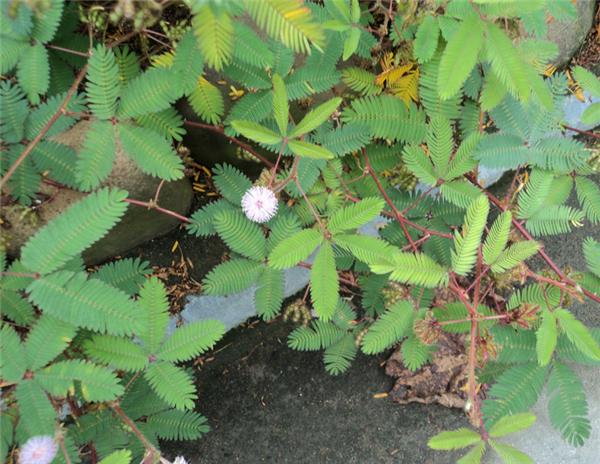
2. Just as there are advantages, there are also disadvantages. Mimosa pudica is a plant with relatively strong toxicity and may make family members sick; on one level, it is not a feng shui treasure. Mimosa pudica contains mimosine; excessive contact can cause sparse eyebrows and yellowing hair, and in severe cases can also cause hair loss. Therefore, if you insist on growing Mimosa pudica indoors, you must be careful not to stay too close to it. Although the rose is beautiful, it has thorns; although perfume is fragrant, it is toxic. Mimosa pudica, in feng shui, although it also has its useful side, while being useful it also implies harm to you. So, if you really want Mimosa pudica to exert its greatest effect, you should use it appropriately.
It may make family members sick; on one level, it is not a feng shui treasure. Mimosa pudica contains mimosine; excessive contact can cause sparse eyebrows and yellowing hair, and in severe cases can also cause hair loss. Therefore, if you insist on growing Mimosa pudica indoors, you must be careful not to stay too close to it. Although the rose is beautiful, it has thorns; although perfume is fragrant, it is toxic. Mimosa pudica, in feng shui, although it also has its useful side, while being useful it also implies harm to you. So, if you really want Mimosa pudica to exert its greatest effect, you should use it appropriately.