Why does the sensitive plant shy away? Uncovering the reasons behind it
In nature, there is a plant called the sensitive plant (Mimosa pudica). If you gently touch it once, its open, feather-like leaves will immediately close up, and right after that the whole leaf droops down, showing a very "shy" appearance. So do you know why the sensitive plant shies away? Below we will look at the reasons the sensitive plant shies away.
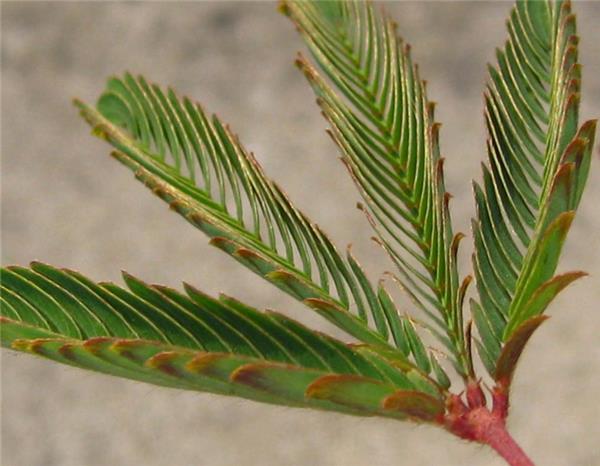
The reasons the sensitive plant shies away
In fact, this phenomenon of the sensitive plant folding its leaf stalks and lowering its head is not because of shyness, but a response of the plant after being stimulated and shaken. In biology, this response is called a nastic movement, and it is the result of changes in cell turgor after the sensitive plant receives an external stimulus.
The sensitive plant's original home is Brazil in tropical South America, where there are often strong winds and heavy rain. Whenever the first drop of rain hits a leaf, it will immediately close its leaflets and droop its leaf stalk, so as to reduce the damage caused to it by the violent storm. This is one way it adapts to changes in external environmental conditions. In addition, this response of the sensitive plant can also be seen as a form of self-defense: as soon as an animal touches it, it folds its leaves, and the animal no longer dares to eat it.
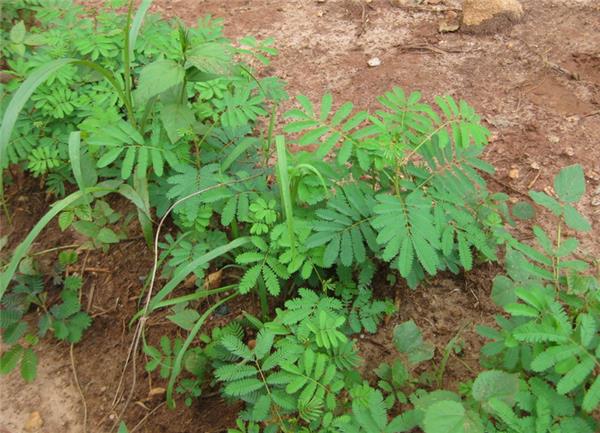
The reasons the sensitive plant shies away are closely related to its native environment. The sensitive plant originates from tropical South America, where the climate is harsh and violent storms often rage. To protect itself well, when the first drop of rain falls on the sensitive plant's leaves, it will promptly, effectively and rapidly close its leaves and droop its leaf stalk, avoiding the damage of the storm; this is the self-regulating nature of the biological world.
At the base of the leaf stalk and at the base of the leaflets of the compound leaf, there is a relatively swollen part called the pulvinus. When the shaking is transmitted to the pulvinus, the cell sap in the thin-walled cells of the upper half of the pulvinus is expelled into the intercellular spaces, reducing the turgor pressure of the cells in the upper half of the pulvinus, while the intercellular spaces of the thin-walled cells in the lower half still maintain their original turgor pressure. As a result, the small leaflets are caused to stand upright, the two small leaflets close together, and even the whole leaf droops down.
Someone has done research: within 0.088 seconds after the sensitive plant is stimulated, its leaves will close; after a little while, the small leaflets unfold again and the leaf stalk also stands upright again. The recovery time is generally 5-10 minutes. However, if we keep teasing it and stimulate its leaves again and again, it will develop a feeling of "boredom" and no longer produce any response. This is because continuous stimulation causes the cell sap that controls opening and closing in the pulvinus cells to be lost, and it cannot be replenished in time. Interesting, isn't it!
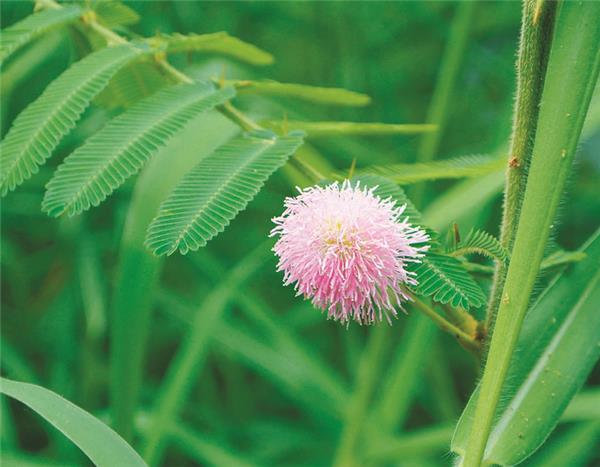
As for the care of the sensitive plant, you can refer to the following methods:
1. Choose a suitable place for planting; growing it indoors in a pot is a relatively good approach. The sensitive plant has few and fine fibrous roots, so it is suitable for propagation by sowing, and it is best to use the direct sowing method to avoid damaging the roots when transplanting. If transplanting is needed, choose the seedling stage.
2. To assist the sensitive plant in reproducing, when it grows lushly and becomes overcrowded, you may appropriately choose to divide it into separate pots for planting, so as to ensure sufficient light and nutrients.
In addition, one point that needs to be noted is that the sensitive plant cannot be planted together with colorful peppers, because colorful peppers carry red spider mites, which will cause the sensitive plant to die.
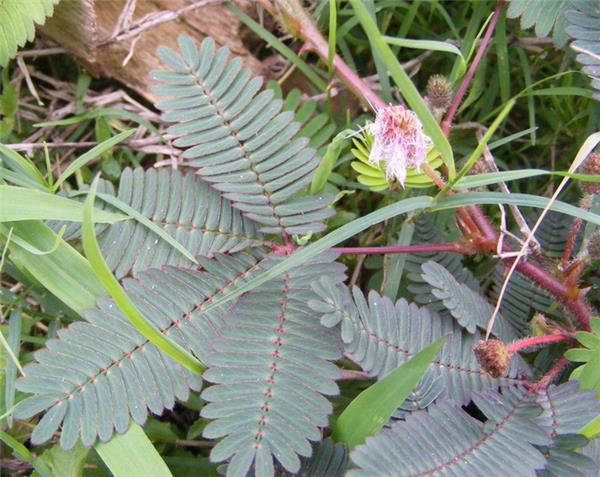
That is all for today's introduction to the reasons the sensitive plant shies away. Now you know the reasons the sensitive plant shies away, right?