How to grow and care for Alocasia macrorrhizos (giant taro)
1. Temperature. Alocasia macrorrhizos can only grow well in an environment no lower than 18°C. If the temperature drops below 18°C, Alocasia macrorrhizos will enter a dormant state and stop growing.
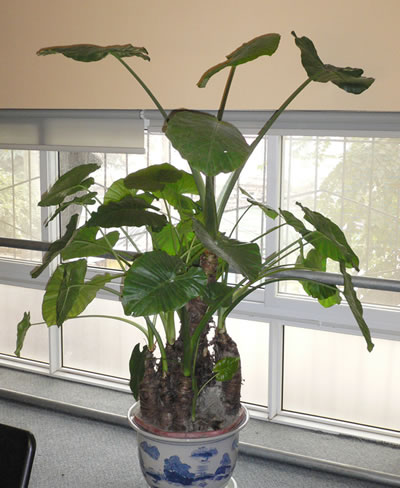
2. Fertilizing. Alocasia macrorrhizos likes fertilizer, so it should be fertilized every month.
3. Watering. In summer, Alocasia macrorrhizos needs more water, but not too much; it is best to let it alternate between dry and moist, and there must be no standing water in the soil, otherwise the tubers will rot. In winter it goes dormant, so water less and stop fertilizing.
4. Sunlight. Alocasia macrorrhizos likes shade, so do not let direct sunlight hit it. If Alocasia macrorrhizos becomes "wilted", it is mainly due to insufficient fertilizing, so pay attention to topdressing. Care: Alocasia macrorrhizos likes a warm, humid environment with slight shade, but during the flowering period it needs plenty of sunlight, otherwise the spathe will be tinged with green, affecting its quality. Make sure it gets 3-5 hours of light every day, otherwise the leaf stalks will elongate and reduce its ornamental value.
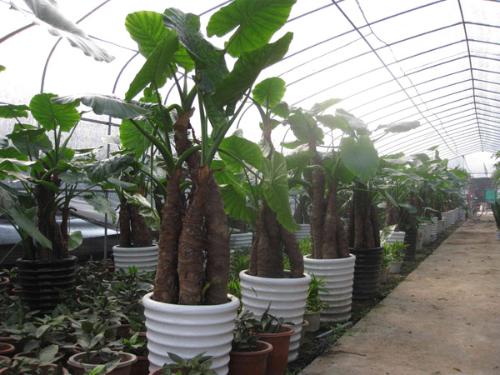
Alocasia macrorrhizos is not very cold-resistant, so it should be moved into a greenhouse in mid-October. In summer, it needs to be shaded, and water should be sprayed frequently to lower the temperature and keep it moist. Alocasia macrorrhizos likes moist, fertile soil, which is what is often called "heavy fertilizer and heavy water", and it needs more watering during the growing period.
Alocasia macrorrhizos is very easy to grow; sufficient water and a suitable temperature are enough. However, it is a bit sensitive to cold, so even when kept indoors in winter, attention should be paid to keeping it warm. Keeping it in the bedroom should not be a problem. It is better to keep it in the living room. The stems of Alocasia macrorrhizos are toxic, so be careful not to break them; if you get the sap on you, rinse it off with water. If there are children in the home, it is best not to grow it.