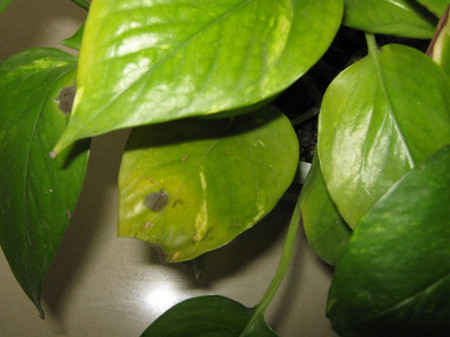
Causes and Solutions for Yellowing Leaves of Pothos Grown in Water
There are several reasons why the lowest leaves of pothos turn yellow:
1. Occasional yellowing is normal metabolism during the growing period, but the intervals are relatively long. (If you have only had it for about 1 month, it needs a certain adaptation period. After one week you can observe growth at the top, that is, new buds sprouting or leaves growing, while yellow leaves at the bottom are normal.)
2. Overwatering or drought; water should be given on a see-dry-see-moist basis.
3. Stop fertilizing after the weather turns cool in autumn.
4. Indoors, pay attention to light and ventilation.
5. In winter, spray water appropriately.
If it is hydroponic, you can add hydroponic acclimatization solution, available at all flower markets. Root rot is probably due to not changing the water frequently enough.
Hydroponic Pothos Propagation Methods
Hydroponic pothos is mainly propagated by cuttings. In late spring and early summer, cut 15 cm to 30 cm branches, remove the leaves from 1 to 2 nodes at the base, and plant them directly in pots with growing medium, 3 to 5 per pot, water thoroughly, and place in a cool, ventilated spot, keeping the potting soil moist. In about one month they will take root and sprout, and in the same year they can grow into plants with ornamental value. Cuttings taken from branches in spring and summer root easily; for making a totem pole, you must use tip cuttings with large leaves, so that it takes shape relatively quickly. Hydroponic pothos can also be grown in water, but the plants are smaller than those grown in soil. Freshly cut hydroponic pothos grown in water generally takes within about a week to grow roots.
During the growth process of pothos, yellowing leaves often occur, and the cause is mostly improper cultivation management. Too much or too little water, too strong or too weak sunlight, and too much or too little fertilizer can all cause leaves to turn yellow, but the yellowing conditions differ, so you should carefully observe and analyze the cause and correct it.
Tools/Materials
Water, agricultural chemicals
Steps/Methods
For one cut from the main stem and inserted into the soil, you can dig away the soil around the roots to see whether there are roots;
Generally the air humidity in a greenhouse is very high. If your home has heating, the air will inevitably be dry, which can also make the leaves wither and turn yellow, so first do a good job of humidifying, and spray a little water on the leaf surface often.
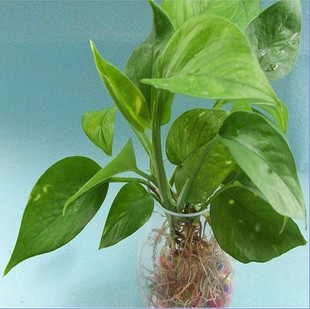
Flowers in flower markets are kept in greenhouses year-round and have their own microbial community, and are often sprayed with chemicals to maintain their survival, but after we buy them and take them home we no longer spray chemicals, and that does not work either. The flower seller cheated you; it should be a root problem. Cut a few branches, put them in a glass, grow them in water for 15 days, and after they grow roots move them into a flowerpot. After 1 year they will be very big. Pothos needs above 20 degrees to root easily.
If there is too much water, it is recommended to pull the plant out and check it. If there is a problem with the roots, cut off the rotted ones. The safe approach is to regrow roots hydroponically and then replant. In winter do not water frequently; water when dry. Pothos is also drought-tolerant.
It is also possible that the seller planted it temporarily, or that the room is too stuffy, which is why the leaves turn yellow, and it looks as if the roots are drying up too.
If the sunlight is too strong, do not water in the middle when watering. The middle of the brown pole is hollow. Water should be poured slowly. The leaves should be sprayed with water, and it is best to spray water on the brown bark as well.