What are the effects and benefits of honeysuckle?
What are the effects and benefits of honeysuckle? Today we will give a simple introduction to this question for everyone, and interested friends can take a look together.
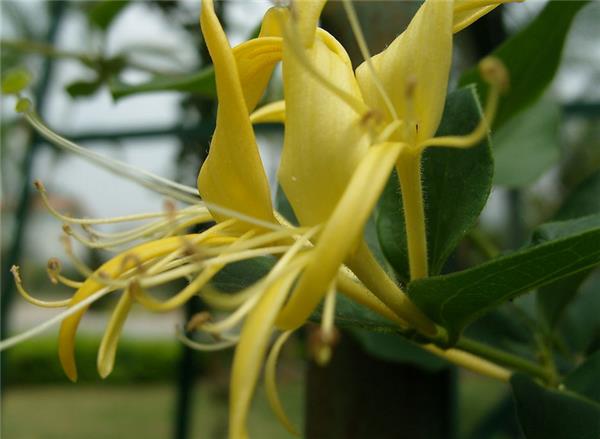
The effects and benefits of honeysuckle
Honeysuckle tea is sweet in taste and cold in nature, and has the effects of clearing heat and removing toxicity, and dispelling wind-heat. Honeysuckle has the effects of clearing heat and removing toxicity, soothing the throat, and relieving summer heat and irritability. It can treat summer heat syndrome, diarrhea and dysentery, influenza, sores, boils and swellings with toxin, acute and chronic tonsillitis, periodontitis and other diseases. The stems, leaves and flowers of honeysuckle can all be used as medicine, and have the effects of removing toxicity, reducing inflammation, killing viruses, sterilizing, promoting urination and relieving itching. Honeysuckle distillate is an excellent product for preventing and treating prickly heat and impetigo in children in summer. Fresh honeysuckle has a delicate fragrance and contains relatively more nectar, and rural children often pick the flowers to suck the nectar. Fresh flowers are sun-dried or dried by the method for making green tea, which gives two kinds of honeysuckle tea, namely the finished products of honeysuckle. There are two kinds of honeysuckle tea on the market: one is fresh honeysuckle blended with a small amount of green tea and scented according to the honeysuckle tea scenting process; the other is made by blending dried honeysuckle, either oven-dried or sun-dried, with green tea.
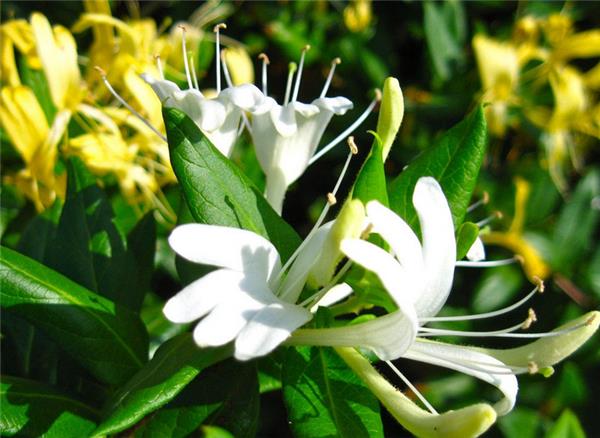
1. Anti-pathogenic microorganism effect. It has a certain inhibitory effect on many pathogenic bacteria such as Staphylococcus aureus, hemolytic streptococcus, Escherichia coli, Shigella dysenteriae, Vibrio cholerae, Salmonella typhi, Salmonella paratyphi and others;
2. It has bacteriostatic and bactericidal effects on pneumococcus, Neisseria meningitidis, Pseudomonas aeruginosa, Mycobacterium tuberculosis, Shigella dysenteriae, Streptococcus mutans and others, and has inhibitory effects on influenza virus, orphan virus, herpes virus and Leptospira;
3. Anti-inflammatory and detoxifying effect, with relatively strong effects of dispersing swelling and clearing heat and removing toxicity for carbuncles, swellings, boils and sores, intestinal abscess and lung abscess;
4. Effect of dispelling heat and dissipating pathogenic factors, with a certain effect on externally contracted wind-heat or the early stage of warm disease, body heat and headache, restlessness and little sleep, mental confusion and crimson tongue, dry throat and parched mouth and others;
5. Effect of cooling blood and stopping dysentery, with the effects of removing toxicity, stopping dysentery, cooling blood and soothing the throat for heat-toxin dysentery, dysentery with pus and blood, damp-warmth obstructing the throat, sore and swollen throat and others;
6. Honeysuckle tea is sweet in taste and cold in nature, and has the effects of clearing heat and removing toxicity, and dispelling wind-heat. Honeysuckle has the effects of clearing heat and removing toxicity, soothing the throat, and relieving summer heat and irritability. It can treat summer heat syndrome, diarrhea and dysentery, influenza, sores, boils and swellings with toxin, acute and chronic tonsillitis, periodontitis and other diseases.
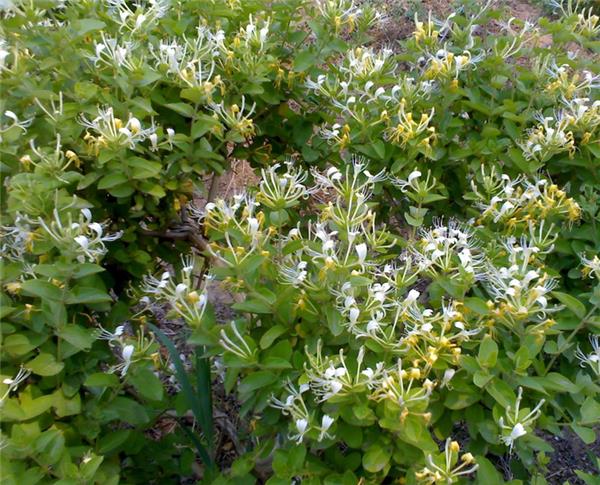
How to brew honeysuckle
The method for brewing and drinking honeysuckle tea is based on the principle of preserving the aroma so that it does not uselessly dissipate and showing the special beauty of the tea base.
For brewing particularly tender honeysuckle tea bases, such as especially high-grade famous teas like jasmine Mao Feng, jasmine Yin Hao and jasmine Dongfeng tea, because the tea base itself has artistic appreciation value, it is best to use a transparent glass teacup. When brewing, place the cup in a tea tray and put two or three grams of honeysuckle tea into the cup. Brew with freshly boiled water slightly cooled to about 90°C, then immediately put on the cup lid to prevent the aroma from dissipating; hold the tea tray in hand facing the light, and through the glass cup wall observe the tea dancing up and down and floating and sinking in the water, as well as the gradual unfolding of the tea leaves, restoration of leaf shape and the changing process of the tea liquor color seeping out. "A cup is a small world, with the sentiment of mountains, rivers, flowers and trees," which can be called an artistic enjoyment, known as "viewing with the eyes."
After brewing for 3 minutes, lift one side of the cup lid and smell the aroma rising densely from the liquor, and you will immediately feel the fragrance rushing to your nose and your spirit lift, "fragrant as the orchid air of nine fields," "the essence of plants and trees is truly divine." Those interested can also lean close to the aroma and take a deep breath to fully appreciate the pleasant fragrance, known as "smelling with the nose."
When the tea liquor is slightly cool and suitable for drinking, take small sips, let it stay in the mouth for a moment, and with the coordinated action of inhaling through the mouth and exhaling through the nose, let the tea liquor flow back and forth once or twice over the tongue surface to fully contact the taste buds. After tasting the tea flavor and the aroma in the liquor, swallow it. Do this once or twice, and only then can you taste the true fragrance and real flavor of precious honeysuckle tea. This flavor is intoxicating, just as the Song dynasty writer Fan Zhongyan said in his tea song, "The taste of tea is now lighter than sweet cream," "The fragrance of tea is thinner than hidden orchids." Comprehensively appreciating the unique tea flavor and fragrant charm of honeysuckle tea is called "tasting with the mouth." There is a folk saying that "one mouthful is drinking, three mouthfuls are tasting"; only by sipping carefully can the flavor emerge. After finishing the first infusion, when one third of the liquor remains, add boiling water again, which is the second infusion. If you drink a third infusion in this way, the tea flavor has already become weak, and no more is added. Through smelling with the nose and tasting with the mouth across the three infusions, after comprehensively appreciating the palatability of the tea flavor and the freshness, concentration and purity of the aroma, one that has all three fragrances is "complete fragrance"; one that is excellent in all three aspects of tea appearance, taste and aroma is a high-grade, famous or treasured honeysuckle tea.
To brew and drink ordinary mid-grade honeysuckle tea, without emphasis on viewing the shape of the tea base, you can use a white porcelain lidded cup. After brewing with 100°C boiling water, put on the cup lid, and after 5 minutes smell the aroma and taste the tea flavor. This kind of honeysuckle tea has a fragrant aroma and a mellow, upright tea flavor, still has tea flavor by the third infusion, and is resistant to repeated brewing.
To brew and drink mid-to-low-grade honeysuckle tea, or honeysuckle tea dust, called "gao mo" in the north, a white porcelain teapot is generally used. Because there is more water in the pot and heat preservation is better than in a cup, it is helpful for fully brewing out the tea flavor. Depending on the size of the teapot, the number of tea drinkers and the strength of taste, put an appropriate amount of tea leaves into the pot, pour in 100°C freshly boiled water, add the pot lid, wait 5 minutes, and then pour into teacups for drinking. This method of brewing together and drinking separately is, first, convenient and hygienic, and second, when family members gather, or three to five relatives and friends chat together, sit around tasting tea and talking about everyday matters, it is more harmonious and adds an atmosphere of unity, friendship and amity.