What are the side effects of honeysuckle? You need to understand them clearly before taking it
Honeysuckle has been hailed since ancient times as a good medicine for clearing heat and detoxifying. It is sweet in nature, cold in energy, and aromatic; being sweet and cold, it clears heat without harming the stomach, and being aromatic and penetrating, it can also dispel pathogenic factors. Since everything has two sides, today we will look at the side effects of honeysuckle.
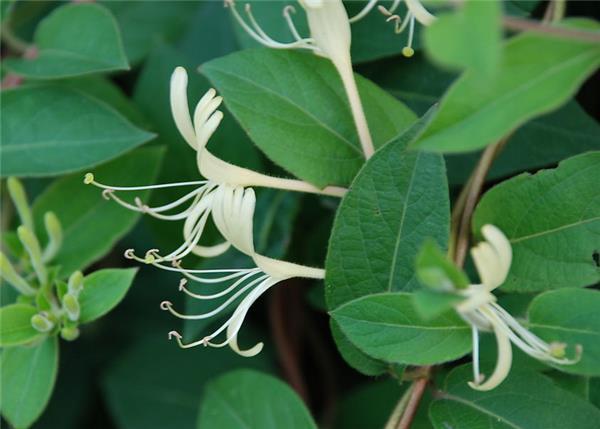
Side effects of honeysuckle
1. Honeysuckle can disperse wind-heat and clear blood toxins. It is generally used for various heat-related ☆contraindicated☆ diseases, such as fever, rash, spots, heat-toxin sores and carbuncles, and sore, swollen throat, with remarkable results. Although honeysuckle is an anti-inflammatory medicine, it should not be taken often; the side effects of honeysuckle can make the constitution weak. It should only be taken when there is fire in the body or when one has a cold and cough, and long-term use is not recommended.
2. Honeysuckle is cold and cool in nature, and its side effects can affect the transforming and transporting functions of the spleen and stomach. This medicine is generally more suitable for use in the hot summer days.
3. People with weak spleen and stomach should not use it often.
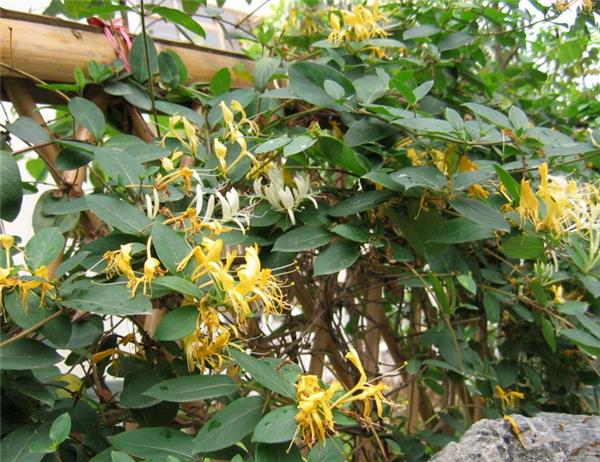
The better the quality of honeysuckle, the better its medicinal effect and the higher its value. Therefore, one needs to learn how to distinguish it. Let us look at how to identify honeysuckle of different qualities.
The national standard for commercial honeysuckle divides it into four grades
Grade One: dry goods, flower buds are club-shaped, thick at the top and thin at the bottom, slightly curved, surface greenish-white, corolla thick and slightly hard, with a firm feel when held; fresh aromatic odor, sweet and slightly bitter taste. Open flowers, split flower buds, and yellow strips do not exceed 5%. No black strips, black heads, branches and leaves, impurities, insect damage, or mildew.
Grade Two: basically the same as Grade One, except that open flowers do not exceed 5%. Split flower buds and yellow strips do not exceed 10%.
Grade Three: dry goods, flower buds are rod-shaped, thick at the top and thin at the bottom, slightly curved, surface greenish-white or yellowish-white, corolla thick and hard in texture, with a firm feel when held. Fresh aromatic odor, sweet and slightly bitter taste. Open flowers and black heads do not exceed 30%. No branches and leaves, impurities, insect damage, or mildew.
Grade Four: dry goods, with both flower buds and open flowers, color not distinguished. Branches and leaves do not exceed 3%, no impurities, insect damage, or mildew. Only by knowing how to identify honeysuckle can you ensure that you buy good honeysuckle, so that diseases can be treated better.
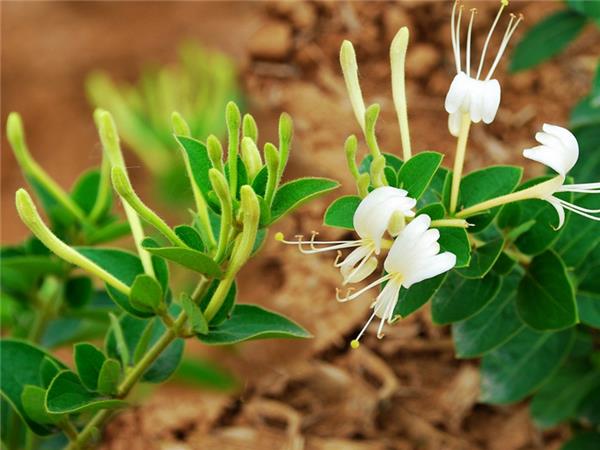
Making honeysuckle tea
1. Preparation of tea base: honeysuckle tea uses refined green tea base as the main material, at about 90% of the amount. Pick fresh tea leaves with one bud and two leaves or one bud and three leaves as raw material, and make the tea base according to the new green tea production process of "high-temperature de-enzyming, rapid rolling, and complete baking." The tea strips are required to be tightly formed, the leaves young and tender, and the moisture content lower than 5%, and old leaves, tea stems, and debris should be removed, and tea dust sifted out.
2. Harvesting of honeysuckle: summer is the harvest period for honeysuckle. When the flower buds turn from green to white and the upper part swells, pick the unopened flower buds before 9 a.m. on a sunny day (while the dew has not dried). At this time the fragrance of the flowers is the strongest, and it also helps maintain the color of the flowers.
3. Tea base absorbing fragrance: prepare materials in the ratio of 5-6 kg of fresh honeysuckle per 10 kg of tea base. Depending on the amount of fresh flowers, evenly divide them into several mesh bags (sewn from nylon screen cloth) and spread them flat. Place the tea base and flower bags in layers in a clean wooden box, that is, put a layer of tea, then a bag of flowers, then another layer of tea, and seal the container mouth tightly to let the tea leaves absorb the fragrance. After 2-3 hours, take out the flower bags from the container, take out the tea base and mix evenly, then place the tea base and flower bags in layers in the container again for a second fragrance absorption, then take out the tea and flower bags.
4. Drying and packaging: pour the honeysuckle into a baking tray and dry it at 40°C; or spread it in a mesh sieve and burn medicinal sulfur beneath the sieve for 2-3 minutes (until smoke is visible above the sieve), then air-dry to prevent the honeysuckle from changing color. At the same time, re-bake the tea base to dry it, and cool for 24 hours. Mix at a ratio of 90% dry tea and 10% dried honeysuckle, and seal and package it in laminated film bags according to weight specifications; this is the finished tea.
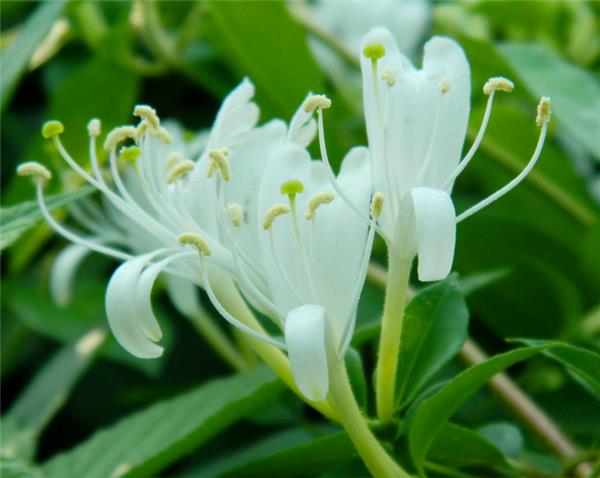
Honeysuckle mainly clears heat and detoxifies. Although there are no side effects of honeysuckle, the processing and preparation method must also be considered. Some traders nowadays are really bad; in order to make the color look good and make it appear sellable, they add a certain amount of sulfur for processing. If the original color of the honeysuckle is still present, it can be used, but it is still better to use less and be careful. If the honeysuckle is processed by transient de-enzyming, then it can be eaten with peace of mind, and there is no problem.