How to grow pomegranate flowers? A detailed guide to pomegranate flower cultivation methods
Pomegranate flowers are mostly grown by people for ornamental purposes, so are pomegranate flowers easy to keep alive, and easy to cultivate? Let's learn together below about how to grow pomegranate flowers!
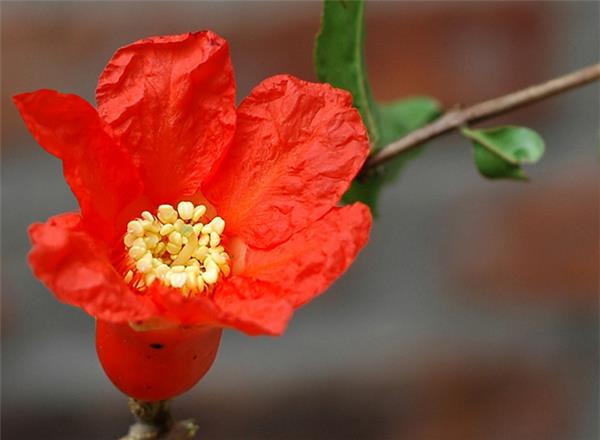
How to grow pomegranate flowers
1. Planting
Pomegranates can be planted in all four seasons, with early spring and autumn being the best. There is a saying that in the north they are planted in spring, and in the south in autumn. When planting, it is best to choose high-quality seedlings with intact root systems, plump buds and smooth stems. The soil can be turned over until it is matured, debris removed, then replaced with new soil, dug to 50 cm, and the plant buried deeply, with a length of 0.6-0.8 m, and 25-50 kg of organic fertilizer applied, fully mixed with the topsoil and then backfilled.
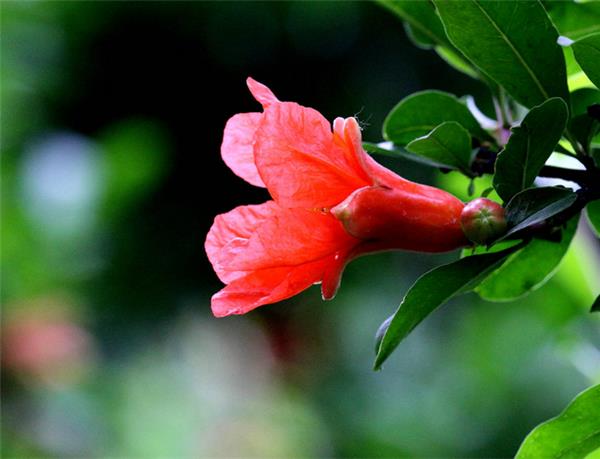
2. Water and fertilizer management
(1) Water
There is the matter of irrigation and drainage, that is, watering treatment is needed during the key periods for pomegranates, and a soil moisture of 60-80% is more suitable, while during other periods it also needs to be controlled flexibly. These three key periods are respectively the budding stage, the fruit expansion stage and before leaf fall. Because pomegranates are drought-resistant but not waterlogging-resistant, attention should also be paid to drainage treatment to prevent poor pomegranate growth caused by waterlogging damage.
(2) Fertilizing
In the year of planting, additional fertilizer is needed, using 1-2 kg of decomposed manure water plus a small amount of urea, applied to the soil. Fertilizer is also needed before leaf fall in autumn; the usual practice is to dig a ring-shaped trench and apply 20-30 kg of supplementary fertilizer. Fertilizer is also needed during the full fruiting period, applying decomposed manure water in holes around the tree disc 3-4 times. Attention should also be paid to supplementary fertilizing during the growing season; at this time nitrogen fertilizer is usually used first, and then phosphorus and potassium fertilizer, taking care to control the fertilizer concentration.
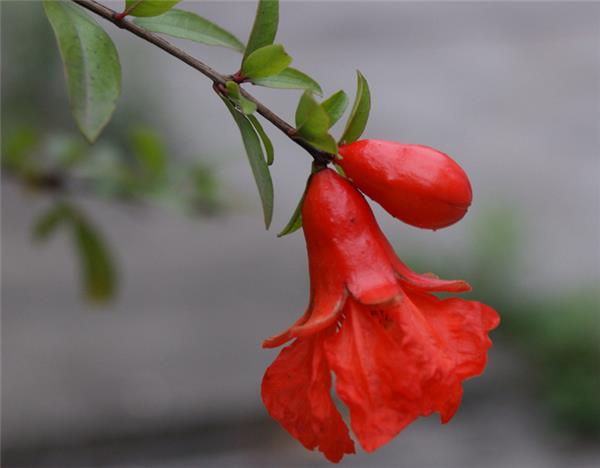
3. Training and pruning
Pomegranates like sunlight, so their light transmission performance should be considered; in addition, of course, attention should also be paid to ornamental value. Therefore, when training and pruning, care should be taken to ensure a certain form. For example, the natural open-center form, the "V" shape, and so on.
The principle of pomegranate pruning is: with form but not rigid, without form but not chaotic. Therefore these branches and leaves should be handled according to this principle, so that the vigorous branches have space to grow, while those with no usable space should be dealt with in time.
4. Pests
For pomegranates, the main focus should be on the two periods before and after fruit set: pest prevention in the early period, and disease prevention in the later period. From the end of April to early and mid-May, pomegranate trees are prone to pests such as slug moths, aphids, stink bugs, scale insects and cotton leafworms. After fruit set, the main diseases are white rot, black spot and anthracnose.
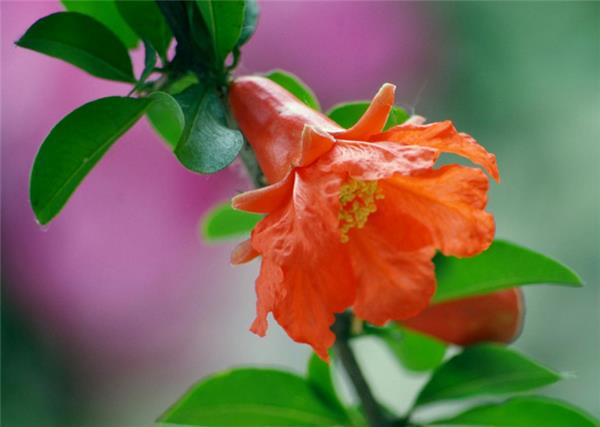
Pomegranate flowers are commonly propagated by cuttings, division and layering.
Propagation by cuttings
Either two-year-old branches selected in spring or semi-lignified branches used in summer can be used for cuttings, and they root 15-20 days after insertion. For division, in early spring in April when the buds swell, dig out strong root-sucker seedlings and plant them separately.
Propagation by layering
This can be done in both spring and autumn, without the need for wounding; before the buds swell, press the root-sucker branches from the base into the soil, and after rooting through the summer, cut them away from the mother plant, and by autumn they become seedlings.
For open-field cultivation, a site with sufficient light and good drainage should be chosen. During growth, it is necessary to frequently remove root-sucker seedlings and cut off dead branches, diseased branches, dense branches and leggy branches, so as to facilitate ventilation and light penetration.
Propagation in pots
It is best to plant shallowly, and watering needs to be controlled; it is better dry than wet. During the growing period, pinching is needed to control the growth of vegetative branches and promote flower bud formation.