How to grow crabapple flowers? Detailed explanation of cultivation methods and precautions
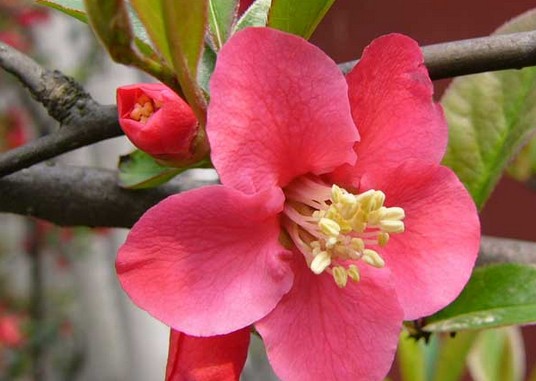
How to grow crabapple flowers
Crabapple likes sunlight and is not tolerant of shade. It has strong adaptability to severe cold climates, and its drought tolerance is also very strong. Most species grow best in high, dry, sunny areas, and some species can also tolerate a certain degree of saline-alkali soil. It likes to grow in deep, fertile loam with a pH of 5.5 to 7.0, from slightly acidic to neutral. Crabapple has strong sprouting ability. Its phenological periods vary with latitude, altitude and species.
1. Timely pruning. Every year before bud break in early spring, prune overly dense and thin branches as well as dead, diseased and pest-infested branches. This helps ventilation and light penetration, promotes growth and flowering, and reduces the occurrence of pests and diseases. For old plants, old branches should be renewed. In early spring, saw off the upper part of large branches that have few small branches with a sharp saw. After new shoots sprout, select and keep several vigorous branches, cut off the thin and weak branches, and after another year of cultivation they can bloom.
2. Fertilizer and water management. Plant before buds sprout in early spring, and apply decomposed organic fertilizer before planting. After leaf fall each autumn, dig a trench around the root zone and apply decomposed organic fertilizer, then cover with soil and water thoroughly. Established plants should not be watered too much; too much water easily causes yellow leaves. Generally, water 2 to 3 times in spring, 1 to 2 times in summer and autumn, and water once more when winter begins.
3. Remove fruit in time. After the flowers fade, remove the young fruit promptly to save nutrients, which helps increase the number of flowers the following year.
4. Pest and disease control. Malus spectabilis is easily harmed by pests such as aphids, red spiders, scale insects and longhorn beetles, and pesticides should be sprayed promptly for control.
5. Watering and fertilizing. Watering should keep the potting soil moist. In dry and midsummer weather, it is also necessary to spray water on the leaves and the ground; increasing air humidity is beneficial to growth. Avoid water accumulation in the pot and rain exposure, otherwise root rot easily occurs. In winter, the potting soil is better kept slightly dry. Every 7 days, spray the leaves and the surrounding environment with clean water, which both increases humidity and keeps the leaves clean. During the growth period, apply dilute cake fertilizer water about once every 10 days; during the bud stage, apply a quick-acting phosphorus fertilizer as a top dressing. When fertilizing, be careful not to splash the fertilizer solution onto the leaves; do not fertilize during the flowering period or in winter and summer.
6. Light and temperature. The suitable temperature for the growth of Begonia maculata is 18 to 20°C, and it needs a well-ventilated environment with diffused light. In high-temperature seasons, measures such as shading, ventilation and spraying water should be taken; in winter, it is best to keep the room temperature above 10°C, and it can be placed in a sunny place. When cultivated at home, place it outdoors in diffused light 1 to 2 times a week during the growing season, and in winter place it in a sunny, wind-sheltered spot.
7. Tying and repotting. Because Begonia maculata plants are relatively tall and large, supports such as thin bamboo stakes are needed to hold up the branches to prevent lodging. At the same time, every spring it is necessary to repot, change the soil and prune the branches, cutting off weak branches, overlapping branches and residual roots. For plants that have already bloomed for 2 to 3 years and are too tall, cut them back, leaving only 6 to 10 cm of the stem, and let them sprout new branches again.