Is the poinsettia toxic? A detailed explanation of the poinsettia's effects on the home environment
The poinsettia is one of our favorite foliage plants; its red leaves at the top set off the other emerald-green leaves beautifully. Is the poinsettia toxic? What effects does the poinsettia have on the home environment?
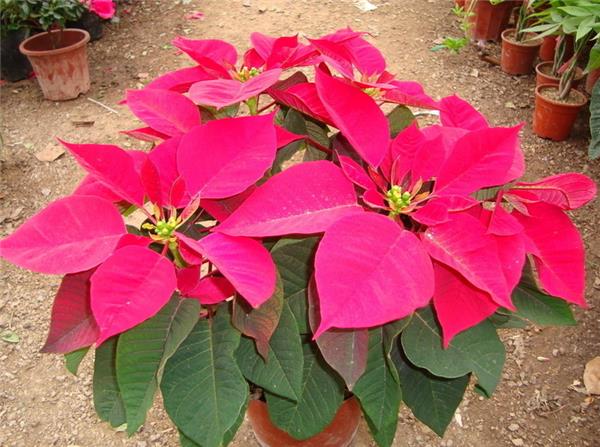
Is the poinsettia toxic?
The entire poinsettia plant is toxic. Once its white milky sap touches the skin, it can cause allergic symptoms such as redness and swelling; if the stems or leaves are eaten by mistake, mild cases lead to gastrointestinal reactions and nervous system disorders, while severe cases carry the risk of death from poisoning. However, as long as you do not eat it and do not come into close contact with it, it will not harm the human body. So it is best not to put a poinsettia in the bedroom, and not to place it where children can touch it.
In fact, flowers and plants can purify the air and regulate temperature. The vast majority of plants are harmless to the human body; for example, white orchid (Michelia alba) and white chrysanthemum have the function of clearing lung heat, while rose and osmanthus can refresh the mind and sharpen the senses.
The poinsettia's effects on the home environment
With the development of high-rise buildings in cities, people spend most of their time active indoors. In addition to arranging beautiful furniture and some furnishings in the home, if potted flowers, bonsai and flower arrangements can be used as indoor decoration, it will have even more unique flavor; it can not only bring a rich atmosphere of life to the room, but also delight the eye and soothe the mood.
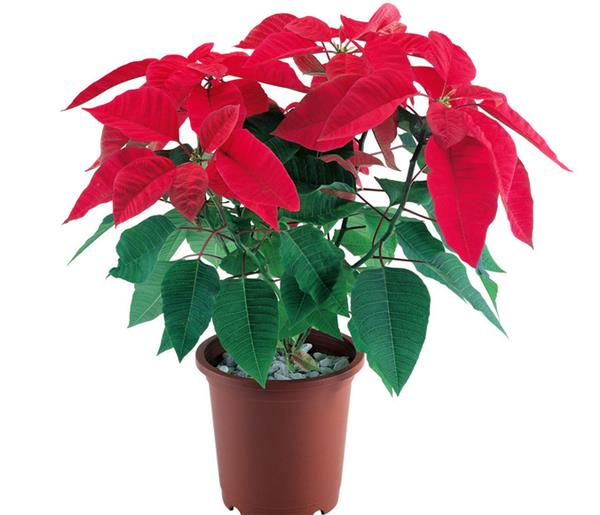
There is no doubt that the poinsettia is very beautiful, but what pleases your eye is not its flower, but its bracts. The poinsettia is an evergreen shrub; its young branches are green and its old branches are dark brown. The leaves near the flower cluster at the top are bract-like and turn red when blooming, and this is the main ornamental part. Therefore, what we usually admire is actually its bracts, but checking the true flowers located at the top helps to judge the quality of the poinsettia. If most of the small yellow flowers at the top have already opened and there are also many small flowers on the side buds, then it is "past its bloom"; such poinsettias mostly have a short flowering period, and it is very difficult to extend their display time after buying them and taking them home. An ideal poinsettia should have relatively firm stems and leaves, giving a feeling of vigorous upward growth.
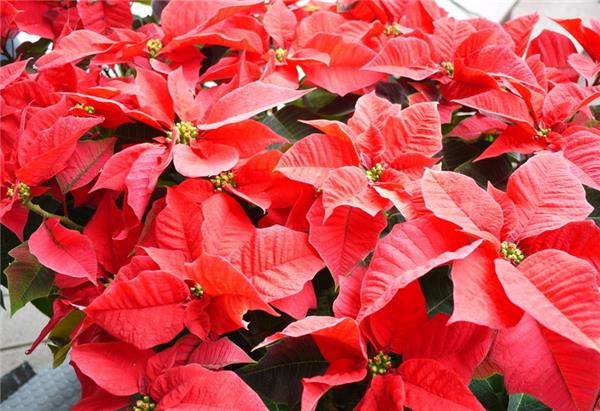
Placing a pot of poinsettia at home and quietly accompanying it as it grows, it first gives you a vibrant green, yet in the bleakest, coldest season it repays you with a mass of fiery warmth. At the joyful Christmas and New Year, it shares those happy, blessed moments with you. This is undoubtedly a very wonderful thing.
The poinsettia likes warmth, moisture and sunlight. While caring for it attentively, it will also make you pay attention to the temperature, humidity and other environmental conditions in the room, invisibly urging you to adjust the indoor environment to its best state, so that you feel pleasant and relaxed within it.
Using plants to decorate our lives is not only to improve the indoor environment; I think it is more to create an atmosphere. Just as we can survive with bread and water, what we pursue is far more than that. The beauty of life needs you to discover it, and I think a beautiful environment also needs us to create it.
That is all for today's discussion of the question of whether the poinsettia is toxic. Do you have your answer now!