Spider Plant Varieties with Pictures and Names: Complete Guide, Plus Care Methods
█ Orchid Care >> Spring Orchid Care Methods and Precautions
█ Orchid Flower Language >> Oncidium Flower Language / Oncidium Care Methods Introduced
█ Orchid Blooming Period >> How Long Does an Orchid Bloom? Key Points for Controlling the Orchid Blooming Period
When modern people grow plants indoors, they generally tend to favor green plants with air-purifying ability, such as the spider plant. Its roots and leaves are unusual, it grows in a creeping manner, and it has a strong air-purifying ability, making it one of the indoor green plants most loved by modern people. But do you know how many varieties of spider plant there are, and do you understand their names and care methods? Below, let us take a look at the complete list of spider plant variety names and the care methods for spider plants.
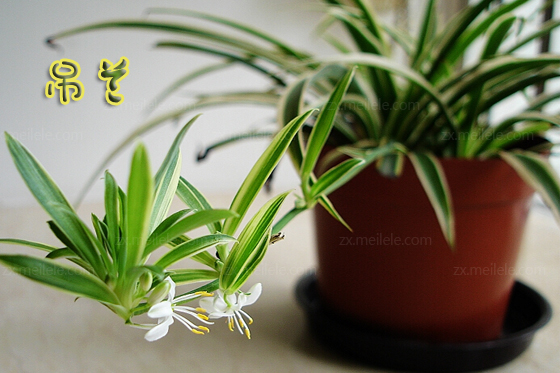
¤ Complete List of Spider Plant Variety Names
People have been growing spider plants for a very long time, and over this period they have bred all kinds of spider plants, so that today there are a great many spider plant varieties surviving in our lives, each with a different form, and all interrelated yet distinct from one another. Among these many types, the most common spider plant varieties generally number five. Which five are they:
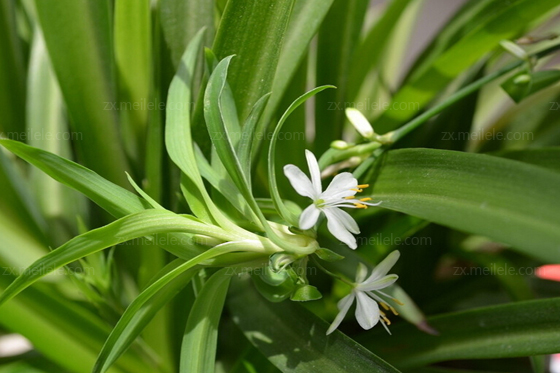
1. Spider Plant Variety - Broadleaf Spider Plant
The broadleaf spider plant is in fact the most common kind of spider plant in our lives. Its leaves are broadly linear, with slightly wavy margins along the entire edge, making it look extremely attractive. The flower scape generally emerges from the plant as well, forming a raceme when it blooms, with flowers mostly white, and the blooming period concentrated in the spring and summer of each year.
2. Spider Plant Variety - Purple Spider Plant
The purple spider plant, also called the painted-leaf spider plant, is a perennial evergreen herbaceous plant. Its flowers generally bloom in the summer and autumn of each year. The stems of the plant are jointed, and each jointed stem bears leaves; the leaf stalks are entirely purplish-red, and the leaves are thick and glossy, all hanging downward. When it blooms, the flowers are mostly pink, looking very cute, with high ornamental value.
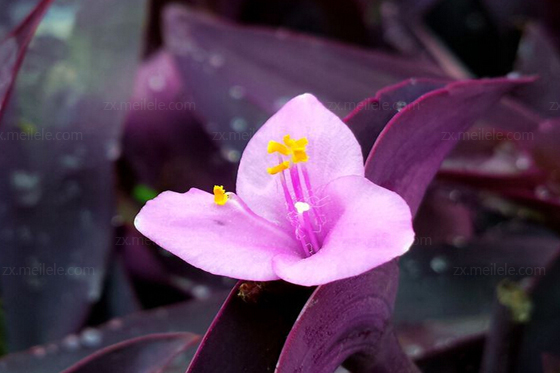
3. Spider Plant Variety - Flower Spider Plant
The flower spider plant, also called flower vine grass or lipstick flower, is also one of the very exquisite varieties among spider plants. Its stems are trailing, with branches and leaves hanging down, and the leaves are peach-shaped. Whenever it blooms, the inflorescences are mostly axillary or terminal, and the flower calyx is tubular in form, looking just like a lipstick, which is why it is also called the lipstick spider plant.
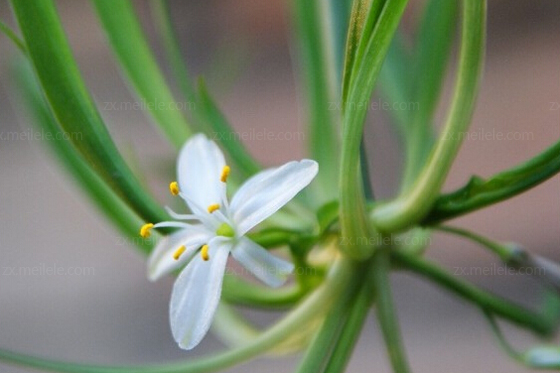
4. Spider Plant Variety - Golden-Edge Spider Plant
The golden-edge spider plant, also called the golden-leaf spider plant, is one of the ornamental flowers that people today most love to hang indoors. Its leaves are broadly linear and tender green, and the fleshy roots growing on the plant's short stems are rather plump. When it blooms, the plant forms a raceme of many small white flowers, and the flowers curve and hang downward, looking very elegant and beautiful.
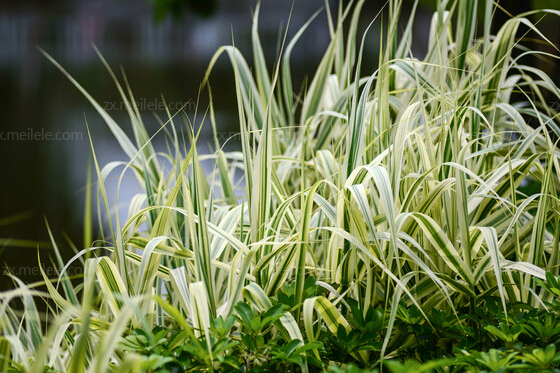
5. Spider Plant Variety - Silver-Edge Spider Plant
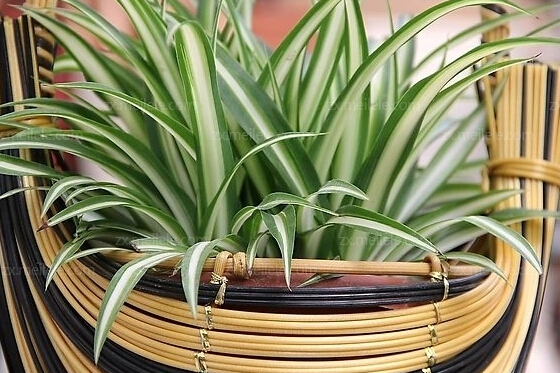
The silver-edge spider plant actually has many similarities to the golden-edge spider plant. The leaves of this spider plant are also emerald green; the difference lies in the leaves being edged in white, so the leaves of the whole spider plant look even more vivid, with very high ornamental value. Moreover, this plant is easy to grow, so it is very popular with consumers.
¤ Introduction to Spider Plant Care Methods
The spider plant likes a warm and humid growing environment. In terms of light, the spider plant leans more toward a semi-shaded environment, so in daily care you should avoid strong light or direct sunlight. In summer, care must include good shading. In terms of watering, spider plants should be watered adequately, and you must always pay attention to keeping the plant's soil moist, especially in the hot summer.
As for fertilizing, the spider plant is a foliage plant that is relatively tolerant of fertilizer and has a fairly large demand for nutrients, so it needs fertilizing once every 10 days to half a month. At the same time, from late spring to early autumn, organic fertilizer should be applied once every week. In addition, when growing spider plants you should also pay attention to pruning; simply cut off the yellow leaves the plant produces.
Summary: As a plant and flower that is both full of greenery and able to purify indoor air, the spider plant has always been deeply loved by people, so learning more about it can not only help yourself but also help others.
[You May Be Interested In]
☑ Pothos Care Methods and Precautions ☑ Crape Myrtle ☑ Cosmos ☑ Lisianthus ☑ Snapdragon ☑ Dahlia
☑ Anthurium Care Methods and Precautions ☑ Balloon Flower ☑ Peace Tree ☑ Living Stones ☑ Cuban Oregano ☑ Fortune Tree