Carnivorous Plant Growing Methods and Picture Collection
█ Orchid Growing >> Detailed Guide to Growing Orchids at Home and Precautions
█ Vegetable Growing >> Complete Guide to Growing Vegetables at Home, Adding More Green to Life
█ Water Lily Growing >> Complete Guide to Water Lily Growing Methods, Grow Your Own Moonlit Lotus Pond
Before summer has even arrived, mosquitoes, rodents and ants are already on the rise, plunging people's lives into misery. To solve this problem, some people have thought of all kinds of carnivorous plants. Growing some carnivorous plants at home can indeed keep mosquitoes away, but what are the growing methods for carnivorous plants, and what do carnivorous plant pictures look like? Below, let us take a look at carnivorous plant growing methods and a carnivorous plant picture collection.
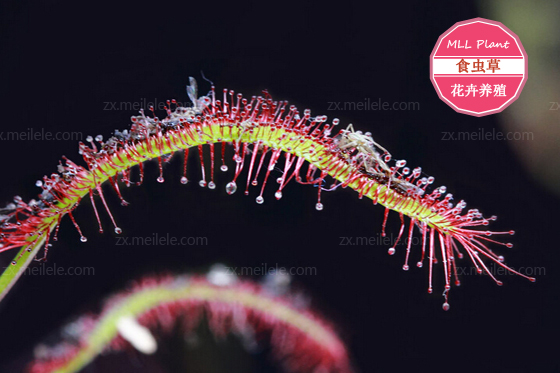
¤ Carnivorous Plant Growing Methods
1. Temperature and light control: Carnivorous plants are one of the more temperature-sensitive plants and are very intolerant of low-temperature growth, so during cultivation, controlling the temperature well is the most critical thing. The best growing temperature for carnivorous plants is around 25 to 30 degrees, and when growing in winter the temperature must be kept above 10°C at the lowest; when summer temperatures are too high, attention must also be paid to cooling. At the same time, carnivorous plants have very little demand for light; it can be said that carnivorous plants are a type of plant that rather fears strong light, so during cultivation, be sure to avoid strong light exposure and carry out proper shading work, especially in summer.
2. Substrate selection and disinfection: Normally, when planting carnivorous plants, a relatively loose, breathable, fairly fertile substrate with strong water-holding capacity is chosen, and this kind of seedling substrate is currently quite easy to find on the market. However, after choosing the growing substrate, disinfection work is still needed; the purpose of doing this is to prevent the danger of pest and disease invasion during plant growth. At the same time, after disinfection is completed, the substrate also needs to be dried, so that the resulting substrate can be used to plant carnivorous plants.
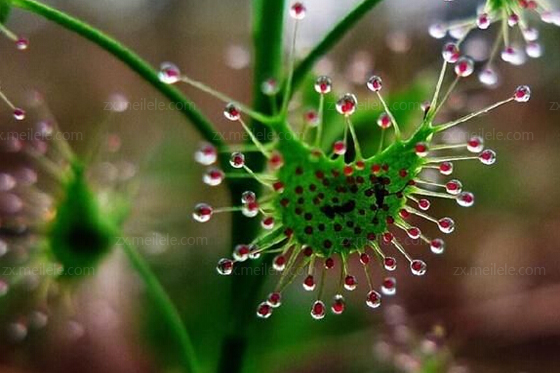
3. Proper watering and fertilizing: Because carnivorous plants generally grow in high-temperature environments, their demand for water is relatively high whether during the growth period or the vigorous growth stage. Therefore, in addition to watering 4 to 5 times a day, clear water also needs to be sprayed frequently on the plant's leaves. However, at low temperatures in winter, the plant's water demand will drop greatly, and at this time watering can be appropriately reduced. At the same time, carnivorous plants actually have very low demand for fertilizer; when nutrients are insufficient, some fertilizer can be applied.
4. Pest and disease control: During the seedling growth period, because the plant is still very fragile and its growth rate is slow, all kinds of pest and disease problems can appear if one is not careful. Therefore, at this time, constant attention must be paid to the prevention and treatment of plant pests and diseases. In daily planting, pay attention to ventilation and breathability for the plant, and try to avoid rain exposure and overwatering. At the same time, to avoid pests and diseases, some 50 percent carbendazim can also be sprayed for prevention.
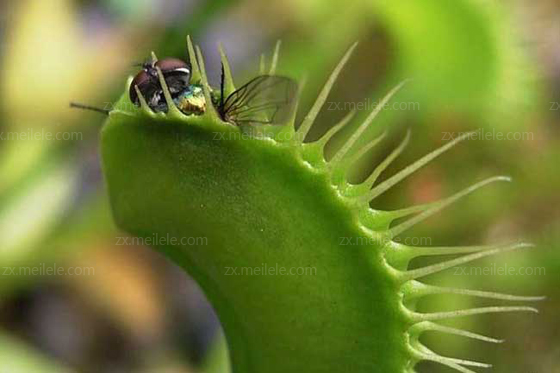
¤ Carnivorous Plant Picture Collection
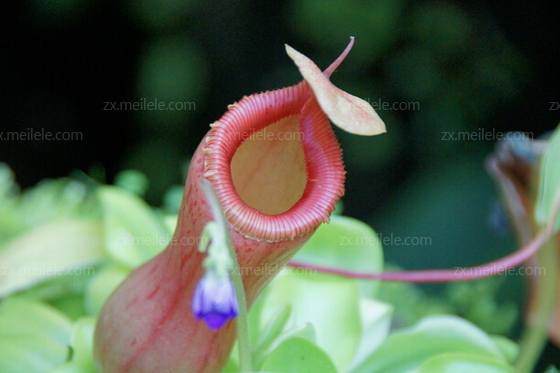
Actually, in general, carnivorous plant pictures are not especially attractive; probably most carnivorous plants are not particularly beautiful. This is mainly because people actually always have a kind of psychological bias toward them. But in fact, some carnivorous plants still have very beautiful appearances. For example, this kind of carnivorous plant is a type we often see called pitcher plant (Nepenthes); at first glance it is still quite delicate and elegant, especially when the plant's soft pink colors and emerald green leaves set each other off, it looks very pleasing, but the most important thing is still that the plant's role in catching mosquitoes is very good.
Summary: As mosquitoes gradually increase in summer, planting such a pot of carnivorous plants is quite nice. Whether placed in our indoor living room or by the balcony windowsill, it can play a role in catching mosquitoes.
[You May Be Interested In]
☑ Phalaenopsis growing methods and precautions ☑ Sand painting making ☑ Paper-cutting tutorial ☑ Bonsai plants ☑ Cockscomb
☑ Alocasia macrorrhizos growing methods and precautions ☑ Peony Chinese painting ☑ Curtain chains ☑ Suzhou embroidery pictures ☑ Tuberose