How to Water a Clivia: Master the Right Methods and Precautions
Clivia has well-developed fleshy roots that can store a good amount of water, giving it a certain degree of drought tolerance. However, prolonged water shortage will affect new leaf growth, root development and flower stalk emergence. So how should you water a Clivia? Below we look at the precautions for watering Clivia.
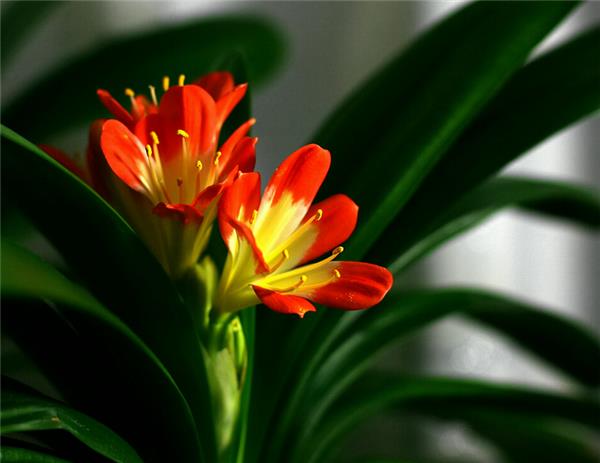
How to Water a Clivia
The temperature, humidity, pot size, soil permeability (air permeability) and season differ from home to home, so don't rely on a single fixed watering interval. The length of the interval should be considered according to changes in the environment. To judge whether it is time to water, here are a few tips:
1. Tap
Tap lightly at the 1/2 to 1/3 point of the pot. A crisp sound means the soil no longer has enough moisture and it is time to water. A dull sound means there is plenty of moisture and no watering is needed.
2. Weigh
Before watering, lift the pot and feel its weight. Water it. After watering, lift the pot again and feel the weight. Over time, with some experience, you will know whether it is time to water just by weighing the pot in your hand.
3. Probe
Probing is the most direct method. Insert a finger about 1/3 of the way into the soil to feel the moisture. If it feels moist, no watering is needed. If it feels damp, get ready to water. If there is only a slight trace of moisture, it is time to water.
Clivia should be watered thoroughly. Indoors, it is best to water Clivia using the "sit-pot" method. That is, place the Clivia pot in a basin and water it, keeping the water that flows out of the pot to use for watering the flowers next time. This way the soil is easily watered thoroughly, and the nutrients flowing out of the pot are not lost and wasted with the water. When watering, also be careful not to let water get into the leaf core. If water accidentally gets into the leaf core, immediately draw it out with highly absorbent paper or cotton.
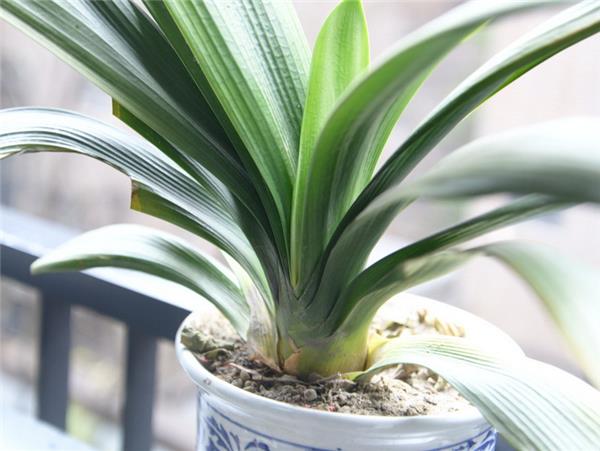
Precautions for Watering Clivia
1. Pay attention to water temperature
In winter, do not water with cold water; the water temperature should be close to room temperature, ideally 8-10°C. In summer, do not water with hot water. If you store water in a water tank, beware of water that is too warm harming the Clivia plant and roots; the water temperature must not exceed 25-28°C, and do not suddenly water with cold water either, so as not to harm the plant.
2. Pay attention to humidity
When the air humidity is too high, reaching 90-100 degrees, never water or mist. During the day, humidity of 70-90 is ideal. Too much humidity weakens the roots' ability to absorb water, affects the number of roots formed, and causes the plant to lose its driving force.
3. Pay attention to protecting new shoots
During the shoot-opening period, it is best to water at the roots, and to sprinkle or spray as little as possible; otherwise water poured into the leaf core causes waterlogging and rot, resulting in losses.
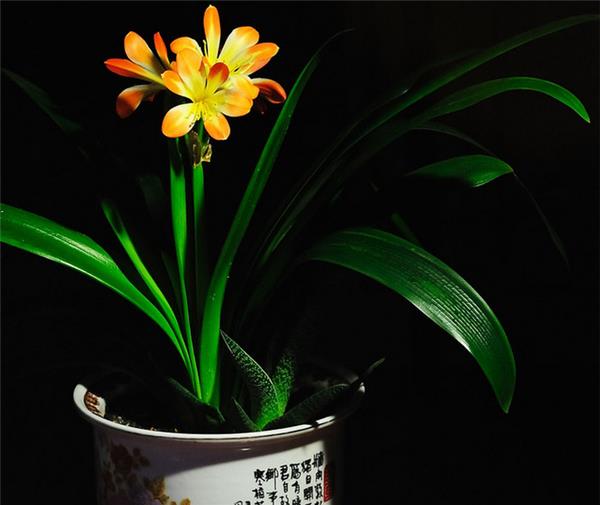
4. Pay attention not to give half-measure water
Some people mistakenly believe that orchids should not be watered much, so they dare not water, and often give half-measure water. The potting medium stays wet on top and dry below for a long time, causing the roots to dry up and wither from lack of water.
5. Pay attention to using less standing water
When water is stored in a water tank and left standing too long, the water molecules form chain-like structures. The longer the time, the harder they are to break apart, making it difficult for them to take part in metabolic activity and unfavorable for the plant to absorb.
6. Pay attention to watering with "revival water"
After fertilizing in the evening, the plant absorbs most of the nutrients effectively over the course of a night, and at this time it needs water most, just as a person needs tea after a meal. Therefore, "revival water" should be given the next morning. It serves two purposes: first, to rinse off the fertilizer solution splashed on the leaves; second, to wash away residual fertilizer in the pot to prevent fertilizer burn.
7. Pay attention not to water too frequently
Orchids are very tolerant of water and are relatively drought-tolerant plants, so being a little dry does not matter much. On the contrary, being wet is a problem; waterlogging for 24 hours will cause suffocation. In everyday cultivation, the vast majority of people love their orchids too much and water too frequently, causing root rot and even plant death.
8. Pay attention to "acid rain"
If using rainwater, two kinds of rainwater must not be used. First, acid rainwater must not be used to water orchids. So-called "acid rain" is formed when sulfides, fluorides and other acidic substances suspended in the air fall with the rain; this water must never be used to water orchids. Second, water from artificial rainmaking must not be used; rainmaking shells contain chemical substances, and when these substances dissolve in the rainwater and are used to water orchids, they will also corrode the orchid roots.
9. Pay attention not to spray water arbitrarily
"Spraying water" is necessary. Besides supplementing moisture, it also keeps the leaves fresh, which helps the leaves breathe and carry out photosynthesis. But water should not be sprayed arbitrarily: do not spray under strong sunlight; do not spray in hot weather; spray less when there is no wind and drying is difficult; do not spray with water that contains impurities; do not spray on rainy days when humidity is too high, and so on.