What to Do When a Clivia's Flower Stalk Gets Stuck? Causes and Solutions Explained
What to do when a clivia's flower stalk gets stuck? So-called "stuck arrow" means that when the clivia's flower stalk has not grown properly, it is pinched by the leaves or stems in the middle, and then it blooms. Generally, flowers that bloom this way do not last long and wither within a short time, forming rotten flowers, which makes the clivia look very ugly, and the blooms are not so beautiful either. Below, let us look at the causes and solutions for a clivia's stuck arrow.
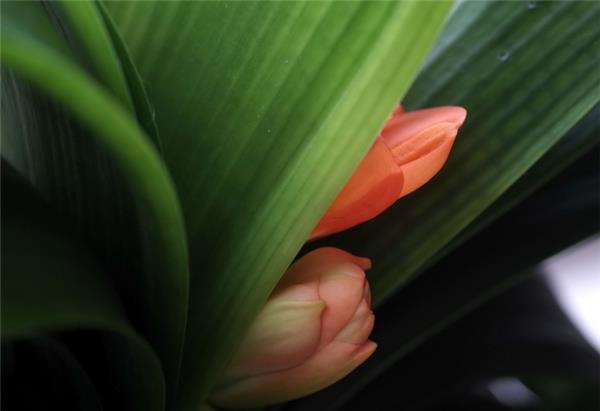
What to Do When a Clivia's Flower Stalk Gets Stuck
Causes of stuck arrow:
1. Temperature too low: the temperature for clivia to send up its stalk is around 20°C. If the temperature stays below 15°C for a long time, its flower stalk will find it very hard to grow.
2. Insufficient nutrients: when a clivia is budding and blooming, its demand for phosphorus and potassium fertilizer is relatively high. If lacking, the clivia will not have enough strength to send up its stalk, thus causing the stuck arrow phenomenon.
3. Lack of oxygen in the potting soil: during the bud stage, the clivia's root system needs a large amount of oxygen. If the potting soil is too fine or stays in a state of high moisture for a long time, the permeability of the potting soil will be reduced, thus causing a lack of oxygen and resulting in the stuck arrow phenomenon.
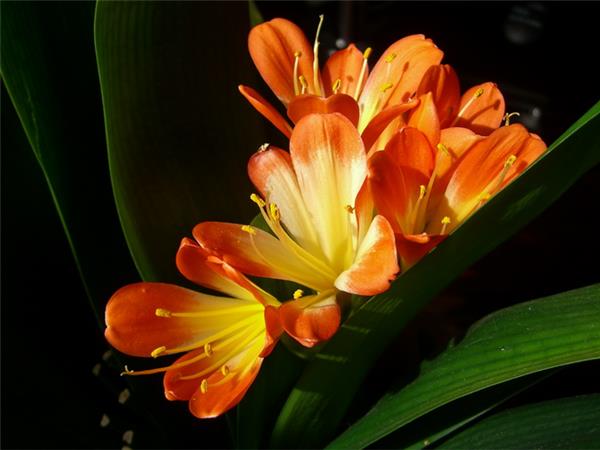
4. Constant-temperature cultivation: clivia flowering requires a day-night temperature difference of 5°C to 8°C. If the plant is kept at basically the same temperature day and night, it will affect the clivia's nutrient accumulation, and the stuck arrow phenomenon will easily appear during the flowering period.
5. Damaged or rotten roots: if the clivia's root system is damaged or rotted, the pipeline for nutrient absorption will be blocked, affecting the plant's stalk emergence and flowering.
6. Poor variety: some varieties of clivia are naturally prone to stuck arrows.
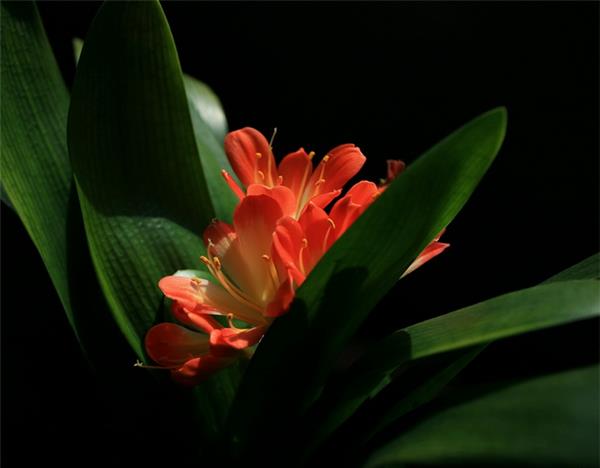
Prevention and control measures:
1. Adjust the temperature and increase the temperature difference: when winter begins, after the clivia has been treated at low temperature for about 20 days, place the plant at a normal cultivation temperature in good time, and try to keep the day-night temperature difference at 5°C to 8°C.
2. Apply more phosphorus and potassium fertilizer to ensure nutrition: in autumn and winter, appropriately apply more phosphorus and potassium fertilizer to promote the plant's flower formation and stalk emergence.
3. Ensure an appropriate water supply: during the period when the clivia sends up its stalk, ensure that the potting soil's water content is between 30% and 50%.
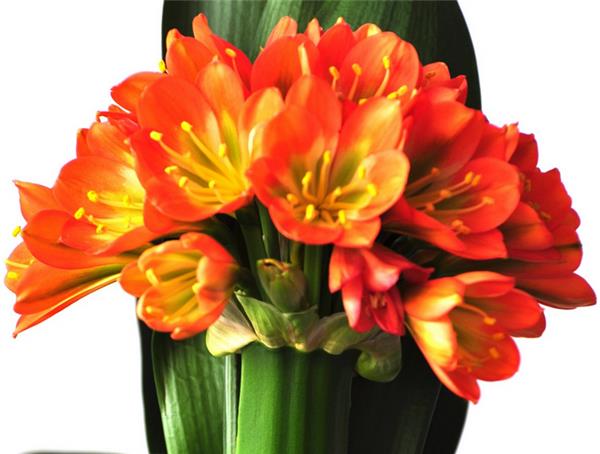
4. Use medicine together with manual assistance to promote the stalk and hasten flowering: you can apply a clivia stalk-promoting agent bought on the market to the flower stalk according to the instructions or drip it into the potting soil; you can also manually prop open the leaves on both sides of the stuck arrow spot, but you must not damage the leaves, so as to reduce the pinching force of the leaves on the flower stalk and encourage the flower stalk to extend out and grow taller as soon as possible.
5. Replace the soil, first dry then wet. Note that after changing the soil, do not water for 5 days; the replacement soil must not be dry soil and should maintain about 30% moisture; after 5 days, water once heavily. In this way, it can generally send up its stalk and bloom.