How to water orchids? Detailed explanation of watering time and method
Orchids are the gentleman among flowers. They do not have showy colors, but their pleasant fragrance has also won them the favor of many people, who place them indoors for viewing. However, in the process of growing them, we still need to pay extra attention in order to grow orchids well. Next, we will introduce the watering time and method for orchids.
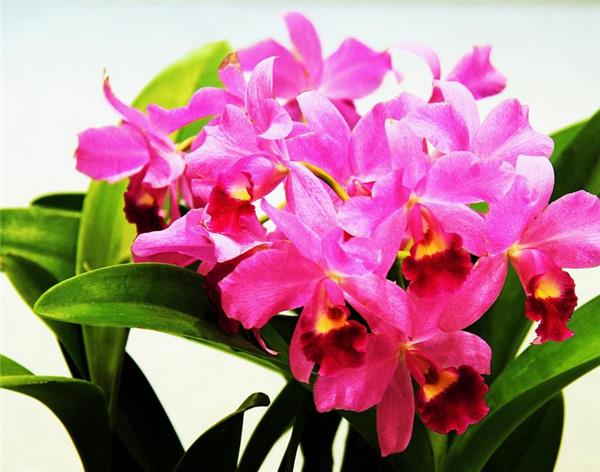
Orchid watering time and method
For the first watering of orchids, use the pot-soaking method so that the pot absorbs enough water. Finally, place the potted orchid in a shaded place for about half a month to 1 month. During this period, watering must be controlled, and it must not be too wet. Afterward, place it in a spot with half shade and half sun, good ventilation and air flow, and where it can catch the sun in the morning. The pot stand should be about 1 m high, and it must not be placed on a flat platform, to prevent ants and earthworms from entering through the holes at the bottom of the pot and affecting orchid growth. For the growing medium, the first layer of hillside soil from the mountain can be used, or fine sand mixed with loam. The growing medium must be sieved and disinfected before use.
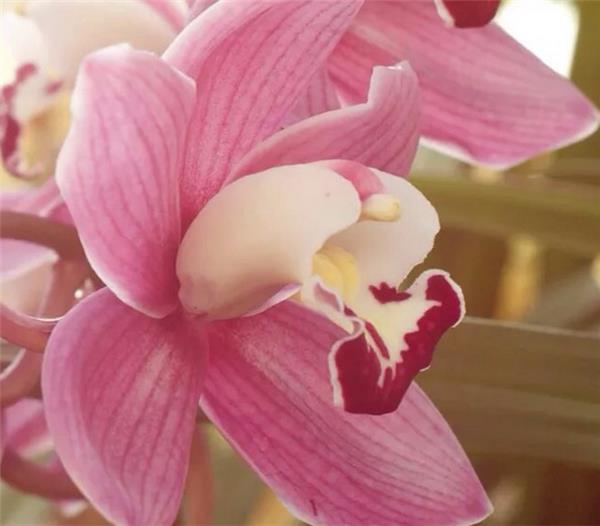
Practice has shown that orchids do best with eight parts dry and two parts wet, and during the flowering period and the period when leaf buds are emerging, orchids should be watered less. During the plum rain season, they should be moved back indoors, or a shed should be set up to shield them from rain. In summer, water orchids in the early morning or evening, and not too much; in autumn, the amount of watering can be increased as appropriate. In dry seasons, spray every evening. When spraying, spray upward, so the mist droplets are fine and even, making the leaf surface moist and the ground damp, increasing air humidity.
Sometimes it is best to spray several times a day. When watering orchids, water from the edge of the pot; do not pour directly onto the crown, and do not water at noon. In winter, watering can be greatly reduced, but it is not that you do not water at all; take care not to let the potting soil dry out completely. In late winter and early spring, if watering causes the leaves and leaf sheaths to become wet along their length, wait until they dry in the sun before moving them indoors, to avoid rotting. In short, water when dry, stop when wet, and the principle is to keep them appropriately on the dry side. For water, rainwater and spring water are best. All kinds of water should first be drawn and stored in a jar, so that pollutants in the water settle, the water temperature returns to normal, and the chlorine in tap water dissipates completely, and then water with it.
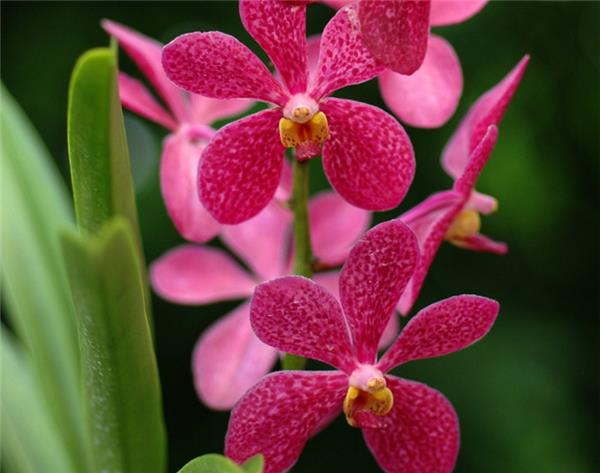
How to water orchids
1. Water temperature
In winter, do not water with cold water; the water temperature should be close to room temperature, with 8-10°C being suitable. In summer, do not water with hot water. If water is stored in a water tower, guard against the water temperature being too high and harming the orchid plants and orchid roots; the water temperature must not exceed 25-28°C, and do not suddenly water with cold water either, to avoid harming the orchid plants.
2. Humidity
When air humidity is too high, reaching 90-100 degrees, by no means water or spray. During the day, humidity is best at 70-90. Too much humidity will weaken the roots' ability to absorb water, affect the number of roots formed, and cause the orchid plants to lose their driving force. Next, pay attention to protecting new shoots. During the period when new shoots are splitting open, it is best to water at the roots, and to sprinkle and spray as little as possible; otherwise, water poured into the leaf center causes waterlogging and rot, resulting in losses.
3. Do not give half-measure water
Some people mistakenly believe that orchids cannot be watered much, and therefore do not dare to water, often giving half-measure water, so the potting medium stays wet on top and dry below for a long time, causing the roots to dry up and wither from lack of water.
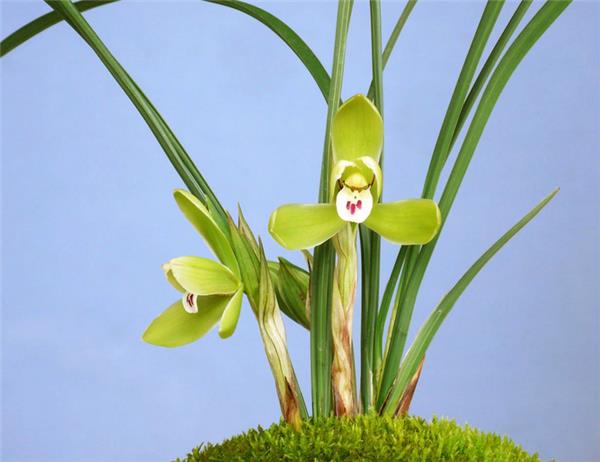
4. Water less with standing water
If water is stored in a water tower and left standing too long, the water molecules become chain-like; the longer the time, the harder they are to break apart, making it difficult for them to take part in metabolic activity, which is unfavorable for absorption by the orchid plants.
5. Water with "reviving water"
After fertilizing in the evening, the orchid plants absorb most of the nutrients effectively through a night of uptake. At this time they need water most, just as people need tea after a meal, so the next morning they should be given "reviving water." It has two functions: first, to rinse off the fertilizer liquid splashed onto the leaves; second, to wash away residual fertilizer in the pot, to prevent fertilizer damage.
6. Do not water too frequently
Orchids are very tolerant of water and are relatively drought-tolerant plants, so being a little on the dry side has little effect. On the contrary, being wet is not acceptable; waterlogging for 24 hours will cause suffocation. In daily cultivation, the vast majority of people love orchids too much and water too frequently, causing root rot and even plant death.
7. Acid rain
If rainwater is used, two kinds of rainwater cannot be used. First, acid rainwater cannot be used to water orchids. So-called "acid rain" is formed when sulfides, fluorides and other acidic substances suspended in the air fall with the rain; this water must never be used to water orchids. Second, water from artificial rainfall cannot be used either; rain-inducing shells contain chemical substances, and these substances dissolve in the rainwater, and using it to water orchids will also corrode orchid roots.
8. Do not spray water arbitrarily
Spraying water is necessary. Besides supplementing moisture, it can also keep orchid leaves fresh, which helps orchid leaves respire and carry out photosynthesis. But water cannot be sprayed arbitrarily: do not spray under strong sunlight; do not spray in high-temperature weather; spray little when there is no wind and drying is difficult; do not spray with water containing impurities; do not spray when humidity is too high on rainy days, and so on.