What are the key points to note when growing orchids?
Orchids are one of the Four Gentlemen, representing a person's temperament and elegance, and they are also a must-have plant for indoor placement. What I want to share with you next are the key points to note when growing orchids. Friends who are interested, come and take a look!
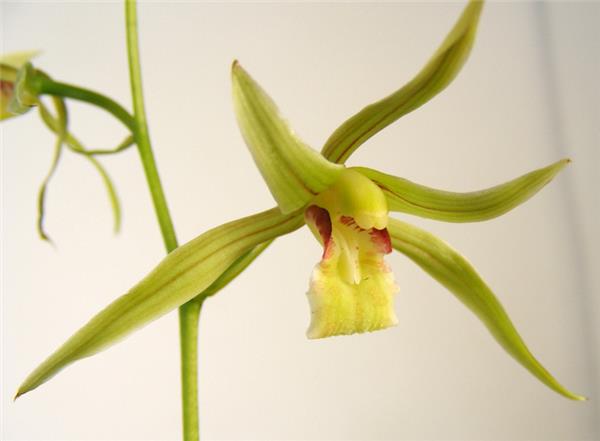
Key points to note when growing orchids
1. The roots must be spread out: When planting orchids, the roots should be spread evenly in all directions and must not be squeezed into a clump. This way each root can come into contact with the potting medium, and aeration is also good; otherwise, root rot easily occurs.
2. Press the potting medium down slightly: Orchid potting medium must be airy and drain well, but it should also be pressed down slightly; otherwise, the space at the base will be too large and the roots will not grow well. The correct method is to firm it from both sides, not to press down heavily from above.
3. Place the new shoot in the center: When planting an orchid, it is not the whole plant that should be placed in the center of the pot; rather, the new shoot should be placed in the center of the pot. For the time being it may look as if it is leaning to one side, but in the future, when the new shoot grows and blooms, it will be in the center of the pot.
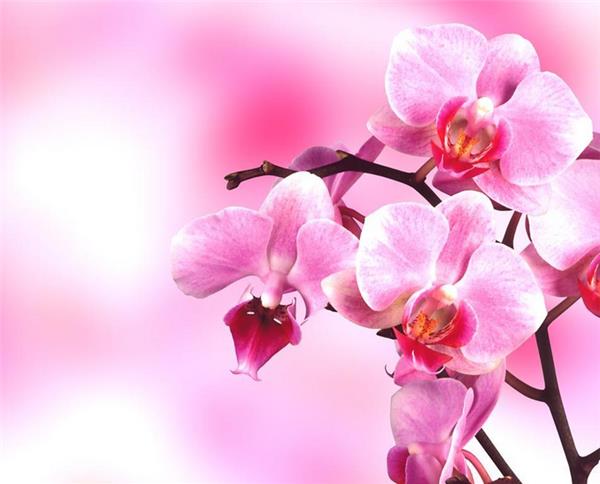
4. Do not water for several days: Newly planted orchids may have injured roots. After the wounds are coated with fungicide, do not water for 3 to 5 days. Only then can the fungicide take effect, and it can also promote the growth of new shoots and new roots. This is where orchids differ from ordinary herbaceous flowers.
5. The plant body must be fixed: Orchid plants cannot be planted deep, so they often appear unstable and ready to topple. Therefore, stakes, tying wire, or hanging hooks used as supports must be used to secure them so that they do not sway and damage the base.
6. The pot should not be too large: Planting a small plant in a large pot means more potting medium is used, which easily leads to poor aeration, and the moisture from watering is not easily uniform. If too much water is given and too much is absorbed, the potting medium is not easy to dry, bacteria easily invade, and root rot results.
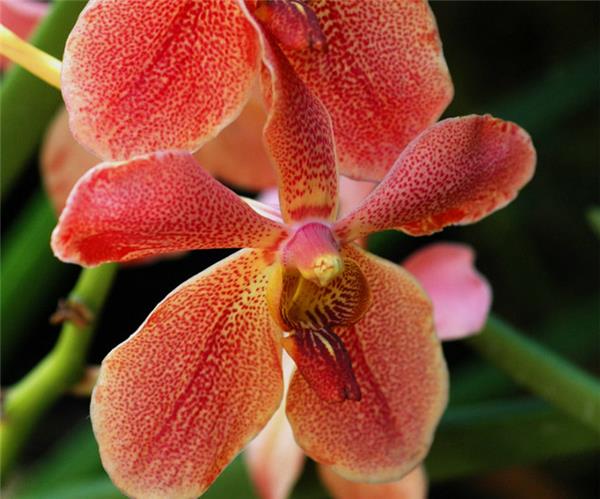
7. Avoid strong light: Newly planted orchids must all avoid direct strong light to prevent excessive dehydration. They should be placed in a warm and shaded location, and misting can be used to raise the humidity in the air until the orchid plant returns to normal growth.
8. Disinfect wounds first: When repotting or dividing plants, if the stems, leaves, or roots have wounds, first apply fungicide to the wounds to prevent pathogen invasion. After planting, waiting 2 to 3 days before watering is even safer.
9. Old pots must be disinfected: In principle, new pots should be used for planting orchids, but it is a pity to use pots only once when cultivating on a large scale. Old pots can be disinfected with disinfectant and used again.
10. Orchid plants should be planted shallowly: Orchid plants must not be planted deep, because if planted deep, the base will remain moist for a long time and rot. When planting, fill the potting medium around the roots, and the base or pseudobulbs must be exposed and must not be buried in the potting medium.
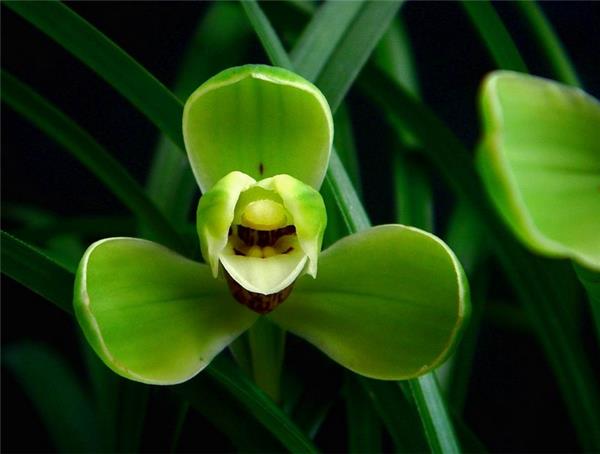
Points to note when growing orchids
First, watering: Do not water every day, otherwise it will cause severe root rot. Do not use tap water, as it contains chlorine.
Second, temperature: Many people generally place Phalaenopsis in the living room and other places for enjoyment. Although the daytime temperature in these places is sufficient, the nighttime temperature is somewhat on the low side, and the humidity is also insufficient, so very close attention must be paid.
Third, fertilizing: Many people think that once they fertilize, the plant will grow very quickly. This is a very wrong approach. Phalaenopsis should be given light fertilizer, in small amounts and more frequently. Do not "over-nourish" it, otherwise the result will be the opposite of what is intended.
Fourth, the planting pot: Use a large pot. A large pot can give Phalaenopsis a roomy environment, with sufficient material, and the sphagnum moss is not easy to dry out. Phalaenopsis likes good aeration, and when air circulates well, it grows very well.