Detailed Explanation of Key Techniques for Orchid Cultivation and Management
Orchids are the gentleman among flowers. They do not have showy colors, but their pleasant fragrance makes them favored by many people. Below, let us look at orchid cultivation and management.
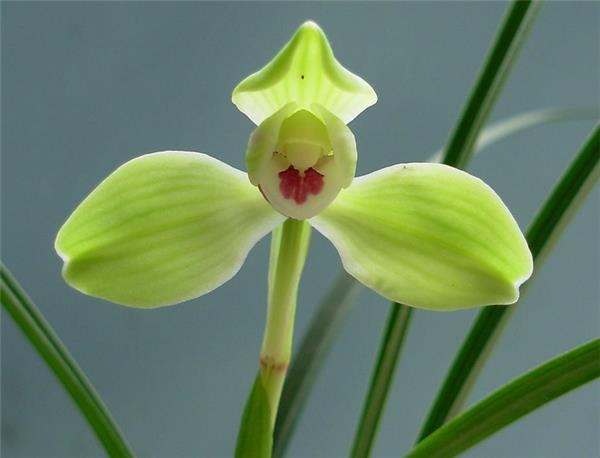
Orchid Cultivation and Management
I. Propagation of orchids: At present, orchids are mainly propagated asexually, primarily by division, carried out in conjunction with repotting. Yuzhen orchids (Cymbidium ensifolium variants) and Jianlan (Cymbidium ensifolium) should be divided in March-April before Qingming, before new shoots emerge; Chunlan (Cymbidium goeringii) and Huilan (Cymbidium faberi) should be divided after autumn in September-October. After selecting the mother plant, the orchid clump can be cut apart with scissors at the larger gaps between pseudobulbs. It is best to choose connected mother-and-child plants. Carefully cut away rotten roots and dead leaves, and be sure not to injure young shoots when pruning. After trimming, wash the roots clean with clear water and place them in a cool, shaded place. Once they are dry, they can be potted. Before potting, wash the flower pot clean, cover the bottom with a layer of palm fiber, then place tile pieces, put a layer of coarse sand on top of the tiles, then add coarse mountain soil, filling to about half the pot. Then place the divided orchid plants into the pot, spread the orchid roots evenly, and fill fine mountain soil or leaf mold around the inside of the pot up to the pot surface, slightly below the rim. At the same time, gently lift the plant upward to stretch out its roots, and use your hand to lightly press and firm the soil around the roots. Then cover the pot surface with some green grass or moss to help with watering. Place the pot in a cool, shaded place, and after it survives, it can be cared for as usual.
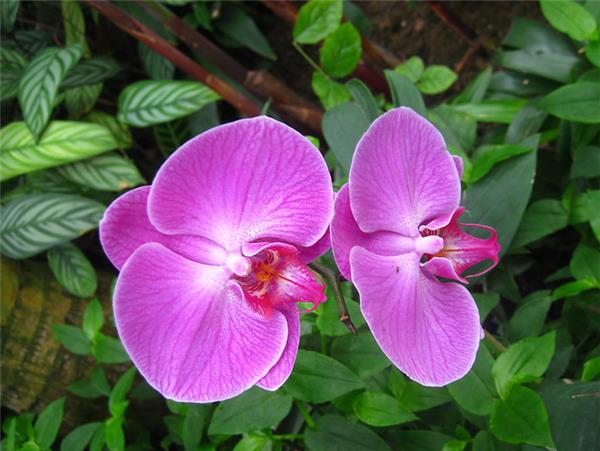
II. Orchid growing site: When growing orchids, pay attention to ventilation and air permeability. It is best to choose a place with shade in the southwest direction to avoid strong sunlight. Chunlan and Huilan prefer shade; generally, about 1-2 hours of morning sun per day is enough. Yuzhen orchids and Jianlan have poor cold resistance and like slightly more sunlight, but avoid exposure to intense sun. In winter, they need to be brought into an orchid shed for care. Chunlan and Huilan, as long as there is no frost, snow, or severe cold, can be placed outdoors at the foot of a south-facing wall. All kinds of orchids must avoid torrential rain and blazing sun, but they need a certain amount of light. Light is an effective external factor in promoting flower bud formation. With good light, there are more flower buds; with poor light, there are fewer flower buds.
III. Potting soil: The soil used for planting orchids should be favorable for drainage and loose. Generally, mountain soil or leaf mold is used, that is, relatively fertile acidic humus soil is suitable. Never use alkaline soil. Pond mud that has been dried in the sun and hammered into small granules is also a good planting medium for orchids. An ideal orchid planting medium should have good drainage and air permeability, contain sufficient nutrients, and not easily become mushy, rotten, or compacted. To obtain an ideal medium, you can mix it yourself. A mixture of mountain soil or humus soil with sawdust and a small amount of organic fertilizer is also a good medium for growing orchids.
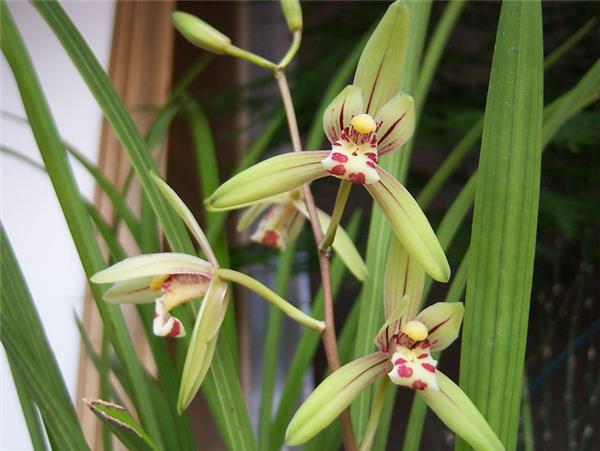
IV. Potting orchids: It is better to choose clay pots. New clay pots should be soaked in clear water for several hours before planting. If you want them to look attractive, use purple clay pots, plastic pots, etc. Choose ones with relatively large drainage holes. The size of the pot should be such that the orchid roots can spread out inside the pot.
V. Watering: Orchids prefer dry conditions and should not be wet. As the saying goes: "Dry orchids, wet chrysanthemums." For watering, rainwater or river water is best. Tap water can also be used, but it must be stored for one or two days so that some harmful gases can evaporate. When watering, you must use a fine-holed spray nozzle to wet the entire plant. Do not pour water directly into the pot. In summer, water in the morning and evening, watering thoroughly so the water reaches the roots. Do not give half-watering. Never water at noon. When watering, mainly decide based on whether the potting soil is dry or wet; do not treat all plants the same. Generally, keeping it moist is enough. In hot, dry summer seasons, in the evening, spray water around the ground near the flower pot to increase air humidity.
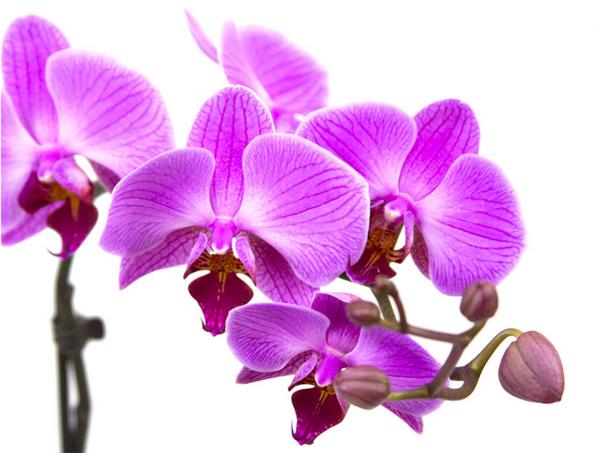
VI. Fertilizing: Orchids should not be given heavy fertilizer. Newly planted orchids should not be fertilized in the first year. After one year of cultivation, when new roots are growing vigorously, then fertilize. Orchids are generally fertilized once every half month from March-May and September-November with decomposed dilute fertilizer water. During the hottest part of midsummer and the dormant period, fertilizing should stop. For orchid fertilization, soybean cake, peanut cake, bone meal, fish meal, etc. are often used, but they must be composted and decomposed before use. Fertilizer water should be dilute and never concentrated. Leaf-variegated orchids and plain-hearted orchid varieties do not like fertilizer. Too much fertilizer will inevitably cause degeneration, so plain cultivation is preferable. In short, fertilize appropriately and at the right time.
VII. Pest and disease control: Orchids are harmed by many pests and diseases. When ventilation and light transmission are poor and watering is excessive, scale insects easily appear. Scale insects are the most common pests of orchids, mainly parasitizing the stems and leaves of orchids. When scale insects are found, spray 50% omethoate emulsifiable concentrate or 50% malathion. When spraying, be uniform and thorough, spraying both the front and back of leaves. If the pest infestation is severe, after manual brushing and washing, combine with spraying for a better effect. Orchids are prone to diseases, commonly including anthracnose. In the early stage of disease, spraying 50% carbendazim or 50% thiophanate-methyl at 500-600 times dilution has a relatively good effect.
Orchids are prone to diseases, commonly including anthracnose. In the early stage of disease, spraying 50% carbendazim or 50% thiophanate-methyl at 500-600 times dilution has a relatively good effect.