How to grow Peperomia obtusifolia? Detailed introduction to hydroponic cultivation methods
Peperomia obtusifolia is a potted plant with great ornamental value. It is small and lovely, with a plant height generally under 30 cm, very beautiful. It is mainly placed indoors, on desks and tea tables. So how do you grow Peperomia obtusifolia? Below, the editor will introduce the hydroponic cultivation methods for Peperomia obtusifolia. I hope it can be helpful to everyone.
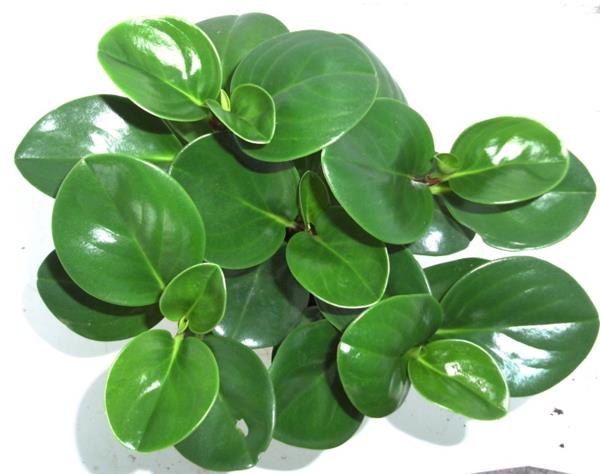
[Introduction to Peperomia obtusifolia]
Peperomia obtusifolia is native to Venezuela. It likes a warm, humid, semi-shaded environment, and is not tolerant of severe cold, strong light, or drought. Its inflorescence is a spike, but its ornamental value is not high; it is mainly grown for its foliage. Peperomia has two types: upright clumping and creeping trailing growth. The former can be placed directly on a flat surface as a potted plant for appreciation, while the latter needs to be hung for appreciation. Cultivated varieties include spotted-leaf type, variegated-leaf type, glossy-leaf type, and wrinkled-leaf type.
[How to grow Peperomia obtusifolia]
Peperomia obtusifolia is an excellent example of a very easy-to-keep hydroponic plant. Each plant has 4-5 leaves, adapts very easily to a water environment, does not rot, and is easy to grow, making it a lovely variety that boosts beginners' confidence. It likes a warm, humid, semi-shaded environment, is not tolerant of high temperatures, and avoids direct sunlight; it is drought-tolerant, so it should not be watered too much, especially in autumn and winter when watering should be reduced. If the air is dry, spray more water on the leaves, and avoid frost. If grown in soil, the growing medium should be an organic substrate with good air permeability and good water retention, such as peat soil mixed with perlite or vermiculite at a ratio of about 6:1. Avoid excessive moisture in the growing medium, and generally keep the growing medium at 40-60% water content. This product is usually placed indoors in a bright spot or outdoors in a shaded area. The optimum temperature is 20-26°C, and the winter temperature should be above 5°C. Keep the potting soil somewhat moist, and when replenishing water, use about 20-30 ml. If the surface soil is too wet, it easily breeds moss. Frequently spray water on the leaves to maintain relatively high air humidity. It can also be properly pruned after being cared for for a period of time, or transplanted into a courtyard for appreciation.
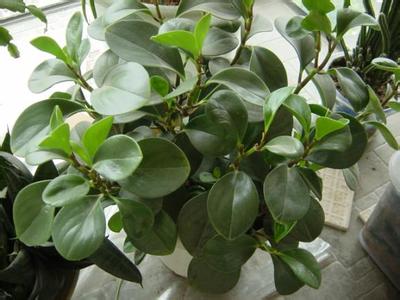
[Hydroponic cultivation methods for Peperomia obtusifolia]
1. Substrate: Peperomia obtusifolia likes to grow in loose, fertile, well-drained sandy soil rich in humus, and is not suitable for growing in clay. The substrate mix for Peperomia obtusifolia is usually made by mixing leaf mold, river sand, and a small amount of decomposed organic fertilizer. A better substrate can be made by optionally mixing peat soil with perlite for cultivation.
2. Light: Peperomia obtusifolia likes semi-shade or scattered light. Apart from needing sufficient light in winter, it needs a little shading in other seasons. It is very suitable for growing in an office, and the light from an incandescent lamp is just right. If placed in a shaded environment, it easily becomes leggy, the internodes lengthen, and its ornamental value decreases, so this is also not advisable.
3. Temperature: Peperomia obtusifolia likes a warm environment. The suitable growth temperature is between 20-30°C. The overwintering temperature is best kept above 10°C. Below 10°C it stops growing, and below ℃ it is prone to frost damage.
4. Humidity>: Peperomia obtusifolia likes a humid growing environment. Under conditions of high humidity, it grows luxuriantly and its leaf color is vivid. When the temperature is high or the air is dry, increase leaf spraying or sprinkle water in the growing environment to maintain relatively high air humidity, which is extremely beneficial to plant growth. It can also adapt to a short period of dry environment, but not for long; generally it should be kept at around 70%.
5. Watering: Peperomia obtusifolia relatively likes water and is not tolerant of drought. During the growing period, it should be watered frequently. When the temperature is above 25°C or the air is dry, water a bit more, but also prevent waterlogging. When the temperature is below 25°C, water thoroughly only when the surface of the potting soil is dry. When the temperature is below 10°C, it can tolerate several days of dryness without watering.
6. Fertilization: When the temperature is above 18°C, a small amount of fertilizer is needed. When the temperature is below 18°C or above 30°C, it is best to apply little or no fertilizer. Fertilization is best done in small amounts and multiple times. Applying diluted fertilizer solution instead of clean water for irrigation is best. It is not tolerant of raw fertilizer or concentrated fertilizer, and fertilizer damage is very easy to cause. Fertilizer solution can also be sprayed on the leaves for fertilization, with good results. Fertilizers are mainly nitrogen fertilizer and potassium fertilizer, with phosphorus fertilizer secondary.
7. Pruning and propagation: For newly propagated young seedlings, in order to make the plant shape fuller in the future and improve its ornamental value, pinch off the growing tips when the seedlings are about 10 cm tall to increase the number of branches. For large plants, pruning is generally based on growth conditions. Propagation can be done by leaf cuttings and division. The propagation temperature is between 20-25°C. Keep the substrate moist and the air humidity relatively high. Roots and adventitious buds can form in 2-3 weeks. Once the small buds are slightly larger, they can be transplanted.
8. Hydroponics: Speaking of hydroponics, some people will ask whether Peperomia obtusifolia can be grown hydroponically. The answer is yes. For hydroponics, you can directly cut longer branches or rinse the substrate off a whole pot and then grow it hydroponically. When inserting branches, the ambient temperature should be around 20-25°C. New roots can grow in about 2 weeks, and hydroponic cultivation has good ornamental value.
9. Pests and diseases: Peperomia obtusifolia has relatively few pests and diseases. Generally, the diseases that appear are all caused by improper care and an unsuitable environment, and it can gradually recover after adjustments. The main pest is spider mite damage, but it can be prevented by maintaining relatively high air humidity. When it occurs, it can be controlled by wiping the leaves with a damp cloth or spraying a specialized pesticide.
Renovation Network, we will update everyone with the latest information and knowledge content.