How to grow baby's breath? Detailed guide to cultivation methods and techniques
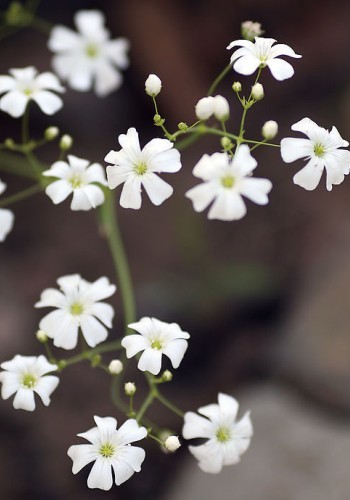
Baby's breath is also called baby's breath gypsophila and double-flowered gypsophila. It belongs to the Caryophyllaceae family, genus Gypsophila. Because its flowers are small, light-colored, and its flower form is fluffy with a three-dimensional feel, it has an elegant and delicate character, giving people a hazy impression. The overall effect of its inflorescence clusters is excellent. It is an important companion flower material and one of the most popular cut flowers today. It is expensive and sells very well.
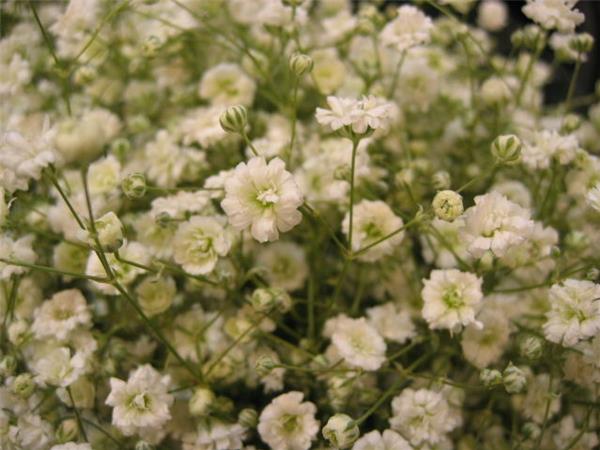
Baby's breath cultivation and management
1. Land preparation Before planting, the soil should be deeply plowed 40 cm to 50 cm, sufficient organic fertilizer should be applied, and some phosphorus and potassium fertilizer should be appropriately added. For acidic or neutral soil, some lime should be appropriately applied to adjust the soil pH. Make raised beds, with the bed surface 30 cm to 40 cm high.
2. Planting Plant 2,000 to 2,500 plants per mu (1 mu = 667 sq m), using double-row planting, with a row spacing of 50 cm and a plant spacing of 35 cm to 50 cm. Before planting, irrigate thoroughly, then choose a cloudy day for planting, and water thoroughly after planting. Planting time: for cut flower cultivation, if produced in a greenhouse, it can be planted in summer or autumn or even early spring. In this way, flowers can be harvested from early autumn until early summer. After harvesting the flowers, the plants should be dug up in June to July, then cold-stored until August to September, and then planted again. Tiantian Nursery Stock Network --- a professional online nursery stock trading market
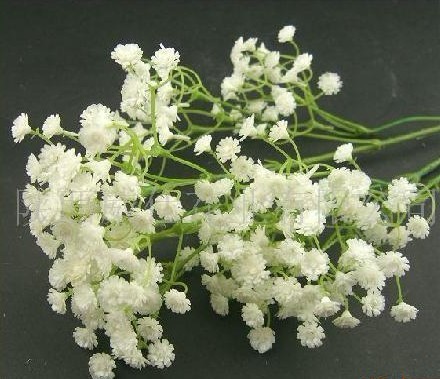
3. Fertilizer and water management Baby's breath likes fertilizer but dislikes water. After planting, topdressing should be done in stages, with nitrogen fertilizer mainly in the early stage and phosphorus and potassium fertilizer mainly in the later stage. Water management must be strictly controlled; if too wet, growth becomes weak, and waterlogging will cause root rot and death. When the plants grow to 30 cm, watering should be controlled, especially during the bud stage, which requires even more care, and the flowering period should also be kept somewhat dry. In rainy areas, a shelter should be built during cultivation to avoid rain.
4. Pest and disease control Stem rot and stunting disease are fatal diseases of baby's breath. Before planting, the soil should be disinfected with formaldehyde solution. Pests are mainly mites and aphids, which can be sprayed and killed with 1000-fold dicofol solution and 1500-fold fenvalerate solution.
5. Cutting flowers and marketing There is no fixed standard for cutting baby's breath flowers. The international market mostly uses weight as the standard, generally requiring each stem to be no less than 10 grams. Some cut at the base of the stem and use the entire reproductive stem as a unit. The domestic market generally requires each stem to have three branches. The suitable time for cutting fresh flowers is when 75% of the flowers have opened. If the transport distance is relatively long, it may be appropriately earlier.