How to grow cotton rose hibiscus? With cotton rose hibiscus pictures for appreciation
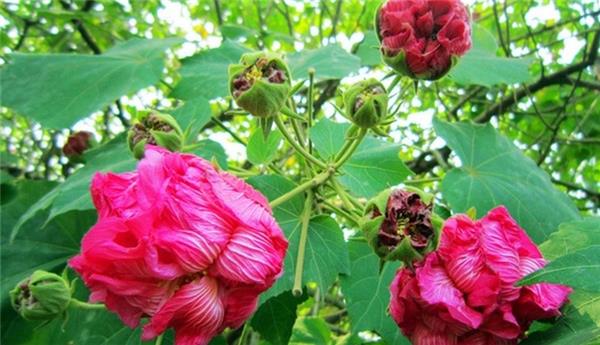
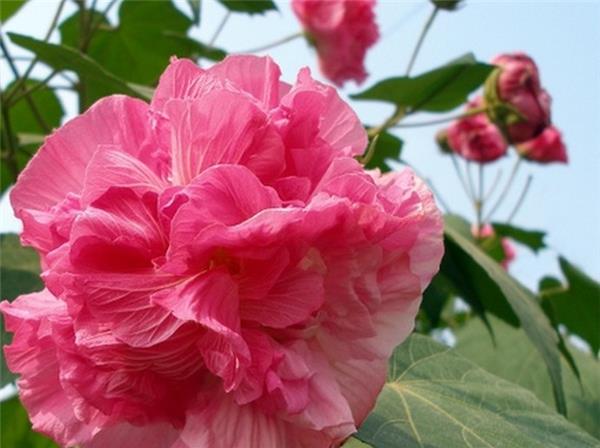
Cotton rose hibiscus is something we can often see, and some people are especially fond of it, but for those who have just come into contact with cotton rose hibiscus, they still do not know how to grow cotton rose hibiscus. So how do you grow cotton rose hibiscus? Below, the editor will tell everyone about cotton rose hibiscus and also share some cotton rose hibiscus pictures for appreciation.
[Introduction to cotton rose hibiscus]
Cotton rose hibiscus has many aliases. Some call it mutong hibiscus, and others call it frost-rejecting flower. Besides these, huamu, difurong, and mulian are also alternative names for it. It is a deciduous shrub plant, that is, a small tree. It grows in clumps, reaches 1 m in height, has large leaves that are lobed, triangular, with serrated leaf margins. It has extremely strict environmental requirements, but its soil requirements are not high, and it can also grow in poor soil.
[Growth habits of cotton rose hibiscus]
The most suitable conditions for the growth of cotton rose hibiscus are: humid and warm areas, not cold-tolerant and not drought-tolerant. It is suitable for growing in places with sufficient sunlight, tolerates partial shade, has low soil requirements, and can live in fertile, moist soil with good drainage, but it can still grow in poor areas.
Cotton rose hibiscus is generally planted beside ponds or in sunny spots in courtyards, and extensive management is also acceptable. Water more in the dry season, and in winter pay attention to fertilizing, watering, and earthing up.
Cotton rose hibiscus needs frequent pruning, which can maintain its ornamental appearance, and more importantly, prune it into a shrub shape and remove dead branches and fallen leaves, which can keep the entire crown well ventilated and allow sufficient light through. During the growing season, sufficient moisture needs to be maintained to meet its growth needs. Because of its poor cold tolerance, it should be moved indoors in winter, ensuring the temperature is kept at 0°C to 10°C, allowing it to go into natural dormancy.
The most suitable growing areas for cotton rose hibiscus are the provinces of South China through the Yellow River basin, and it is most commonly seen in deciduous and evergreen broad-leaved mixed forest areas.
[Cultivation and management of cotton rose hibiscus]
I. Propagation
1. Division propagation
In spring, dig up the plant and divide the suckers before budding, planting them with roots.
2. Cutting propagation
In warm seasons (mostly February to March), cut from the mother plant and insert into soil for propagation. In cold seasons (mostly September to October), cut, process through cellar storage, and when the temperature warms up the next year, cut into cuttings, insert into planting holes, water thoroughly, and cover them deeply, leaving 3-4 cm exposed above the ground. After they survive, they can be used.
3. Seed propagation
Pick mature fruits in November to December, store them dry until March to April of the next year for sowing, bury the seeds deeply in furrows, cover with soil and grass, and seedlings emerge in about 15 days. After 1 year of seedling cultivation, they can be lifted from the nursery and planted out.
4. Layering propagation
During July to August, bury its branches in soil. After about more than 1 month, the layered branches in the soil take root, and after another 1 month, they can be separated from the mother plant and survive the winter.
II. Field management of cotton rose hibiscus
Each year, weeding is needed once in summer and once in winter, and topdressing can be applied 2-3 times. Cotton rose hibiscus sprouts very slowly and should not be exposed to direct sunlight; suitable light conditions are enough.
Mutong hibiscus tolerates pruning and can be pruned into shape as needed. Cut dead branches and fallen leaves into pieces to ensure light penetration. In winter, attention should be paid to cold protection. And it is best to cultivate its plant shape into a shrub form.
III. Pest and disease control of cotton rose hibiscus
The common red spider mite is the most common pest and disease, and it can be sprayed with 73% propargite 3000-fold solution or 20% amitraz emulsifiable concentrate 1000-fold solution. The harm of small green leafhoppers and cotton leafhoppers should also not be underestimated, and they can be sprayed with 5% sevin powder.