When Does the Lipstick Plant Bloom? A Detailed Guide to Its Flowering Period
The lipstick plant closely resembles the tubular casing of a lipstick, which is why it is called the "lipstick plant." Do you know when the lipstick plant blooms?
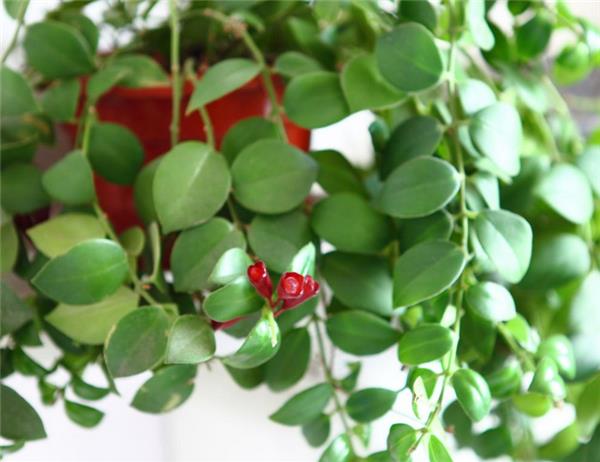
When does the lipstick plant bloom
The lipstick plant generally blooms from November of the current year to June of the following year, though some sources say the flowering period lasts until February of the following year. It cannot be said that the information in these sources is incorrect, but the actual situation should still be taken as the standard.
The main reasons for the wide variation in flowering periods are the great climatic differences between north and south; the strong ability of humans to alter the environment also affects when the lipstick plant blooms.
Apart from differences in the flowering period, if care is neglected when growing the lipstick plant, it is very likely to result in the plant failing to bloom.
The Meaning of the Lipstick Plant
Lipstick flower meaning: the flower is beautiful for a time, you are beautiful for a lifetime.
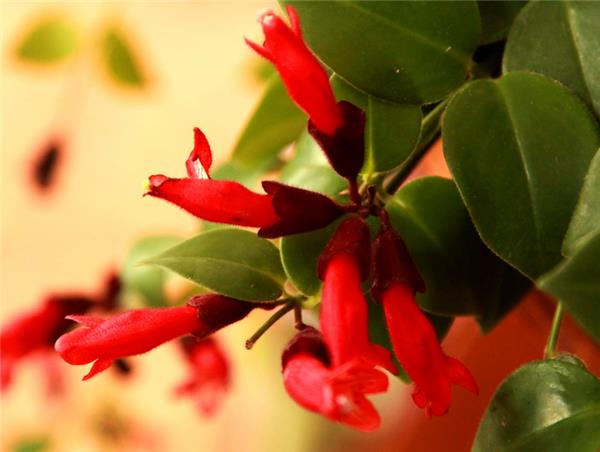
The long calyx tube is dark purple in substance, as crimson rouge slowly spirals open.
The flower deftly reveals the charm of the boudoir, reminding the fair lady to come to her mirror at dawn.
The lipstick flower, also known as flower vine grass, is a perennial green trailing herbaceous flower of the genus Aeschynanthus in the family Gesneriaceae. Because it is often grown as a hanging basket ornamental, it is also commonly called the lipstick plant. The lipstick flower is native to Southeast Asia and other places. Its plant is trailing, with branches hanging down, reaching 30cm~100cm in length. Its leaves are ovate and opposite, slightly fleshy, 4.5cm long and 3cm wide, with a deep green upper surface and a light green underside. The inflorescences are mostly axillary or terminal, and the calyx is tubular, dark purple and covered with fine hairs, much like the tubular casing of a lipstick. The corolla is tubular and bright red, extending out from the calyx, just like a "lipstick" twisting out of its tube. When room temperature is suitable, the lipstick flower can bloom from December to February of the following year.
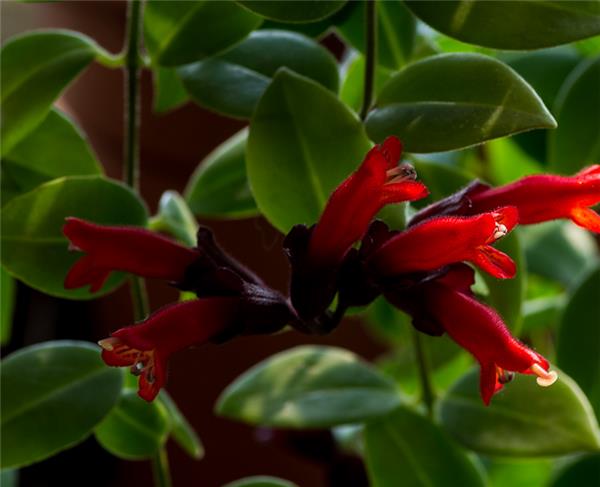
The lipstick flower likes a warm, semi-shady environment and is extremely well suited to indoor conditions. For home cultivation, it is best hung near a south-facing window. The lipstick flower is relatively drought-tolerant, dislikes dampness and fears waterlogging. Its optimum growing temperature is between 20°C~30°C. It is not cold-tolerant, so when winter arrives and the temperature falls below 15°C, it must be moved to a warm indoor spot. The potting soil should be loose, fertile, slightly acidic humus soil. During the growing season, apply an organic liquid fertilizer once a month, water appropriately, keep the soil moist, and avoid any water accumulation, and it will maintain vigorous growth. After flowering in winter, the branches should be pruned appropriately to encourage new shoots to sprout, so that more flowers will be produced the following year.
Propagation of the lipstick flower is mainly by cuttings. Seedlings can be raised throughout the year, but the survival rate of cuttings is higher in spring and summer. Cut 10cm~15cm long tip shoots, insert them into clean river sand, and maintain appropriate temperature and humidity; they will take root and survive in about a month.
The lipstick flower is bright and beautiful. It is a hanging basket plant with lovely flowers, and also a rare excellent foliage and flowering plant for greening and beautifying the home. Keep a pot of lipstick flower, and whether placed on a desk or hung before a window or on a balcony, its glossy deep green leaves and lush, low-hanging branches will bring a sense of beauty full of life's vitality: if it happens to be in bloom, those wonderful flowers shaped like lipsticks will add a touch of elegant charm.
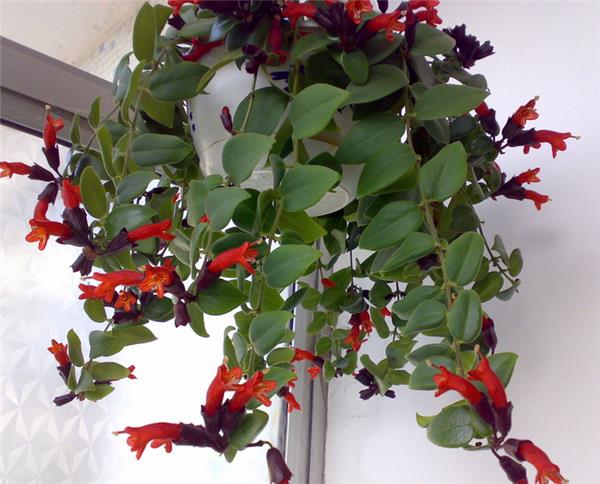
Besides serving as a potted ornamental and purifying indoor air, the lipstick plant also has certain medicinal value:
1. To treat bruises and injuries: grind the dried whole plant of the lipstick plant into powder, take 9 grams per dose, and take it warm in wine.
2. To treat swelling and pain from bruises: pound the leaves of the lipstick plant, fry them with wine until hot, and apply to the affected area.
3. To treat wind-toxin nodules that persist and do not disperse: wash the fresh whole plant of the lipstick plant including the roots, mix with glutinous rice and a little table salt, pound into a paste, and apply to the affected area.
4. To treat cough due to lung heat: 30 grams of lipstick plant root, 30 grams of rock sugar, decoct in water and take.