What are the benefits and effects of white magnolia flowers
White magnolia is a deciduous tree with a graceful form, large flowers, jade-white in color, and a delicate fragrance like that of an orchid. It has great ornamental value and is a common ornamental plant in courtyards. Below, we introduce the benefits of white magnolia flowers.
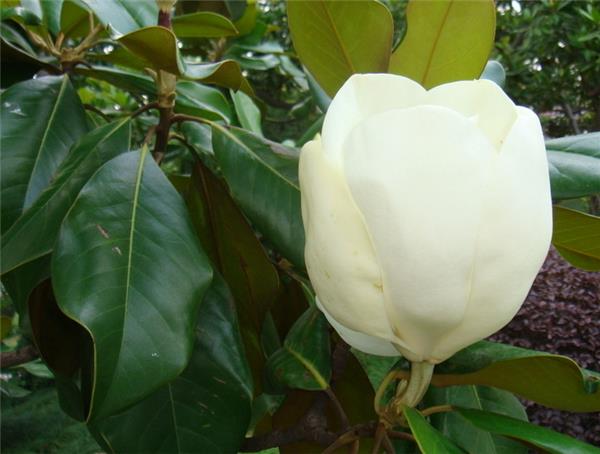
The benefits of white magnolia flowers
First, it has medicinal value.
Root: urinary tract infections, difficult urination, boils and swellings. Leaves: clear heat and promote urination; relieve cough and resolve phlegm. Mainly for urinary tract infections; difficult urination; bronchitis. Flowers: resolve dampness; promote the flow of qi; relieve cough. Mainly for chest tightness and abdominal bloating; heatstroke; cough; prostatitis; leukorrhea. Take 10 magnolia flower buds (those about to open but not yet open), add water and decoct twice, remove the residue, and take the liquid. Divide it equally into two portions and take one in the morning and one in the afternoon. This formula is taken on an empty stomach at the time of each monthly menstrual period, and mainly treats dysmenorrhea caused by cold coagulation and qi stagnation.
Second, it has edible value.
Mix white magnolia petals with flour and white sugar for seasoning, then fry in oil to make a fragrant and tender snack pastry. If japonica rice is placed in a pot with water and cooked until the congee is nearly done, then an appropriate amount of magnolia petals, hawthorn, and honey are added and simmered briefly into congee, it tastes sweet and sour and is pleasant, and it lightens the body and brightens the eyes. If the magnolia petals are washed clean and drained of water, then rubbed with an equal amount of white sugar, put into a bottle and sealed, they can be used as filling for various health-promoting sweets or as an ingredient for steamed cakes.
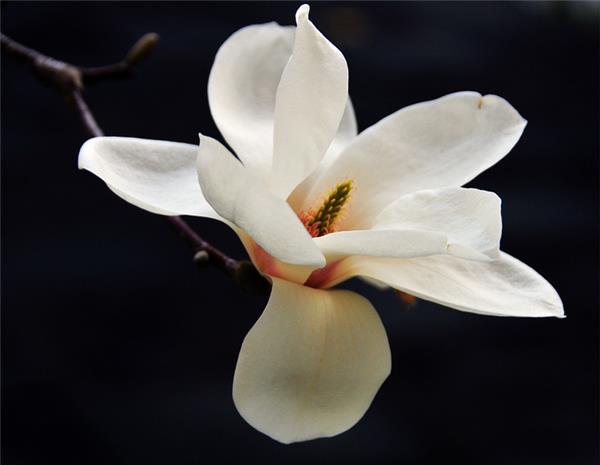
Third, it has ornamental value.
It is often used for garden viewing, in communities, gardens, schools, public institutions, factories, hillsides, courtyards, roadsides, and in front of buildings. When in full bloom, the petals spread out in all directions, making the courtyard full of patches of green and white, with dazzling white light, and it has very high ornamental value; combined with waves of delicate fragrance, it is refreshing to the heart.
Fourth, it has ecological value.
In the warmer south, it can bloom from December to January of the following year. White magnolia has strong resistance to harmful gases. For example, if this flower is planted in a factory polluted by sulfur dioxide and chlorine gas, it has a certain resistance and ability to absorb sulfur. Magnolia likes light and is relatively cold-tolerant, and can overwinter in the open field. It loves high and dry conditions and avoids low humidity; if the planting site is waterlogged, the roots easily rot. It prefers fertile, well-drained, slightly acidic sandy soil, and can also grow in weakly alkaline soil. In the warmer south, it can bloom from December to January of the following year. Magnolia flowers have strong resistance to harmful gases. For example, if this flower is planted in a factory polluted by sulfur dioxide and chlorine gas, it has a certain resistance and ability to absorb sulfur. When artificially fumigated with sulfur dioxide, 1 kg of dry leaves can absorb more than 1.6 grams of sulfur. Therefore, magnolia is a very good pollution-resistant greening tree species for areas with air pollution.
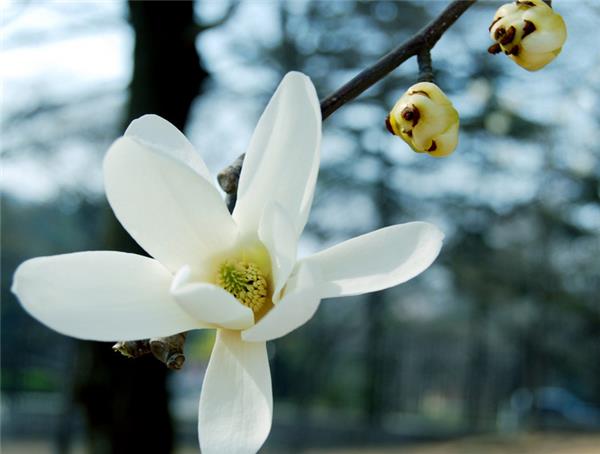
Propagation methods of white magnolia flowers
1. Seed propagation: In early to mid-September, when the fruit turns red and part of it splits open to reveal red seeds, they can be harvested. After threshing, select plump, brightly colored seeds as seed.
Soak the seeds in warm water at 50-60°C for 10 minutes, mix with fine sand and rub to remove the waxy coating, screen out the seeds, and store them by stratification with 3 times the amount of wet sand in a wind-sheltered, sunny pit, covering them with grass to keep them warm and moist. Wait until about 50% of the seeds crack open and show white in the following spring, then take them out and sow. For autumn sowing, they can be sown as soon as collected. At this time, the fresh seeds should be soaked in warm water with plant ash added for 3-5 days, rubbed to remove [the coating], and watered regularly; after the seeds crack open, sow them.
The seedbed should be made into a high raised bed, 1.2 m wide and 30 cm high, with a path 30 cm wide. On the bed, open furrows horizontally at a row spacing of 20 cm for drilling, with a sowing width of 5 cm and a furrow depth of 6 cm. After sowing, cover with 3 cm of soil, then cover with rice straw. Sow in early March, and full seedlings can be achieved in mid-to-late May. Autumn-sown seeds emerge in about more than 1 month. After emergence, promptly remove the covering, insert branches for shade, and water frequently to maintain a moist environment, strengthen management, remove weeds and apply topdressing. After two years of cultivation, they can be planted out.
2. Division propagation: In late winter and early spring, dig up the old plants that have tillers, keeping the roots, and plant them as they are dug.
3. Layering: In early spring, gently press the small branches of the mother tree near the ground into the soil without breaking them, cover them tightly with soil and secure them with crossed stakes, so that the branches grow tender roots and new shoots at the ground. After one year, they can be planted out.
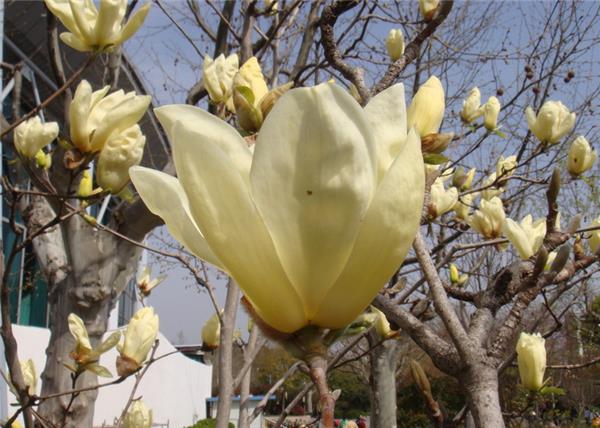
4. Air layering: In late June, select young tender branches on the mother plant, and at the branching point use a knife to cut away the bark of the branch, trimming it into a semicircular shape. Cover it with plastic film or a bamboo tube, fill it with moist fertile soil, and tie it tightly on the outside with rope so it does not move, keeping it moist. In late April of the following year, check that new roots have formed, then remove it and plant it out.
5. Cuttage: In summer and autumn, select 1-2 year old tender branches, cut them into 15-20 cm lengths as cuttings, trim the upper end flat and the lower end into a horse-ear shape, and after moistening, [treat] in fact with a powder composed of 500 ppm indolebutyric acid plus talcum powder, then insert obliquely into the seedbed, leaving 2 nodes at the lower end and exposing one node above the ground. Build a shed for shade, keep the soil moist, and roots can develop in about 1 month.
6. Grafting: Seedling plants propagated from seed need 7-8 years of cultivation before they can bloom. If grafted seedlings are used for planting, they only need 2-3 years to bloom. Commonly used grafting methods include "bud grafting" and "cut grafting"; both cut grafting and bud grafting are the same as for general flowering trees and shrubs.
Leave 2 nodes at the lower end and expose one node above the ground. Build a shed for shade, keep the soil moist, and roots can develop in about 1 month.6. Grafting: Seedling plants propagated from seed need 7-8 years of cultivation before they can bloom. If grafted seedlings are used for planting, they only need 2-3 years to bloom. Commonly used grafting methods include "bud grafting" and "cut grafting"; both cut grafting and bud grafting are the same as for general flowering trees and shrubs.