What information is there about the lotus? One article takes you to a comprehensive understanding of the lotus
The lotus is a plant that likes still-water environments. In some parks, the appearance of the lotus can add a great deal of beauty to the small ponds in the park. So how much do you know about the lotus? Below we give a detailed introduction to information about the lotus.

About the lotus
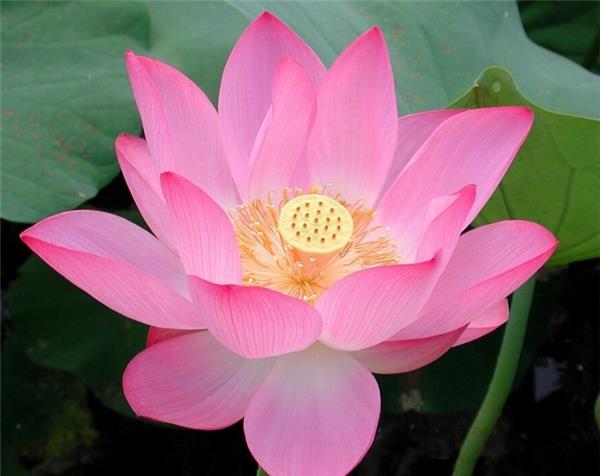
The lotus (scientific name: NelumbonuciferaGaertn.), also known as the lotus flower, water hibiscus, and so on, belongs to the order Nymphaeales, family Nelumbonaceae, and is a perennial aquatic herbaceous flower. Its underground stem is long and thick, with long nodes, and its leaves are shield-shaped and round. The flowering period is from June to September. The flowers are borne singly at the top of the pedicel, with many petals embedded in the cavities of the receptacle, and come in colors such as red, pink, white, and purple, or may have colored patterns and borders. The nut is oval, and the seed is egg-shaped.
Characteristics of the lotus
The flower is a perennial aquatic plant. The rhizome is thick and has many nodes, lying horizontally in the mud at the bottom of the water. The leaves are shield-shaped and round, dark green on the surface and covered with a waxy white powder, grayish green on the back, with entire and wavy margins. The petiole is cylindrical and densely covered with backward-pointing prickles. The flowers are borne singly at the top of the pedicel, held high above the water surface, and have flower forms such as single, semi-double, double, and double-layered; flower colors vary among white, pink, deep red, light purple, yellow, or intermediate colors; the stamens are numerous; the pistils are free and buried in an inverted-conical spongy receptacle, whose surface has numerous scattered honeycomb-like cavities, which gradually swell after fertilization and are called the lotus seed pod, with a small nut (lotus seed) growing inside each cavity. The flowering period is from June to September, with the flowers opening in the morning and closing in the evening each day. The fruit ripening period is from September to October. There are many cultivated varieties of lotus, which can be divided by different uses into three major systems: rhizome lotus, seed lotus, and flower lotus.
Morphological characteristics of the lotus
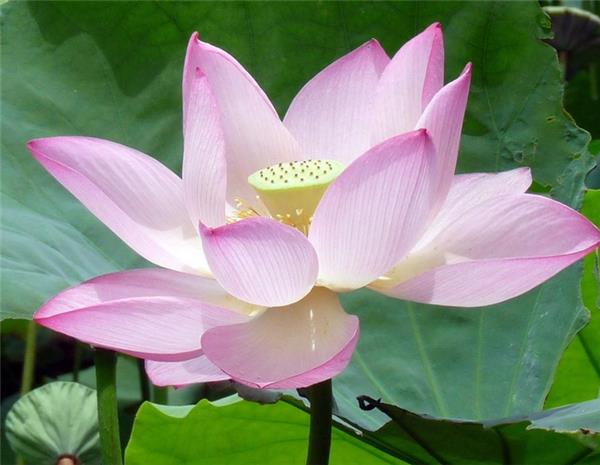
The lotus is a perennial aquatic herb; the rhizome grows horizontally, is thick, and has enlarged internodes containing many longitudinal air passages, with constricted nodes, black scale leaves growing above, and fibrous adventitious roots growing below.
The leaves are round, shield-shaped, 25-90 cm in diameter, dark green on the surface and covered with a waxy white powder, grayish green on the back, with entire and slightly wavy margins, smooth on top and with white powder, and the veins on the underside radiate from the center, with 1-2 forked branches; the petiole is stout, cylindrical, 1-2 m long, hollow, and scattered with small prickles on the outside. The pedicel is equal in length to the petiole or slightly longer, and is also scattered with small prickles; the petiole is cylindrical and densely covered with backward-pointing prickles.
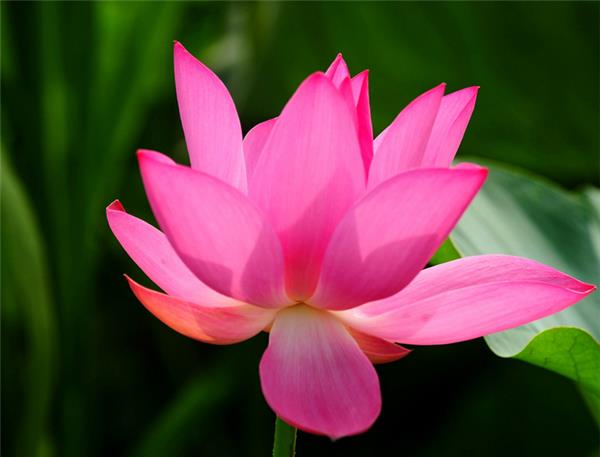
The flowers are borne singly at the top of the pedicel, held high above the water surface; the flowers are 10-20 cm in diameter, beautiful, and fragrant; they have flower forms such as single, semi-double, double, and double-layered; flower colors vary among white, pink, deep red, light purple, yellow, or intermediate colors; the lotus leaves are oblong-elliptic to obovate, 5-10 cm long and 3-5 cm wide, gradually smaller from the outside inward, sometimes becoming stamens, with a rounded-obtuse or slightly pointed tip, and the stamens are numerous; the pistils are free and buried in an inverted-conical spongy receptacle, whose surface has numerous scattered honeycomb-like cavities, which gradually swell after fertilization and are called the lotus seed pod, with a small nut (lotus seed) growing inside each cavity; the anthers are linear, and the filaments are slender, inserted below the receptacle; the style is extremely short, with a terminal stigma; the receptacle (lotus pod) is 5-10 cm in diameter.