What are the cultivation methods and precautions for Phalaenopsis orchids?
Phalaenopsis orchids have graceful flowers and gorgeous colors, and are known as the "Queen of Orchids," but many flower lovers do not know how to grow Phalaenopsis orchids. Below we give a brief introduction.
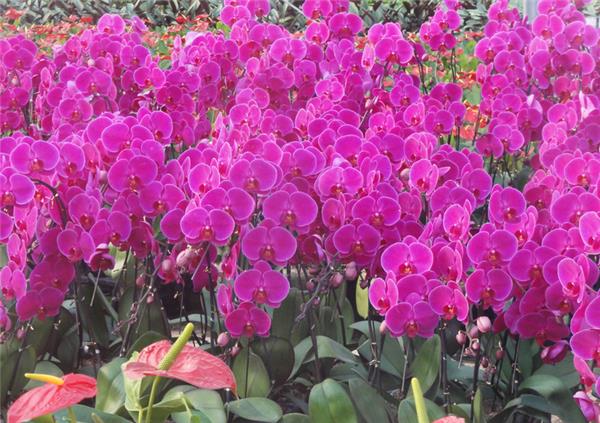
How to grow Phalaenopsis orchids
How to grow Phalaenopsis orchids? First soak them in a 1000-fold carbendazim solution for 2~3 minutes, remove them and rinse with water, then use a small soft brush to gently clean off the culture medium attached to the roots, and rinse again with clean water, otherwise they are prone to mildew and rot. After sterilization, plant the seedlings in relatively fine sphagnum moss; the sphagnum moss should first be soaked for 3~4 hours, then washed, squeezed dry, and sterilized.
When planting, first wrap the roots of the seedlings with sphagnum moss, then plant them in suitable soft pots. The sphagnum moss should be neither too loose nor too tight. Place them in a semi-shaded spot and maintain a relative humidity of 70%~80%. Do not water for 2~3 days after planting. Later, attention should be paid to ventilation and regular watering.
The daytime temperature requirements for large, medium and small Phalaenopsis orchids are basically the same, preferably not exceeding 30°C; at night, small and medium seedlings require 23°C, and large seedlings require 20°C. During flower induction, daytime temperatures of 20~24°C are required, and nighttime temperatures of 17~20°C. After the first flower, daytime temperatures of 25~28°C and nighttime temperatures of 20~22°C are required. When the temperature is low, use a heater; when the temperature is high, use a fan-water curtain system to cool down.
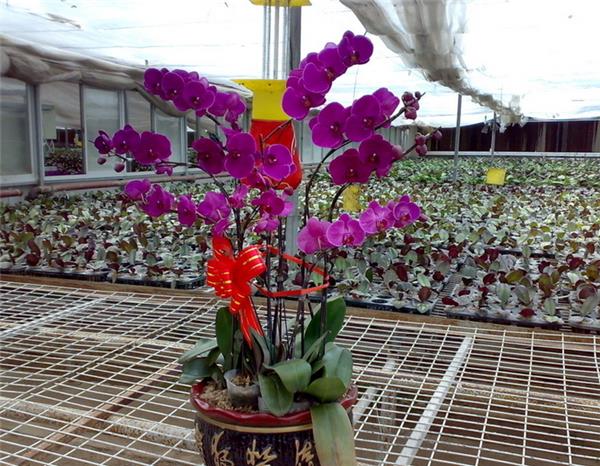
During the growth stage, the best humidity requirement is above 90%; during the flower induction stage, the humidity requirement is 70~80%; after flowering, the humidity requirement is only 50%. Humidity can be regulated by measures such as water curtain ventilation and spraying water on the floor space.
The aerial roots of Phalaenopsis orchids have a strong absorption capacity and can absorb oxygen, nutrients, water, and so on. Excess water can cause suffocation and root death. Therefore, Phalaenopsis orchids should be watered with a fine stream when the medium appears dry. During operation, try not to let water remain in leaf crevices or at the growth point, to prevent mildew or infection. Water until water overflows from the bottom hole of the soft pot.
Common pests and diseases of Phalaenopsis orchids mainly include soft rot, brown spot, anthracnose, sooty mold, viral disease, scale insects, red spider mites, and so on. Mainly adopt the principle of prevention first, strengthen cultivation management measures, improve ventilation conditions, reasonably control placement density, and keep the environment clean. Spray insecticides and fungicides regularly. If diseased plants are found, promptly remove the source of infection, remove diseased leaves and remnants, and for severely affected plants, isolate or destroy them to prevent the spread and expansion of pests and diseases.
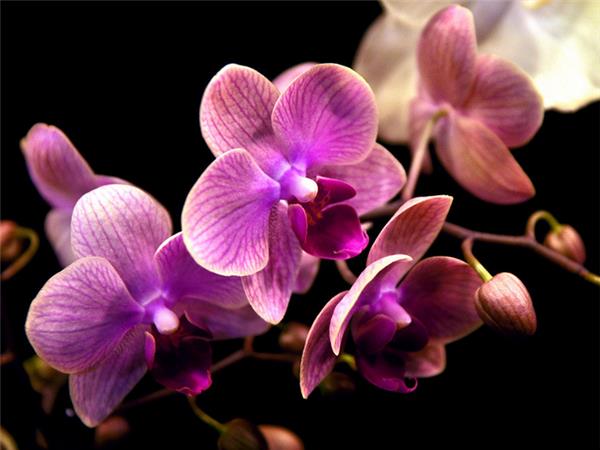
Four reasons for failure in home cultivation
1. Overwatering: Friends who grow Phalaenopsis orchids always worry that the orchids lack water, and regardless of whether the growing medium is dry, they water every day, causing severe root rot.
2. Temperature too low: Usually, flowering Phalaenopsis orchids are mostly marketed in early spring, and after being bought home they are generally placed in living rooms and other places for appreciation. Although the daytime temperature in these places is sufficient, the nighttime temperature is slightly on the low side. On the other hand, professionally cultivated orchids are mostly kept in well-equipped greenhouses. By comparison, the temperature and humidity at home are somewhat insufficient, causing the plants' growth to gradually weaken. Therefore, sometimes no matter how well they are cared for, the orchids still fail to bloom.
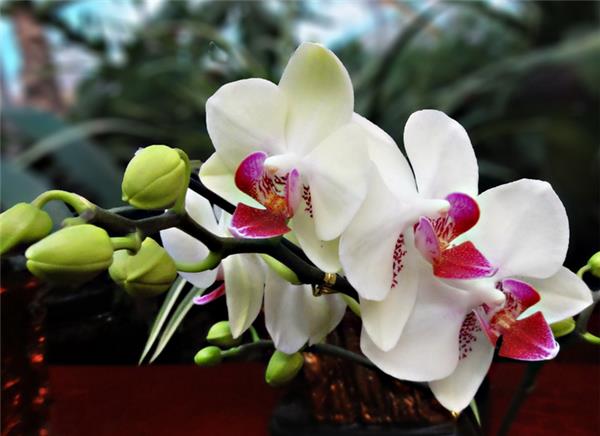
3. Excessive fertilization: Applying fertilizer whenever there is some, and not paying attention to concentration, thinking that applying fertilizer will make them grow faster. One should know that Phalaenopsis orchids are suitable for light fertilization, and should be fertilized in small amounts and more frequently. Remember that "supplementing" must not be excessive, otherwise the result will be the opposite.
4. Planting small plants in large pots: Thinking that using a large pot can give Phalaenopsis orchids a more spacious environment and sufficient material. In fact, after using a large pot, the sphagnum moss is not easy to dry. One should know that Phalaenopsis orchids like ventilation, and when air circulates they thrive.