What are the cultivation methods and precautions for English ivy?
English ivy is a fairly popular indoor potted plant these days, most commonly placed in spacious living rooms, studies and bedrooms, giving people a feeling of elegance and simplicity. It is a beautifully shaped, neat plant and a world-famous new-generation indoor foliage plant. Below, we introduce the cultivation methods and precautions for English ivy.
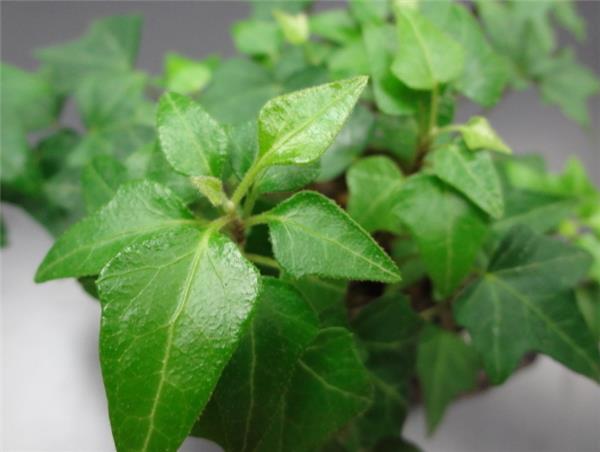
Cultivation methods for English ivy
1. Suitable temperature: English ivy likes warmth, with an optimum growing temperature of 20°C-25°C. It fears heat and is not cold-tolerant. Therefore, when keeping it indoors, pay attention to ventilation and cooling in summer. In winter, the room temperature should preferably stay above 10°C, and must not fall below 5°C.
2. Appropriate light: English ivy likes light but is also fairly shade-tolerant. Grown under semi-light conditions, its internodes are shorter, its leaf shape is uniform and its leaf color is vivid, so it is best kept in a bright spot indoors. If in spring and autumn you can each time place it in a shaded spot outdoors for a period, so that it gets more morning and evening sunlight, it will grow vigorously with bright green leaves. But be careful to prevent direct strong light, otherwise it is prone to sunscald.
3. Moderate watering: During the growing season, water according to the principle of "dry then wet"; do not let the potting soil become overly moist, otherwise it easily causes root rot and leaf drop. In winter, when room temperature is low, watering must especially be controlled, keeping the potting soil only slightly moist. The northern winter climate is dry, so it is best to spray-wash with clean water close to room temperature once a week to maintain air humidity; the plant will then look lively, with tender green and glossy leaves.
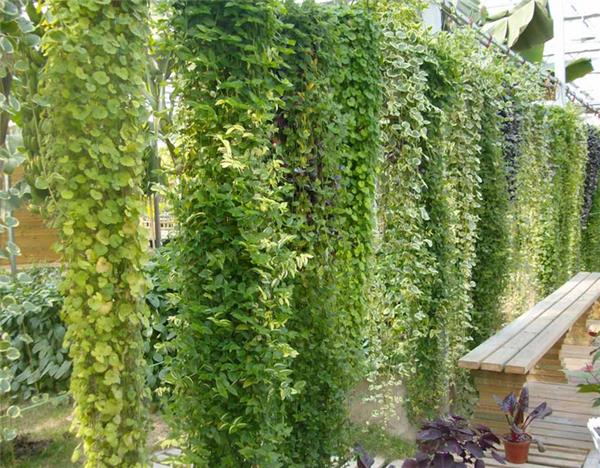
4. Reasonable fertilizing: For home cultivation of English ivy, the potting soil should preferably be a culture soil mixed from leaf mold or peat soil plus 1/4 river sand and a small amount of bone meal. During the growing season, apply a dilute cake fertilizer solution once every 2-3 weeks. Generally, do not fertilize in summer and winter. When fertilizing, never apply nitrogen fertilizer alone, otherwise the patterns and patches on the leaves of variegated varieties will fade to green. The ratio of nitrogen, phosphorus and potassium should preferably be 1;1;l. In the peak growing season, you can also spray the leaves 1-2 times with a 0.2% potassium dihydrogen phosphate solution, which will make the leaf color even more beautiful. But note that when applying liquid fertilizer, avoid contaminating the leaves, so as not to cause leaf scorch.
5. Timely pruning: When small seedlings are potted (preferably 3 plants per pot) and grow to a certain height, pinch them in time to encourage more branching, so the plant shape looks full.
6. Provide supports for potted plants: To let them climb upward and add infinite charm to the indoor space, or to grow them as hanging baskets, with soft branches and vines drooping and swaying naturally, extremely elegant, bringing the soothing enjoyment of evergreen foliage through all four seasons. Therefore, it is a rare hanging vine foliage plant for modern living rooms, offices, performance venues and similar places. Generally, repot once every one or two years.
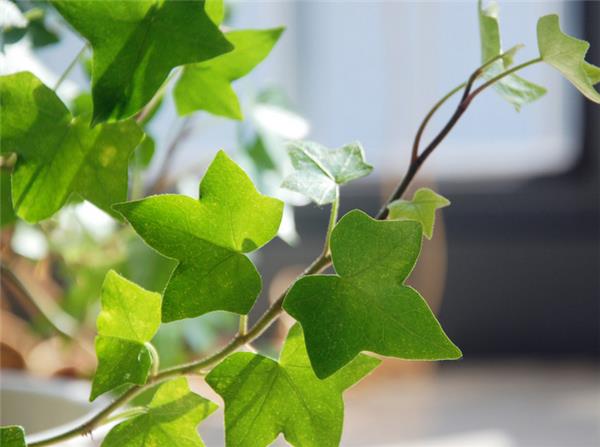
Precautions for growing English ivy
(1) Planting can be done during any period when the branches and vines have stopped growing. For potting soil, it is best to use a loose, fertile soil mixed from garden soil, leaf mold and sand. Repot once every 1-2 years. During the growing period, keep the potting soil moist and frequently spray water on the leaf surfaces and the surrounding ground to raise air humidity; move it indoors in winter, where it can overwinter at above 3°C. Place it in a spot with ample light, pay attention to ventilation, and reduce the frequency of watering.
(2) For newly planted specimens, pinch the tips after spring budding to encourage branching. For perennial plants, strengthen pruning and cut off dead branches, weak thin branches, and diseased or pest-infested branches.
(3) Frequently mist the leaf surfaces of English ivy to prevent dry air from causing the leaf tips to wither and turn brown.
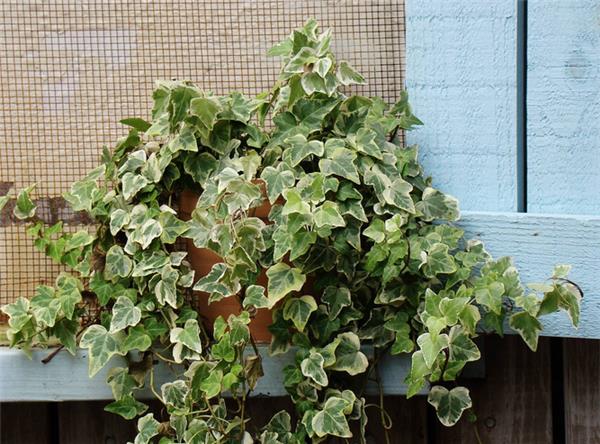
(4) If placed on a windowsill or stand so the stems and vines hang down, it will look messy and have low ornamental value. In an indoor garden, it can be used as material for beautifying walls; stretch thin strings on the wall for them to twine and climb along. If displayed as a single pot, use bamboo strips or No. 8 galvanized wire to make a frame, and by artificial guiding, distribute the stems and vines evenly over the frame for shaping. Pruning should also be strengthened to prevent the stems and vines from winding in multiple layers and becoming tangled. There are many forms of frames for potted English ivy to climb on, which can be tied according to personal preference. Common frame forms include spiral, cylindrical, spherical, fan-shaped and so on.
(5) English ivy has relatively strong cold resistance and can overwinter safely in ordinary home rooms. In winter, water less and stop topdressing. Place it near a south-facing window so it gets more sunlight. In a room without heating equipment, if leaves drop due to low temperature, as long as the stems and vines are not frozen, there is no need to worry about it. After the weather warms in the following spring, carry out a heavy pruning to let the dormant buds on the lower parts of the stems and vines sprout and send out new stems and vines, then guide and tie them again, so the plant is renewed once every year. This can also keep the size of the plant within a certain range, making it convenient for indoor display.
Let the dormant buds on the lower parts of the stems and vines sprout and send out new stems and vines, then guide and tie them again, so the plant is renewed once every year. This can also keep the size of the plant within a certain range, making it convenient for indoor display.