Crape Myrtle Cultivation Methods and Precautions
The crape myrtle, also known as the "tickle tree," will tremble at the slightest touch and sometimes even emit a "chuckling" sound, a strange characteristic that is truly astonishing. Today we are going to introduce the cultivation methods for the crape myrtle.
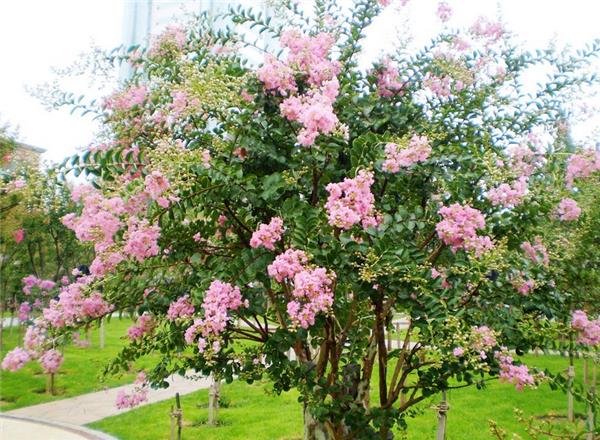
Crape Myrtle Cultivation Methods
The crape myrtle generally has strong adaptability to environmental conditions. It is drought-tolerant and cold-tolerant. It is not demanding about soil, but when planted in fertile, deep, loose, slightly acidic to acidic soil it grows robustly and has a long flowering period. It fears waterlogging, so avoid planting it in low-lying, damp places with a high water table. It loves light, and both growth and flowering require ample sunlight, though it also tolerates slight shade. It grows vigorously under warm, humid climatic conditions.
Crape myrtle is generally planted after leaf fall in November through March of the following year. Using rooted cuttings from that year's old branches for pot cultivation is a good way to quickly develop bonsai. Because crape myrtle branches are supple, potted crape myrtle can be appropriately bent and trained. Generally, when spring shoot growth stops and the branches become semi-lignified, wiring and shaping are carried out, using thin coir rope to pull them into bonsai of various forms.
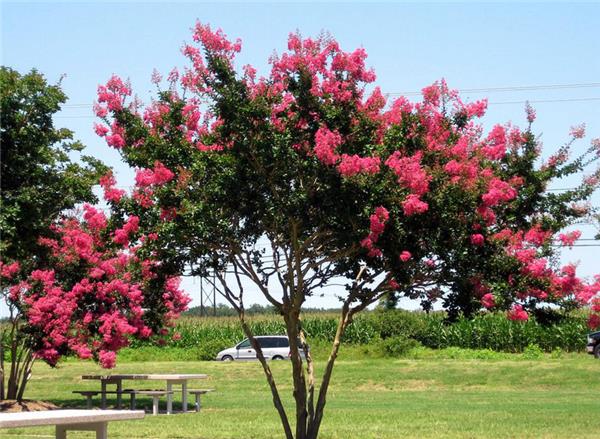
Fertilizing crape myrtle: crape myrtle management is generally quite extensive. In early March, a shoot-promoting fertilizer should be applied, combining nitrogen, phosphorus and potassium; from late May to early June, apply a phosphorus-potassium fertilizer once to strengthen branches and hasten flowering; in late July and early September, apply a flowering-period fertilizer once each, using cake fertilizer water or similar, to make the flowers bloom brilliantly. If disease is found, use Bordeaux mixture or a 600-fold carbendazim solution for control.
The crape myrtle grows at the tips of the spring shoots that sprout that year; it has strong sprouting ability and its crown is untidy, so pruning is necessary. After flowering in summer, part of the spent flowers should be cut off to prevent it from setting seed, thereby reducing nutrient loss and promoting the sprouting of new branches and flowering. When pruning during the growing season, never prune or shorten the new branches that sprouted in spring, otherwise it easily results in only branches growing and no flowers. The above is the cultivation and management technical information. To ensure normal flowering and the formation of large flower panicles, winter pruning is very important. For ground-planted ones, cut off the current year's branches at the height where the main trunk is headed, so that sturdy branches emerge the following year and flower; for potted ones, first cut off all sprouting shoots, diseased and dead branches, and crossing and overlapping branches; to beautify the shape, shorten other branches 1 cm above a plump terminal bud, generally retaining only about 5 cm.
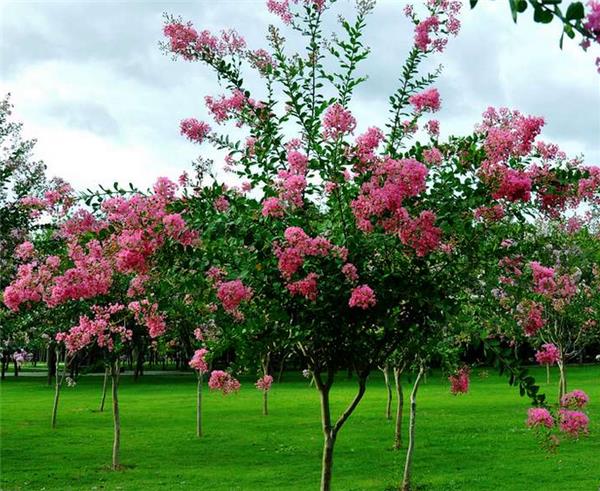
Next, let's look at crape myrtle shaping and pruning techniques.
I. Selection of Tree Form
Crape myrtle tree forms are generally divided into the natural open-center form with a main trunk and the shrub form. For top-grafted crape myrtle, the original tree form should be fully utilized to form a crown as quickly as possible.
II. Shaping and Pruning Techniques
1. Trunk heading and shaping: after 1-2 years of cultivation, when a crape myrtle seedling reaches 1-2 cm in basal diameter, head the trunk in winter.
① Natural open-center shaping: for the natural open-center form with a trunk, generally keep one trunk and cut it back at 80-100 cm above ground; weak seedlings may be slightly lower, and vigorous seedlings slightly higher. All branches below the cut should be thinned out to help concentrate nutrients. After sprouting in spring, first select and retain 3-4 robust buds below the cut for training; the first branch below the cut serves as the trunk extension branch. The main branches should form a suitable angle with the trunk, be evenly distributed, and have a certain spacing above and below. During the growing season, remove other sprouts and rootstock suckers at any time. In the dormant-season pruning of the following year, shorten the trunk extension branch by 1/3, and shorten the first tier of main branches to retain 20-30 cm, forming the basic framework. Thin out auxiliary branches that affect the growth of the main branches, such as water sprouts and overlapping branches.
② Shrub-form shaping: for the shrub form, head the trunk in winter, selecting 3-5 reasonably distributed branches as main trunks and cutting them back at 50-60 cm above ground to promote branching. In spring, through bud removal, retain 3-4 branches per main trunk as the first tier of lateral branches, and shorten them during dormant-season pruning to form the basic framework.
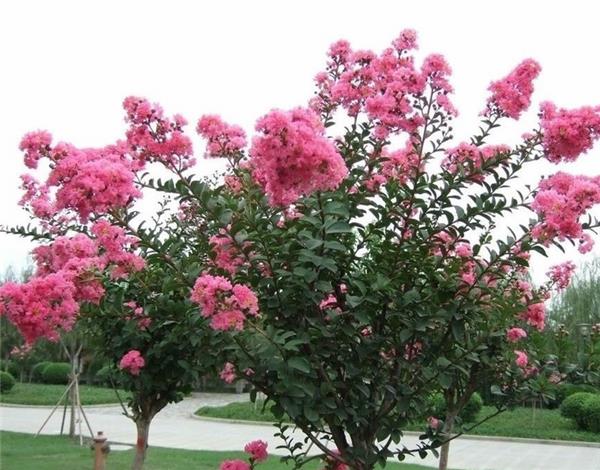
2. Pruning for growing larger saplings: after the crape myrtle trunk is headed, in each year's dormant period, after cutting out dead branches, diseased branches, parallel branches and inward-growing branches, shorten the current year's main and lateral branches at all levels. The trunk extension branch should be lightly pruned retaining a lateral bud, generally alternating buds about every two years, so that the trunk extension branch develops in a zigzag manner. Lateral branches on the main branches should be selected from branches of moderate vigor and suitable direction, so that the main trunk and the main and lateral branches at all levels are reasonably distributed, tiered above and below, elegant and orderly. When pruning and heading lateral branches, generally retain the outer bud to help expand the crown. After sprouting in spring, promptly remove overly dense or upright new shoots. For the natural open-center form, the branching height can be gradually raised to train a tall-trunk crape myrtle. Minimize flowering and fruiting as much as possible to favor nutrient accumulation. Basal suckers should generally be cut off promptly; crape myrtle branches can adhere to each other, and nurseries often take advantage of this by winding basal sucker branches around the main trunk, which after a few years heal together with the trunk to achieve the effect of rapid thickening, and can even be shaped into forms such as vases and screens.
3. Pruning for rejuvenation of crape myrtle and top-grafting to change the cultivar: many nurseries use old crape myrtle to grow large-specification landscaping saplings. Because the old crape myrtle crown is relatively large, plus the effects of digging, wrapping, transport and other stages, the damage to the roots is relatively great, and correspondingly the upper branches are pruned more heavily. Often at the branching point of 3-6-year-old branch groups, the scaffold branches are cut back and shortened, some even heavily pruned down to the main trunk. The latent buds on crape myrtle branches and trunks are numerous and long-lived; through the stimulus of heavy pruning, the dormant buds are made to sprout new branches. For plants of a fine original cultivar, if root damage is relatively slight and sprouting is abundant, some overly dense sprouts or new branches can be appropriately thinned out. Select the sturdy water sprouts among them as main branches; when vigorously growing water sprouts and long branches reach 40 cm, pinch them to promote secondary branches and expand the crown as early as possible. If growth is not strong, the branches sprouted from latent buds below the cut after heavy pruning that year should be retained as much as possible that year to promote recovery of tree vigor, thereby achieving the cultivation goal of rejuvenation and renewal. Many wild crape myrtles often have poor ornamental value and need to be improved by grafting. First select and retain strong sprouts at suitable positions, cultivate them well as rootstock, and graft fine cultivars before spring sprouting to form a crown as early as possible. Top-grafted crape myrtle that has undergone cultivar change, after 2-3 years of cultivation, can form a relatively large crown for landscaping, but care should be taken to cut off sprouts on the rootstock at any time.
Basal suckers should generally be cut off promptly; crape myrtle branches can adhere to each other, and nurseries often take advantage of this by winding basal sucker branches around the main trunk, which after a few years heal together with the trunk to achieve the effect of rapid thickening, and can even be shaped into forms such as vases and screens.3. Pruning for rejuvenation of crape myrtle and top-grafting to change the cultivar: many nurseries use old crape myrtle to grow large-specification landscaping saplings. Because the old crape myrtle crown is relatively large, plus the effects of digging, wrapping, transport and other stages, the damage to the roots is relatively great, and correspondingly the upper branches are pruned more heavily. Often at the branching point of 3-6-year-old branch groups, the scaffold branches are cut back and shortened, some even heavily pruned down to the main trunk. The latent buds on crape myrtle branches and trunks are numerous and long-lived; through the stimulus of heavy pruning, the dormant buds are made to sprout new branches. For plants of a fine original cultivar, if root damage is relatively slight and sprouting is abundant, some overly dense sprouts or new branches can be appropriately thinned out. Select the sturdy water sprouts among them as main branches; when vigorously growing water sprouts and long branches reach 40 cm, pinch them to promote secondary branches and expand the crown as early as possible. If growth is not strong, the branches sprouted from latent buds below the cut after heavy pruning that year should be retained as much as possible that year to promote recovery of tree vigor, thereby achieving the cultivation goal of rejuvenation and renewal. Many wild crape myrtles often have poor ornamental value and need to be improved by grafting. First select and retain strong sprouts at suitable positions, cultivate them well as rootstock, and graft fine cultivars before spring sprouting to form a crown as early as possible. Top-grafted crape myrtle that has undergone cultivar change, after 2-3 years of cultivation, can form a relatively large crown for landscaping, but care should be taken to cut off sprouts on the rootstock at any time.