How to grow a cactus so it blooms? Detailed guide to cactus cultivation methods
We all know that the cactus is a green, spiny, drought-tolerant plant, and generally when we grow cacti we rarely see them bloom. In fact, it is possible for a cactus to bloom, but this requires careful cultivation on your part and the right conditions.
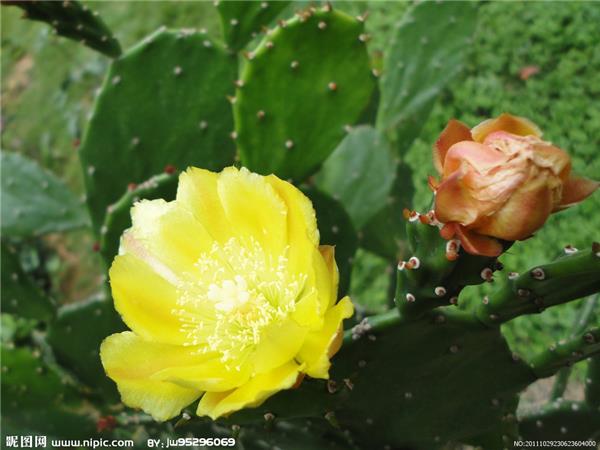
Cactus cultivation
1. Temperature The cactus likes high temperatures and a dry environment. In winter, the room temperature during the day should be kept above 20°C, and the nighttime temperature should not be lower than 10°C. Too low a temperature easily causes root rot.
2. Light The cactus requires plenty of sunlight, but in summer it must not be exposed to strong direct sunlight and needs appropriate shading. For indoor cultivation, artificial lighting can be used to promote healthy growth.
3. Potting soil For potted cacti, the soil should be well-draining, breathable, calcareous sandy soil (or sandy loam). It can be mixed from 2 parts loam and 2 parts leaf mold, 3 parts coarse sand, plus 1 part limestone gravel or old lime wall debris discarded when old buildings are demolished. It can also be mixed from 2 parts loam and 2 parts coarse sand, with 1 part each of crushed brick, leaf mold and old lime wall debris. When planting, a small amount of crushed brick and tile pieces should be placed at the bottom of the pot to ensure good drainage.
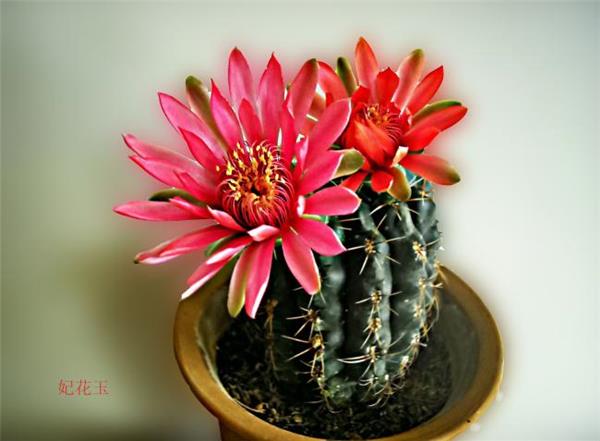
4. Planting It is best to plant and pot up in early spring. The flower pot should not be too large; it is suitable if it can hold the ball and leave a slight gap. If the pot is too large, after watering thoroughly the water cannot be absorbed, air cannot circulate in the pot, and the roots are prone to rot. A few taproot types, as well as Lophophora williamsii and giant barrel cacti, require deeper cylindrical pots. For types with shallower root systems, such as silver ball cacti and offset-forming cacti, shallower ordinary flower pots can be used.
5. Repotting method When repotting, part of the old roots should be cut off. After drying for 4-5 days, pot up again. Planting should not be too deep; it is suitable if the root crown of the ball is level with the soil surface. To avoid root rot, newly planted cacti should not be watered; simply mist 2-3 times a day. After half a month, a small amount of water can be given, and only after one month, when new roots have grown, can watering be gradually increased.
6. Watering Summer is the growing season for cacti. With high temperatures, water demand is high. They must be watered thoroughly, preferably in the early morning or evening when temperatures are low. At noon when it is hot, watering can easily cause sunburn on the ball. During the hot, rainy season, watering should also be appropriately reduced. For cacti with a sunken top, be careful not to let water get into the depression, so as to avoid rot, and this is especially important when watering in the evening.
During winter dormancy, watering should be reduced, and it is suitable to keep the potting soil from becoming excessively dry. The lower the temperature, the more the potting soil should be kept dry. Mature large plants are more drought-tolerant than small seedlings. Winter watering should be done on sunny mornings. As the temperature rises, the plant will gradually come out of dormancy, and only then can the frequency and amount of watering be gradually increased.
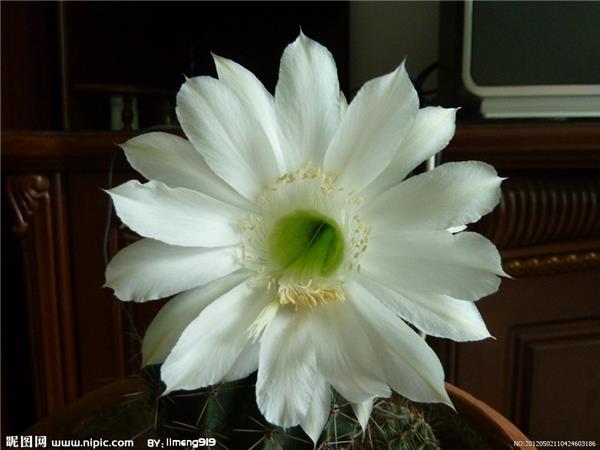
7. Fertilizing
Potted cacti can also be appropriately fertilized during the growing season, especially those grafted onto Hylocereus undatus, for which fertilizing should be taken even more seriously. Fully decomposed dilute liquid fertilizer can be used, applied once every 10-15 days. After autumn begins, pay attention to controlling fertilizer and water; generally applying once a month is enough, and stop fertilizing in early October. If fertilizer is not controlled and the cactus is allowed to continue growing, the tender ball is susceptible to cold damage during overwintering. When fertilizing, be careful not to get it on the ball; if any gets on it, rinse it off with water promptly.
8. Pest and disease control
In environments with high temperatures and poor ventilation, pests and diseases are prone to occur. For diseases, carbendazim or thiophanate-methyl can be sprayed; for pests, dimethoate can be sprayed to kill them. No matter which liquid medicine is sprayed, it should be done outdoors.
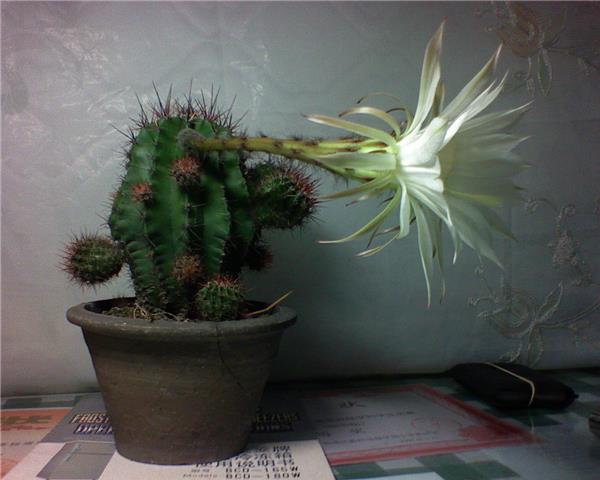
Cacti are generally cultivated for 3-4 years, and they can bloom when the ball diameter reaches 3-4 cm. However, the number of flowers is usually 1-2, or at most 3-4, and the flowers wither 24 hours after blooming. Cactus blooming is relatively rare; it is possible only when the owner tends them carefully and the conditions of fertilizer, temperature and humidity are all fully met.
After reading the above content, regarding your cactus blooming, Zhuangxiu Network provides it for you.