How to Grow Ivy? A Detailed Guide to Ivy Cultivation Methods
Ivy Cultivation Methods: How to Grow Ivy
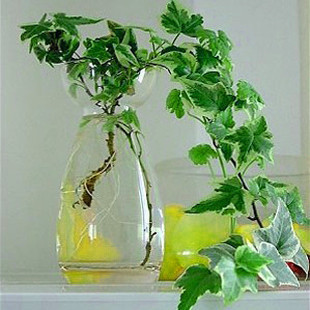
Ivy, also known as "Chinese ivy" and commonly called evergreen ivy, belongs to the genus Hedera in the family Araliaceae. It is a plant that beautifies indoor home spaces and is also a rather popular large indoor potted flowering plant. Below, the editor will introduce to everyone the cultivation methods of ivy and how to grow ivy.
1. Temperature should be suitable. Ivy prefers warmth, with an optimal growing temperature of 20°C to 25°C. It fears intense heat and is not cold-tolerant. Therefore, when keeping it indoors, attention should be paid to ventilation and cooling in summer, and in winter the room temperature should ideally be maintained above 10°C, and must never fall below 5°C.
2. Light should be moderate. Ivy likes light and is also fairly shade-tolerant. When grown under semi-light conditions, its internodes are shorter, its leaf shape is uniform, and its leaf color is vivid, so it is best placed in a bright spot indoors.
4. Fertilize reasonably. For home cultivation of ivy, the potting soil should preferably be a culture soil mixed from leaf mold or peat soil with 1/4 river sand and a small amount of bone meal. During the growing season, apply dilute cake fertilizer water once every 2 to 3 weeks. Generally, do not fertilize in summer and winter. When fertilizing, never apply nitrogen fertilizer excessively, otherwise the patterns and patches on the leaves of variegated varieties will fade to green. However, note that when applying liquid fertilizer, avoid contaminating the leaves, so as to prevent the leaves from scorching.
In addition, ivy commonly suffers from leaf spot disease, which can be controlled by spraying mancozeb and similar products. If indoor ventilation is poor, it is susceptible to damage from scale insects and red spider mites, which can be killed by spraying with essential balm or dicofol respectively.
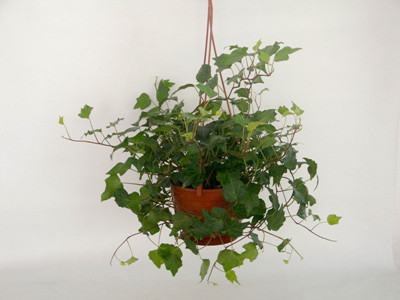
1. Temperature should be suitable. Ivy prefers warmth, with an optimal growing temperature of 20°C to 25°C. It fears intense heat and is not cold-tolerant. Therefore, when keeping it indoors, attention should be paid to ventilation and cooling in summer, and in winter the room temperature should ideally be maintained above 10°C, and must never fall below 5°C.
2. Light should be moderate. Ivy likes light and is also fairly shade-tolerant. When grown under semi-light conditions, its internodes are shorter, its leaf shape is uniform, and its leaf color is vivid, so it is best placed in a bright spot indoors.
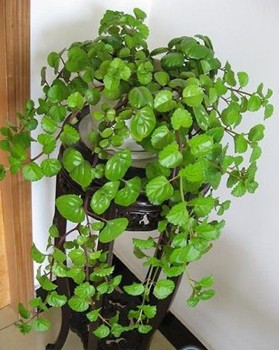
4. Fertilize reasonably. For home cultivation of ivy, the potting soil should preferably be a culture soil mixed from leaf mold or peat soil with 1/4 river sand and a small amount of bone meal. During the growing season, apply dilute cake fertilizer water once every 2 to 3 weeks. Generally, do not fertilize in summer and winter. When fertilizing, never apply nitrogen fertilizer excessively, otherwise the patterns and patches on the leaves of variegated varieties will fade to green. However, note that when applying liquid fertilizer, avoid contaminating the leaves, so as to prevent the leaves from scorching.
In addition, ivy commonly suffers from leaf spot disease, which can be controlled by spraying mancozeb and similar products. If indoor ventilation is poor, it is susceptible to damage from scale insects and red spider mites, which can be killed by spraying with essential balm or dicofol respectively.